 Retro Replay Retro Replay gaming reviews, news, emulation, geek stuff and more!
Retro Replay Review
Gameplay
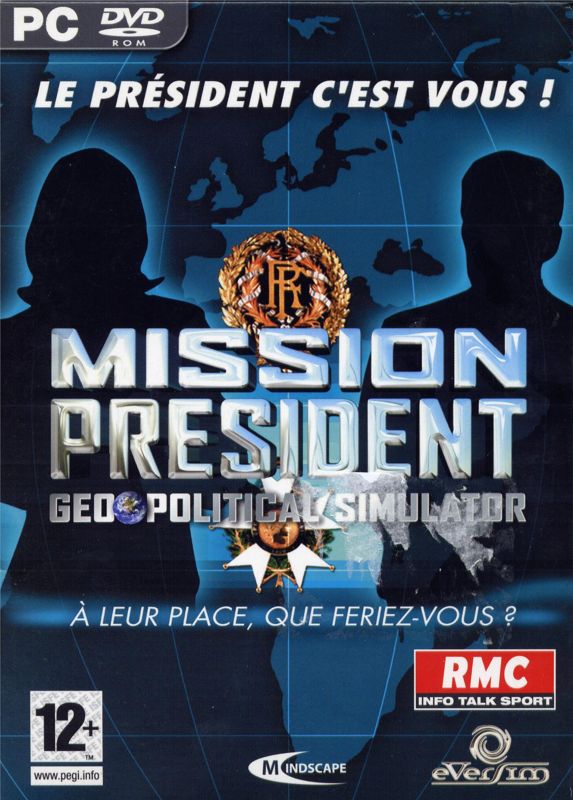
G.P.S.: Geo-Political Simulator places you in the shoes of a national leader, granting control over one of 229 sovereign states. Right from the outset, you’ll delve into a web of interrelated political, economic, and social systems. Twelve distinct ministries serve as your command centers, each overseeing vital aspects such as taxation, public welfare, diplomacy, and legislative reform. The real-time nature of the simulation means that every decision you make—from raising taxes to signing trade agreements—carries immediate consequences for your population’s approval and the stability of your regime.
(HEY YOU!! We hope you enjoy! We try not to run ads. So basically, this is a very expensive hobby running this site. Please consider joining us for updates, forums, and more. Network w/ us to make some cash or friends while retro gaming, and you can win some free retro games for posting. Okay, carry on 👍)
While most of the game unfolds through vibrant, data-rich menus, the strategic depth is far from superficial. You’ll find yourself constantly balancing competing priorities: should you cut defense spending to fund education, or risk public dissent by tightening fiscal belts? In democracies, public opinion polls and election timelines add an extra layer of complexity, forcing you to consider approval ratings before passing controversial laws. Authoritarian states, on the other hand, challenge you to maintain order through surveillance and controlled media, highlighting the diverse gameplay experiences available.
Beyond the open-ended “free play” sandbox, G.P.S. includes 30 scenario challenges that test your diplomatic finesse and crisis management skills. Whether you’re quelling a terrorist insurgency, navigating an energy crisis, or rebuilding after a natural disaster, each scenario sets specific goals and constraints that push you to adapt your strategies. These structured missions provide bite-sized objectives for newcomers and seasoned players alike, ensuring there’s always a fresh problem to tackle.
Graphics
Graphically, G.P.S. leans heavily on colorful, information-dense menu interfaces rather than flashy 3D environments. The user interface is thoughtfully organized: charts, graphs, and sliders are laid out logically, allowing you to digest complex data at a glance. While this approach might strike some players as utilitarian, it’s precisely what makes the game’s deep mechanics accessible without drowning you in unnecessary visual fluff.
When military operations kick in, the game transitions to a classic isometric perspective reminiscent of turn-based strategy titles. You’ll directly command armies on hex-based terrain, issue movement orders, and engage in tactical combat. Unit sprites are simple yet detailed enough to convey different troop types, fortifications, and terrain features. This visual shift not only breaks up the predominantly menu-driven gameplay but also adds a tangible sense of battlefield drama.
Though G.P.S. doesn’t compete with high-end 3D war simulators or AAA cinematic adventures, its graphical presentation serves its purpose admirably. The color palettes for political maps, economic charts, and scenario overlays are distinct and readable, avoiding the clutter that often plagues complex strategy titles. If you value clarity and function over cutting-edge visuals, the game’s aesthetic design will feel intuitive and well-suited to its simulation goals.
Story
Unlike narrative-focused RPGs or story-driven adventures, G.P.S. doesn’t weave a fixed tale. Instead, it invites you to create your own geopolitical saga. Every election campaign, trade dispute, and military skirmish becomes a chapter in the story of your nation. This emergent storytelling harnesses the simulation’s dynamic systems to craft unique experiences—no two playthroughs unfold in exactly the same way.
The 30 built-in scenarios offer more structured narratives, presenting you with urgent national crises and clearly defined objectives. In these missions, you might be tasked with stabilizing a post-conflict region, preventing ecological collapse, or forging alliances to counter a regional power. Each scenario comes with its own timeline, resource constraints, and victory conditions, giving you a focused storyline that still allows for strategic creativity.
For players who relish sandbox freedom, the absence of a linear plot is a feature, not a flaw. You define the direction of your state’s narrative—will you champion human rights and sustainable growth, or cling to power through manipulation and force? The freedom to experiment with different political ideologies and policy mixes fosters a deeply personal storytelling experience rooted in your own strategic choices.
Overall Experience
G.P.S.: Geo-Political Simulator stands out as one of the most ambitious political strategy games on the market. Its intricate systems and real-time decision-making deliver a level of depth rarely seen in the genre. Whether you’re a seasoned geopolitics enthusiast or a newcomer intrigued by the mechanics of power, the game offers countless hours of strategic planning and high-stakes scenario play.
That said, the steep learning curve and UI-driven gameplay may not appeal to everyone. Casual gamers seeking fast-paced action or linear storytelling might find themselves overwhelmed by the sheer volume of data and options at their disposal. However, for those willing to invest the time to master the interface and underlying simulations, G.P.S. rewards you with unparalleled control and the satisfaction of seeing your policies unfold in real time.
Ultimately, G.P.S. excels at what it sets out to do: simulate the complexities of statecraft in a dynamic, real-time environment. Its combination of sandbox freedom, challenging scenarios, and a dual-layered interface—menu-driven governance and isometric military command—creates a multifaceted experience. If you’ve ever wondered what it truly takes to lead a nation, G.P.S. offers a captivating window into the art of geopolitics.



Reviews
There are no reviews yet.