 Retro Replay Retro Replay gaming reviews, news, emulation, geek stuff and more!

Retro Replay Review
Gameplay
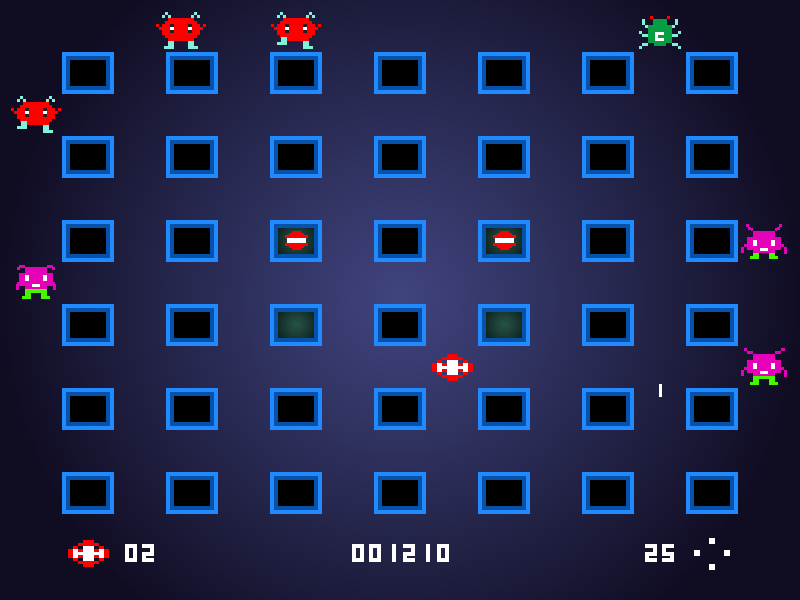
Gridfire delivers a classic arcade experience rooted in the simple premise of moving, aiming, and surviving. You pilot a nimble ship within a central corridor, navigating around a 7×6 grid of obstacles that both you and the swarming creatures can use for cover. This strategic placement forces you to think on your feet: do you weave in close to draw enemies into your line of fire, or do you hang back and pick off creatures as they peek around barriers?
(HEY YOU!! We hope you enjoy! We try not to run ads. So basically, this is a very expensive hobby running this site. Please consider joining us for updates, forums, and more. Network w/ us to make some cash or friends while retro gaming, and you can win some free retro games for posting. Okay, carry on 👍)
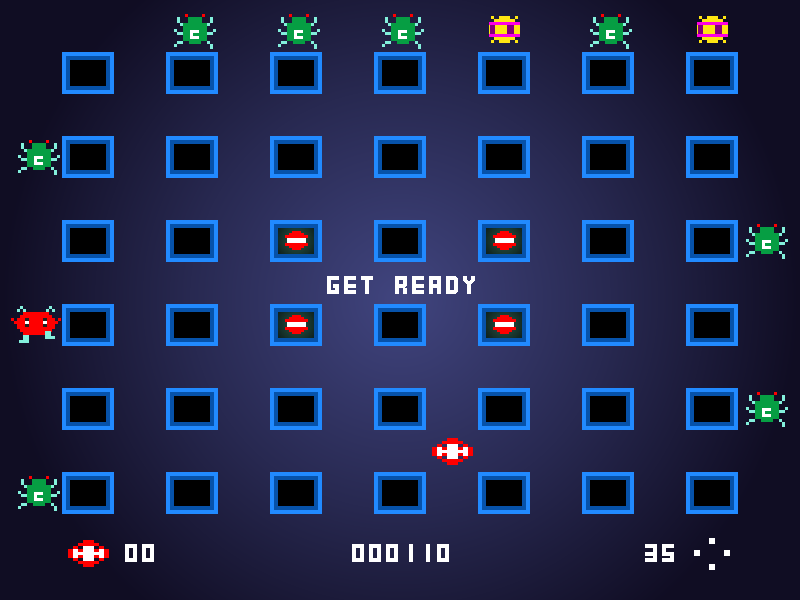
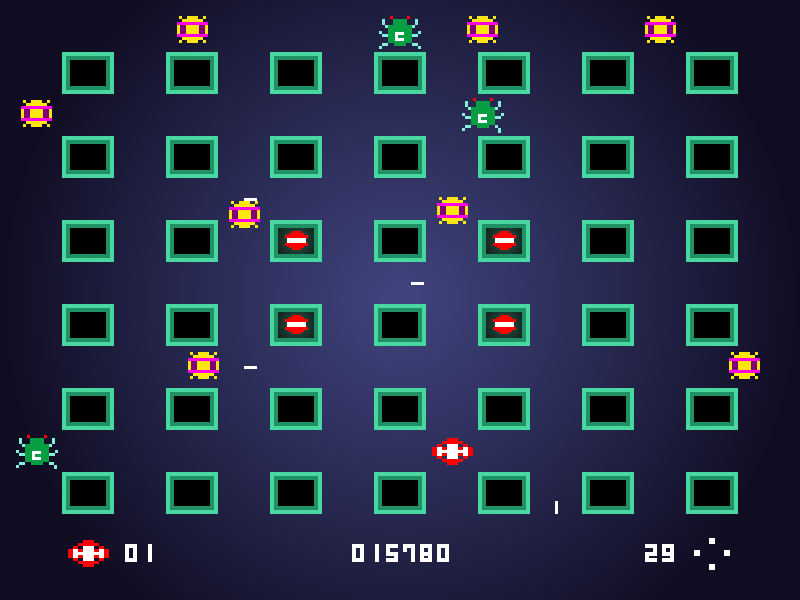
The creature design evolves over time, cycling through four distinct shapes and colors—yellow, green, red, and pink—each hit taking you one step closer to clearing them from the grid. Limited ammunition adds another layer of tension: with only 35 bullets per life and a warning icon popping up at ten remaining shots, every round fired matters. Bonus orbs occasionally materialize in the grid’s center once you’ve expended a certain number of bullets, rewarding precise play and offering a chance to refill your reserves.
As soon as the last creature on the grid is eliminated, a fresh wave emerges faster and more relentless than before. When only a handful of foes remain on-screen, they often charge in unison, demanding rapid reflexes and split-second decisions. With three distinct difficulty levels, Gridfire scales from approachable to punishing, making it a rewarding challenge whether you’re a newcomer to retro shooters or a seasoned veteran chasing high scores.
Graphics
Visually, Gridfire embraces a minimalist, pixel-art aesthetic that pays homage to its 1979 ancestors, Targ and Crossfire, while polishing them for modern screens. The ship, creatures, and obstacles are rendered with sharp, clean lines and vibrant colors that stand out against a subdued background. This clarity not only reinforces the game’s old-school charm but also ensures that every shot and movement is easily readable in the heat of play.
The color progression of the enemies—from yellow to pink—serves as an intuitive visual cue for how many times each creature must be hit before vanishing. This scheme keeps you informed without cluttering the screen with numbers or health bars. When bonus orbs appear, they glow with an animated pulse that draws your eye immediately, making it hard to miss a crucial opportunity to restock your ammo or score big points.
While there’s no flashy 3D or high-resolution textures here, the simple grid layout and crisp sprite animations offer a timeless elegance. Particle effects on explosions are restrained but satisfying, giving each successful shot a palpable impact. Gridfire’s visual design is proof that strong gameplay need not rely on hyper-realistic graphics—sometimes the clearest presentation is the most effective.
Story
Gridfire doesn’t burden players with a convoluted narrative or lengthy cutscenes; instead, it delivers a straightforward premise: defend your city from an onslaught of invading creatures. This stripped-down storyline is typical of late ’70s and early ’80s arcade titles, focusing squarely on the action and high-score pursuits rather than elaborate world-building.
Despite its brevity, the context is engaging enough to keep you invested. The simple idea of piloting a lone ship against waves of colorful invaders provides a clear objective for each play session. Your progress—tracked by score, lives, and the ever-pressing ammo gauge—drives a sense of urgency that aligns well with the arcade pedigree of the original Targ and Crossfire games.
While there’s no character development or plot twists, the escalating waves and faster enemies serve as a narrative of their own. You’ll feel a mounting tension as the grid fills with creatures, and a rush of triumph when you clear it and brace for the next, more challenging layout. This minimalist storytelling, combined with tight gameplay loops, makes each session feel like a concise, action-packed chapter.
Overall Experience
Gridfire strikes a satisfying balance between nostalgia and modern polish. Its controls are tight, the pacing brisk, and the visual feedback immediate, making every minute worthwhile. The threat of running out of ammo, the strategic use of obstacles, and the relentless waves of enemies coalesce into a compelling arcade package that’s easy to pick up yet hard to master.
Replayability is one of Gridfire’s strongest suits. With three difficulty settings, a steadily increasing enemy speed, and score-based extra lives, you’re encouraged to refine your technique and chase higher scores. Whether you’re aiming for a quick ten-minute session or an all-out marathon to top the leaderboards, the game caters to both casual and hardcore audiences.
For fans of retro shooters or anyone looking for a tight, score-driven arcade experience, Gridfire offers a polished homage to the golden age of gaming. It may not feature sprawling narratives or cutting-edge visuals, but its focused gameplay and addictive loop deliver exactly what it promises: pure, unfiltered arcade action.


Reviews
There are no reviews yet.