 Retro Replay Retro Replay gaming reviews, news, emulation, geek stuff and more!
Retro Replay Review
Gameplay
Hacker 1.0 delivers a classic arcade-style hacking experience, distilling the complexity of real-world cyber intrusion into a series of fast-paced mini-challenges. Players navigate through a simulated terminal interface where each “mission” tasks you with breaching corporate firewalls, bypassing security protocols, and transferring funds to your clandestine accounts. The game’s loop is simple yet addictive: earn virtual currency, purchase better hacking tools, and take on increasingly fortified networks.
(HEY YOU!! We hope you enjoy! We try not to run ads. So basically, this is a very expensive hobby running this site. Please consider joining us for updates, forums, and more. Network w/ us to make some cash or friends while retro gaming, and you can win some free retro games for posting. Okay, carry on 👍)
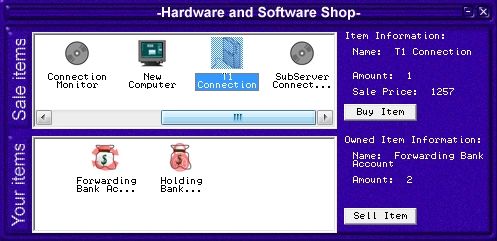
As you progress, the difficulty curve ramps up steadily. Early stages might have you guessing simple passwords or scanning for open ports, but later levels introduce time-sensitive encryption puzzles, randomized firewall configurations, and even simulated tracebacks that threaten to expose your identity. Each success feels rewarding, especially when you reinvest your earnings in items like proxy networks, advanced cracking software, or stealth modules to slow down pursuing authorities.
One standout feature is the in-game economy. Funds flow into your account after each successful hack, and you choose how best to allocate them. Do you boost your password-cracking speed, invest in decoys that confound law enforcement, or upgrade your data-exfiltration bandwidth? This strategic layer adds depth beyond the reflex-based mini-games, encouraging replayability as you tinker with different loadouts and tactics.
Graphics
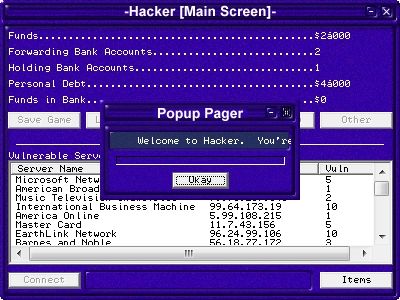
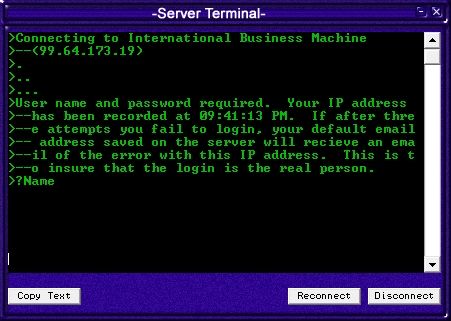
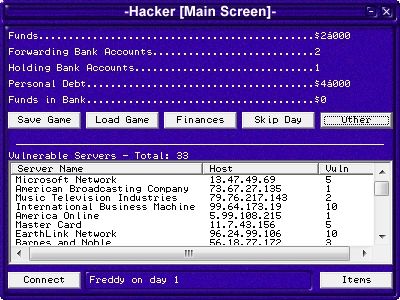
Hacker 1.0 embraces a minimalist, text-driven aesthetic that harkens back to early PC era titles. Rather than flashy 3D models or high-resolution cutscenes, you’re greeted by retro-inspired command prompts, line-drawn schematics of network maps, and occasionally blinking ASCII art. This stylistic choice reinforces the underground, cat-and-mouse vibe between hacker and corporate security.
Though sparse, the graphical interface remains clear and functional. Color-coded alerts flash when alarms are triggered, progress bars slide across the screen as encryption algorithms are being cracked, and simple icons indicate your active tools and upgrades. There’s an undeniable charm to this no-frills approach, especially for players who appreciate an authentic “hacker terminal” ambiance rather than Hollywood gloss.
Performance-wise, the game runs smoothly on almost any hardware, thanks to its lightweight visuals. Load times are negligible, and the responsive UI ensures that keystrokes register instantly—a crucial design element when you’re racing against the clock to thwart a counter-intrusion. While some readers may miss modern visual effects, the stripped-down style is a deliberate choice that serves the gameplay’s core focus.
Story
Hacker 1.0 forgoes an elaborate narrative in favor of an open-ended “you are the hacker” premise. There’s no cinematic intro or branching dialogue trees—just you, your terminal, and a list of high-value targets. This minimalist storytelling frees you to project your own motivations, whether you see yourself as a digital Robin Hood, a corporate saboteur, or simply someone chasing the thrill of illicit exploits.
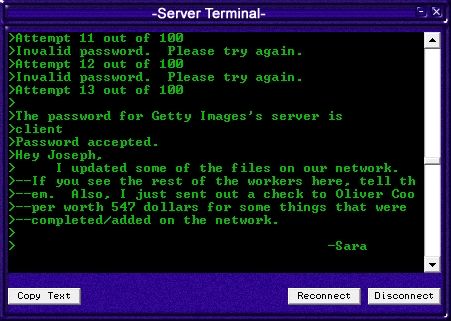
That said, there are hints of lore scattered between the lines. Brief mission descriptions reveal corporate secrets, shady alliances, and occasional references to other shadowy operatives. While these snippets aren’t enough to form a cohesive storyline, they do add context and encourage curiosity. Players who pay close attention to mission logs and in-game newsfeeds will piece together a fragmented tapestry of corporate malfeasance and underground resistance.
Ultimately, the narrative backdrop is serviceable—enough to justify each new target and keep you invested in your virtual crusade. If you’re expecting a fully fleshed-out plot with character arcs, you may feel underwhelmed. However, for those drawn to open-ended, player-driven storytelling, Hacker 1.0’s approach allows your own imagination to fill in the gaps.
Overall Experience
Hacker 1.0 is a niche gem that caters to players seeking a quick-hit, arcade-style challenge rather than a sprawling RPG or high-fidelity simulator. Its blend of reflex-based puzzles and strategic resource management creates an engaging loop that’s easy to pick up and hard to put down. The thrill of outsmarting virtual security measures remains satisfying, especially when you edge closer to a perfect run.
As a free download-only title, the game offers exceptional value for anyone curious about hacking-themed entertainment. There are no paywalls or intrusive microtransactions—just pure, unadulterated gameplay. While its graphics and narrative lean minimalist, these design choices keep the focus squarely on the hacking mechanics, ensuring that every minute spent in the terminal feels purposeful.
In summary, Hacker 1.0 may not teach you real-world cybersecurity skills, nor will it dazzle with blockbuster production values. Instead, it delivers a lean, addictive experience built around the core fantasy of digital infiltration. If you have even a passing interest in cyberpunk aesthetics, puzzle-driven challenges, or resource-based progression loops, this free arcade-style title is well worth your time.


Reviews
There are no reviews yet.