 Retro Replay Retro Replay gaming reviews, news, emulation, geek stuff and more!



Retro Replay Review
Gameplay
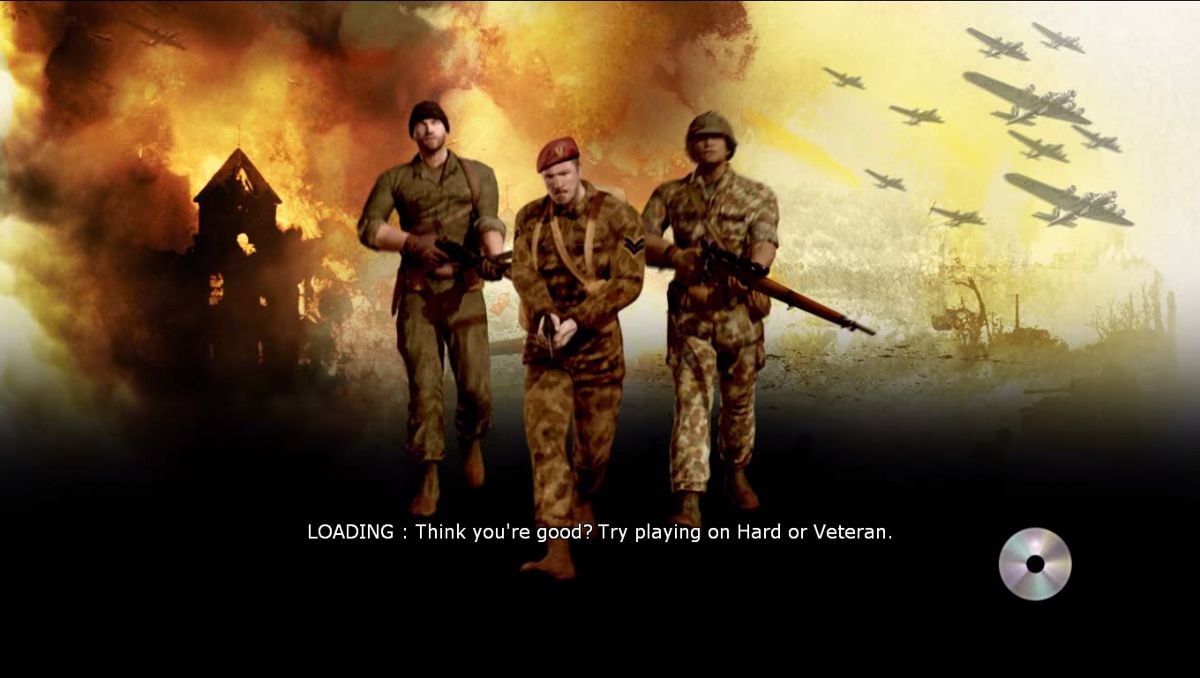
Hour of Victory offers a trio of distinct playstyles, each tied to one of the game’s three protagonists. Taggert, the covert operative, thrives in the shadows—able to sneak past guards, pick locks, and disable alarms with a deft use of stealth mechanics. Ross, the stalwart British commando, charges in guns blazing, shrugging off more damage and manhandling heavy obstacles to forge new paths through the battlefield. Finally, Bull the Army ranger brings a long-range edge, with sniper rifles, demolitions, and a grappling hook that unlocks vertical routes inaccessible to the other characters. This class-based approach encourages multiple playthroughs as you experiment with each hero’s unique toolkit.
(HEY YOU!! We hope you enjoy! We try not to run ads. So basically, this is a very expensive hobby running this site. Please consider joining us for updates, forums, and more. Network w/ us to make some cash or friends while retro gaming, and you can win some free retro games for posting. Okay, carry on 👍)
Level design spans a wide geographic range, from the sun-baked dunes of North Africa to bombed-out European city streets. Each mission offers branching objectives—sometimes you’ll be infiltrating an enemy stronghold under cover of night, other times you’ll lead a frontal assault through open courtyards and vehicle-filled chokepoints. Vehicles, including jeeps, half-tracks, and even tanks, are fully drivable, adding a welcome change of pace when you trade rifles for mounted machine guns. The inclusion of environmental puzzles—like moving crates or using Taggert’s lockpicking to open sealed doors—gives levels a layered feel beyond a simple run-and-gun affair.
On the Xbox 360, Hour of Victory extends its appeal with competitive multiplayer modes: Team Deathmatch, Capture the Flag, and Devastation, a mode that challenges teams to strategically destroy key objectives. While the PC clientele misses out on console-based matchmaking polish, local LAN play remains solidly supported. The multiplayer maps echo themes from the single-player campaign, with narrow alleyways favoring Taggert’s stealth and open plazas where Ross can soak up enemy fire. Though the online community is modest compared to blockbuster shooters, those seeking a class-focused battleground may find Hour of Victory’s modes a welcome diversion.
Graphics
Visuals in Hour of Victory are a mixed bag, reflecting both the game’s ambition and its mid-2000s development cycle. Architectural details stand out—crumbling European cathedrals, muddy trenches, and desert fortifications feel convincingly weathered. Textures on stone walls and sand dunes hold up well at close range, lending authenticity to each theater of war. However, minor texture pop-in and occasional character clipping can break immersion, especially when you’re perched on a rooftop with Bull, preparing to snipe across half a dozen city blocks.
Character models are serviceable if not photorealistic, with distinctive silhouettes that help you identify Taggert, Ross, and Bull at a glance. Animation quality fluctuates: basic combat stances and reload motions are smooth, but certain melee takedowns feel stiff and robotic. Lighting effects shine brightest during night missions, where torchlight flickers and moonlit shadows amplify Taggert’s stealth abilities. Explosions and gunfire produce satisfying screen shake and particle effects, though these can occasionally cause frame rate dips during large-scale skirmishes.
Vehicles receive special attention in the engine, with rotating turrets, shifting suspension, and billowing dust clouds that respond dynamically to terrain. Draw distances are generous enough to appreciate sweeping vistas, although pop-up can occur when surveying the battlefield from high vantage points. Performance on contemporary hardware and consoles remains stable for the most part, but extended firefights—especially in Devastation mode—can tax the engine, leading to brief stutters. Overall, Hour of Victory’s graphical presentation captures the spirit of World War II without pushing the boundaries of its era’s technology.
Story
Set against the vast backdrop of World War II, Hour of Victory weaves its narrative through three intertwined perspectives. Taggert’s missions read like classic espionage—disrupting enemy supply lines, stealing vital intelligence, and disappearing into the night before dawn patrols can react. His storyline injects a sense of tension and subterfuge that contrasts sharply with Ross’s more straightforward combat objectives. Ross operates at the war’s front lines, leading charges to secure beachheads and break through fortified defenses, embodying the era’s “never surrender” ethos.
Bull’s narrative arc explores the unsung heroes of demolitions and reconnaissance. From sabotaging enemy rail networks to scaling cliff faces with his grappling hook, his missions offer breathless set pieces that shake up the campaign’s pacing. Though the characters themselves are not deeply fleshed out—lacking extensive cutscenes or in-depth personal backstories—their gameplay abilities and mission goals give them distinct identities. Brief voice-over exchanges capture the camaraderie and urgency of wartime operations, but veteran gamers may wish for a stronger emotional throughline.
Mission variety helps prevent the story from feeling repetitive: daytime convoys under heavy anti-aircraft fire segue into stealthy nighttime infiltration, while vehicular pursuits in North Africa provide a cinematic counterpoint to snow-bound stealth ops in Europe. The game’s script leans heavily on period-appropriate jargon and radio chatter, reinforcing the historical setting. Though the narrative rarely surprises, it serves as a competent backbone for the action, tying individual levels together with clear objectives and a sense of progression from one theater of war to the next.
Overall Experience
Hour of Victory succeeds in delivering a class-based WWII shooter that has more tactical depth than most run-and-gun contemporaries. The ability to switch between stealth, assault, and sniper roles keeps the campaign fresh and encourages players to adapt their playstyle on the fly. Vehicle sections add variety and a cinematic flair, making each mission feel like a miniature action film. While certain technical rough edges—such as animation hiccups and occasional frame rate drops—prevent it from reaching the status of a genre-defining classic, the core gameplay loop remains engaging.
Graphically, the game strikes a balance between immersive environments and performance stability, though it doesn’t push the envelope of mid-2000s hardware. Storytelling is serviceable, providing enough context to motivate each mission without slowing down the action. Multiplayer fans will appreciate the inclusion of Team Deathmatch, Capture the Flag, and Devastation on the Xbox 360, even if the player base is relatively small compared to blockbuster franchises. For those seeking a more focused WWII experience with clear class roles and vehicle integration, Hour of Victory offers solid value.
Ultimately, Hour of Victory stands out for its ambitious melding of stealth, assault, and demolitions within a single campaign, as well as its nod to classic war film tropes. It may not eclipse the polish of genre giants, but its distinctive character classes and mission variety carve out a niche worth exploring. Potential buyers looking for a historic shooter that emphasizes choice and replayability will find Hour of Victory to be a worthwhile addition to their library.


Reviews
There are no reviews yet.