 Retro Replay Retro Replay gaming reviews, news, emulation, geek stuff and more!





Retro Replay Review
Gameplay
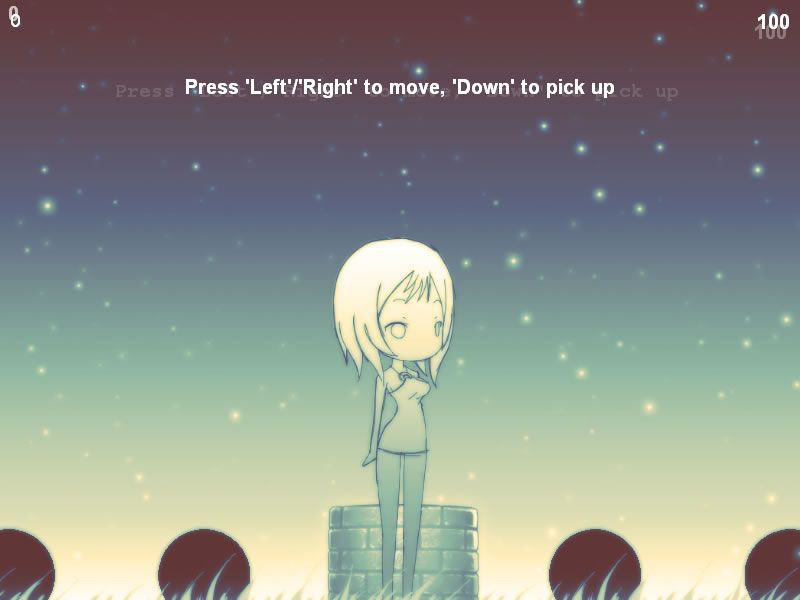
The core loop of How is deceptively simple: guide a young girl across a two-dimensional landscape, pick up colored spheres, and deposit them into a well before the timer runs out. Movement is limited to left and right, with a single button to grab and release balls. Underneath this straightforward premise lies a subtle resource-management system: every time you carry or sprint with a ball, you drain the character’s stamina bar.
(HEY YOU!! We hope you enjoy! We try not to run ads. So basically, this is a very expensive hobby running this site. Please consider joining us for updates, forums, and more. Network w/ us to make some cash or friends while retro gaming, and you can win some free retro games for posting. Okay, carry on 👍)
Players have exactly five minutes to collect and deliver as many balls as possible, making each second precious. You’ll constantly weigh the risk of carrying multiple spheres for larger point hauls against the risk of running out of stamina before you reach the well. When stamina is depleted, you can choose to eat a ball on the spot, instantly restoring your energy at the cost of one point. This push-and-pull decision-making adds surprising depth to what might otherwise feel like a short arcade diversion.
The difficulty curve is gentle at first—you’ll find easy-to-reach balls close to the well—but as time passes and your remaining stamina ebbs, the temptation to dash for distant clusters of spheres grows stronger. Each run feels personal: you’ll learn branch-like shortcuts, memorize the map’s layout, and plan your optimal path. Though the mechanics are intuitive, mastering the stamina balance and timing wall jumps for speed boosts offers a rewarding sense of skill progression.
Graphics
Visually, How adopts a minimalist art style that relies on clean lines, flat colors, and simple animations. The environments shift subtly as you progress—from grassy meadows peppered with rolling hills to rocky outcroppings near the well—while retaining a cohesive color palette of pastels and earth tones. This unadorned approach keeps the focus on gameplay rather than flashy effects.
The protagonist is charmingly animated: her idle breathing, the subtle bounce when she picks up a ball, and the weary slump when stamina runs low all impart personality without excessive detail. Balls glow softly in contrasting hues, making them immediately identifiable against the background. Though there are no elaborate particle systems or dynamic lighting, the game’s modest visual flourishes—like dust kicking up when you sprint—lend it a handcrafted feel.
Camera movement is smooth and stable, tracking the player unintrusively while maintaining sufficient breathing room on either side of the screen. Simple parallax scrolling in the background gives a gentle illusion of depth without causing motion sickness. For a small indie title, the graphical presentation is remarkably polished, demonstrating that thoughtful design often trumps visual complexity.
Story
How forgoes a traditional narrative in favor of an implicit storyline: a lone girl racing against time to save her village from a looming drought by feeding the well. Though the premise is conveyed only through a brief introductory text, the urgency of the task imbues every sprint with purpose. There are no cutscenes or voiceovers—storytelling emerges through gameplay itself.
The lack of explicit dialogue or character backstory invites players to fill in the blanks. Who is this girl, and why does she bear such responsibility? Why are the spheres so crucial to restoring the well’s water? By leaving these questions unanswered, How sparks the imagination, allowing each player to create their own personal narrative as they scurry back and forth under the ticking clock.
With no branching story paths or alternate endings, storytelling here is minimalist but effective. It’s a classic “show, don’t tell” approach: every exhausted gasp and triumphant jump reinforces the stakes. This stripped-down method won’t satisfy those craving epic lore, but it aligns perfectly with the game’s rapid-fire, arcade-style pacing.
Overall Experience
How succeeds in delivering a bite-sized challenge that feels infinitely replayable. Its simple controls and short time limit make it ideal for quick play sessions, whether you’re commuting or taking a coffee break. Despite its brevity, each five-minute run can be remarkably tense and cathartic as you chase personal high scores.
The stamina mechanic elevates the experience beyond mindless fetch quests, injecting meaningful choices into each decision. You’ll find yourself debating whether to power through clusters of balls or retreat for an energy boost, forging a rhythm that rewards both speed and strategy. This balance keeps your heart rate up and your mind engaged throughout.
While there’s no robust multiplayer or lengthy campaign, How’s charm lies in its elegant simplicity. It’s a compact, well-crafted package that offers a refreshing reminder of how much fun you can have with just a handful of core mechanics and a ticking clock. If you’re seeking a short, addictive side-scroller to polish your timing and speedrunning skills, How is a delightful little gem.


Reviews
There are no reviews yet.