 Retro Replay Retro Replay gaming reviews, news, emulation, geek stuff and more!


Retro Replay Review
Gameplay
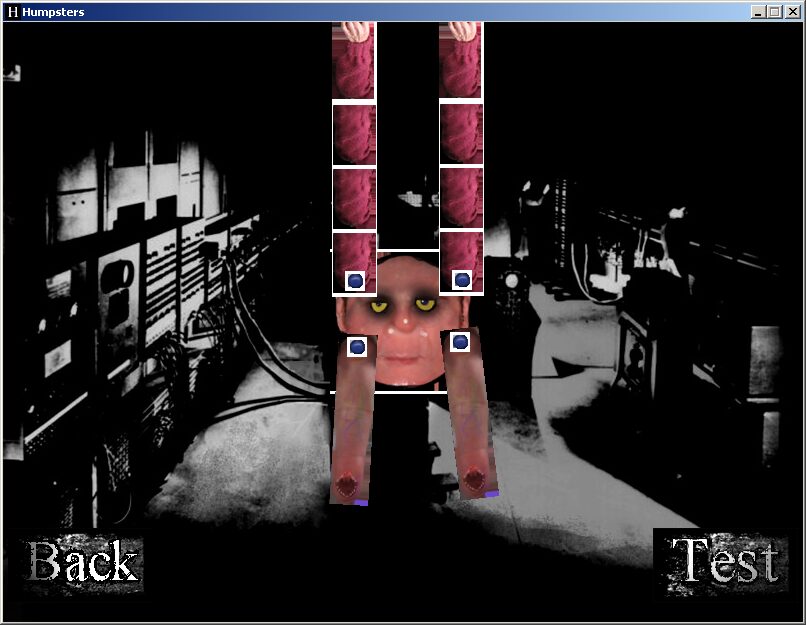
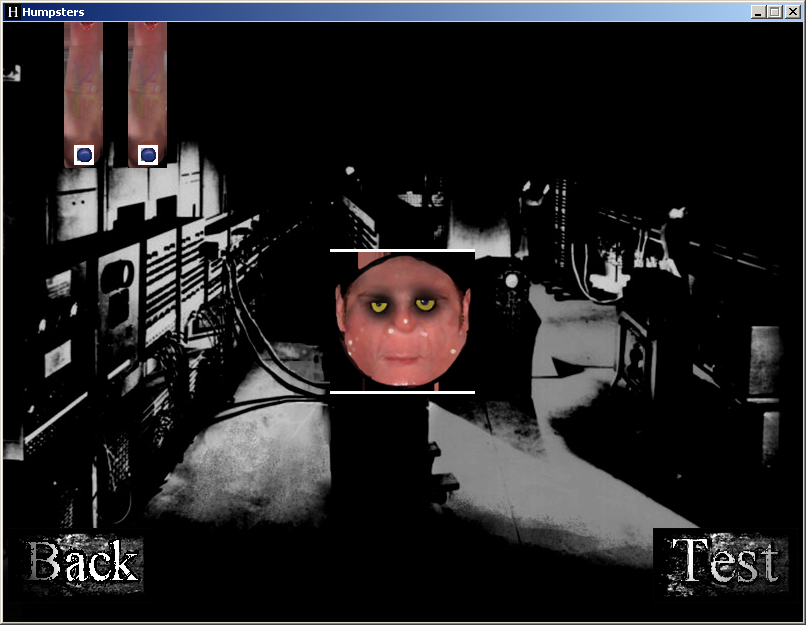
Humpsters places you in the shoes of an eccentric mad scientist tasked with assembling and outfitting your very own “humping monster.” The core gameplay revolves around selecting various appendages—legs, arms, tentacles and more—and positioning them on the monster’s body. Each choice influences how your creation will move and deal damage once unleashed in the arena. This build phase feels akin to a bizarre engineering puzzle, rewarding experimentation as you discover combinations that yield graceful dancers or destructive wrecking balls.
(HEY YOU!! We hope you enjoy! We try not to run ads. So basically, this is a very expensive hobby running this site. Please consider joining us for updates, forums, and more. Network w/ us to make some cash or friends while retro gaming, and you can win some free retro games for posting. Okay, carry on 👍)
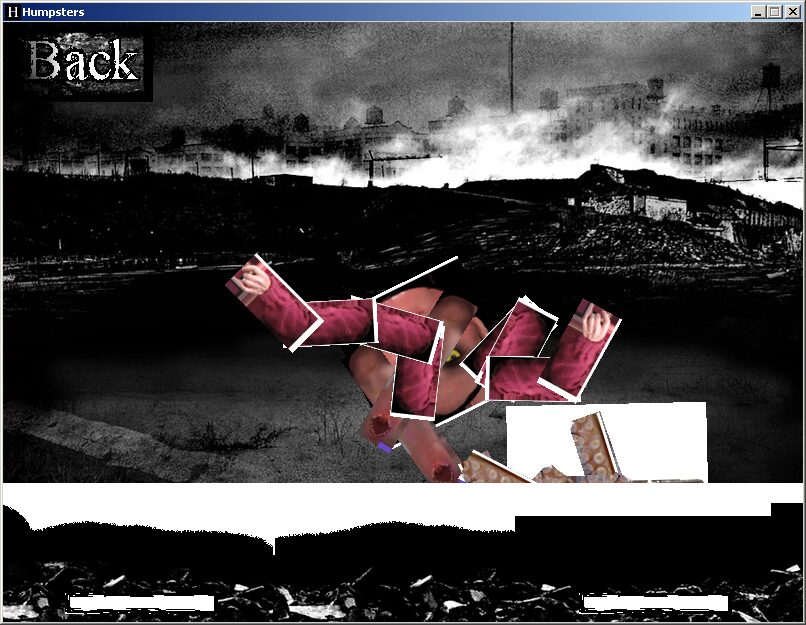
Once your humpster has been configured, the actual battle unfolds entirely automatically. Two monsters gyrate and flail across the stage, colliding in a spectacle that can best be described as a breakdancing contest run amok. Each impact translates into damage, gradually depleting an opponent’s health bar. Watching the mayhem is strangely captivating, though the lack of direct control over your creature during combat can sometimes leave you yearning for more interactivity.
Victorious humpsters claim additional appendages from their defeated foes, giving you fresh customization options for future bouts. This loot-driven progression adds an addictive loop: win fights, collect parts, tinker with new designs, then unleash upgraded creations on stronger competitors. While the combat is hands-off, the strategic depth of designing the optimal layout keeps you invested as you strive to build the ultimate humping machine.
That said, the game’s reliance on randomness and the automated nature of the clashes can lead to moments of frustration. A meticulously balanced monster may be outmatched by a luckier foe whose erratic flailing lands more blows. Players looking for real-time control or tactical commands during combat might find Humpsters’ passive approach lacking. Yet, if you embrace its quirky premise and focus on the engineering aspect, you’ll discover a uniquely entertaining toy box of monstrous dancers.
Graphics
Visually, Humpsters leans into a colorful, slightly cartoony aesthetic that complements its off-kilter theme. Monsters sport exaggerated limbs and expressive textures, making each build feel distinct. The bright arenas—ranging from sandy pits to neon-lit stages—provide a vibrant backdrop for the clashing creatures. While not groundbreaking, the art style delivers consistent charm and humor that align with the game’s tongue-in-cheek premise.
Animation plays a crucial role in selling the humping monster concept, and here the developers mostly succeed. Limbs swivel with elastic exaggeration, and impacts trigger satisfying wobble effects. The result is a kinetic, cheeky dance of destruction that’s both amusing and surprisingly readable. Performance remains stable even when multiple creatures with complex rigs occupy the arena, though loading times can edge into the lengthy side on lower-end systems.
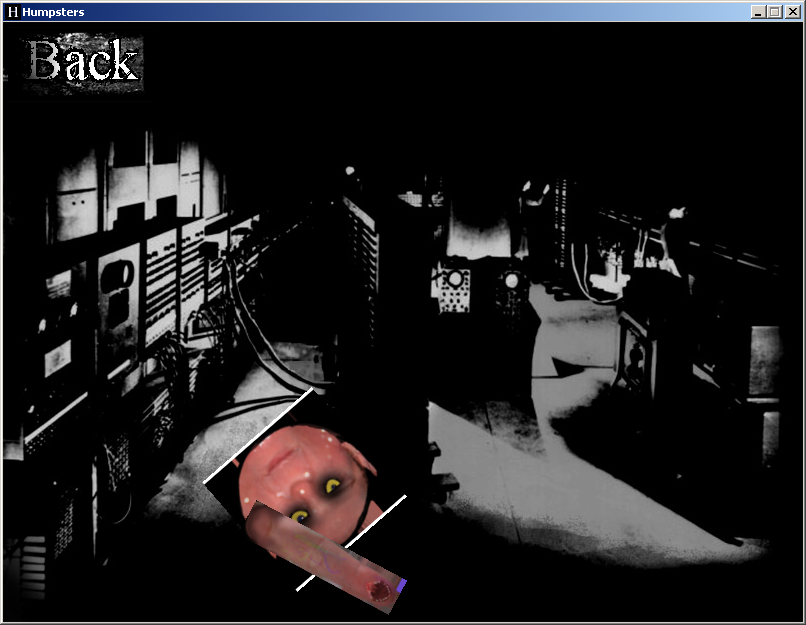
The user interface is clean and intuitive, with clear icons representing each appendage and simple controls for positioning and rotation. A preview window allows you to see how your monster might move, though it can’t fully capture the real-time physics of an actual bout. Sound effects—ranging from comical squishes to triumphant jingles—add personality without overwhelming the senses, rounding out a solid audiovisual package.
If Humpsters has a graphical weak point, it’s the limited environmental variety. After a dozen or so battles, the repetitive backgrounds can feel stale. However, the game’s focus on monster design rather than sprawling landscapes means you’re rarely staring at scenery for long. In any case, the visual fidelity and playful animations ensure every match remains a spectacle worth watching.
Story
Humpsters doesn’t boast a deep narrative or elaborate lore, but it offers just enough context to frame its absurd premise. You assume the role of a mad scientist—an inventor who thrives on chaos and competition. Occasional text snippets and tongue-in-cheek character profiles hint at a shadowy league of fellow “clockmakers” vying for supremacy in the Hump Arena.
Between matches, brief quips and dialogue from rival scientists add flavor to the proceedings, casting each fight as a stepping stone toward your ultimate mechanical monstrosity. While these story beats are lightweight, they provide a playful backdrop that keeps the tone lighthearted. If you’re hoping for branching plots or emotional arcs, you’ll likely be disappointed. But those seeking a basic narrative scaffold to support the gameplay loop will find it serviceable.
The parts you collect carry their own small story hooks—ranging from “Infernous Tentacle” to “Feathered Flail”—each with a tongue-in-cheek description that sparks the imagination. This subtle world-building encourages you to see every new appendage not just as a tool, but as a prized trophy from a fallen adversary. It’s a minimalistic approach, yet it effectively fuels the reward cycle.
Ultimately, Humpsters treats its story more as a garnish than the main course. The real draw lies in creative customization and the spectacle of automated combat. If you come in expecting a deep plot, you’ll leave wanting more. However, if whimsical science-fiction humor and over-the-top monster battles sound appealing, the narrative strikes the right balance between functional and fun.
Overall Experience
Humpsters stands out for its sheer novelty. By turning monster creation into a physics-based dance competition, it offers a gameplay experience unlike most arena fighters. The strategic layer of choosing and placing appendages adds an addictive puzzle element, while the automated bouts provide humorous, unpredictable outcomes that keep you watching.
That said, the hands-off nature of combat is a double-edged sword. It liberates you from rote button mashing but also removes any sense of skill-based mastery during battles. Players who enjoy direct control and frenetic inputs may find themselves on the sidelines, cheering rather than participating. Conversely, those who relish the planning stage and enjoy watching their creations in action will find plenty to love.
The progression loop—collect new parts, redesign, and rematch—drives engagement and gives a tangible sense of growth. Minor drawbacks like repetitive arenas and occasional load times are forgivable in light of the game’s quirky charm. It’s a niche title, best suited for players with a taste for dark humor and experimental gameplay.
In sum, Humpsters delivers a memorable, if unconventional, package. It’s not for everyone, but for those intrigued by the idea of crafting “humping monsters” and letting them duke it out in absurdist spectacles, it offers a unique twist on the arena fighter formula. Dive in prepared to tinker, watch the chaos unfold, and embrace the delightful weirdness that defines the Humpsters experience.



Reviews
There are no reviews yet.