 Retro Replay Retro Replay gaming reviews, news, emulation, geek stuff and more!
Retro Replay Review
Gameplay
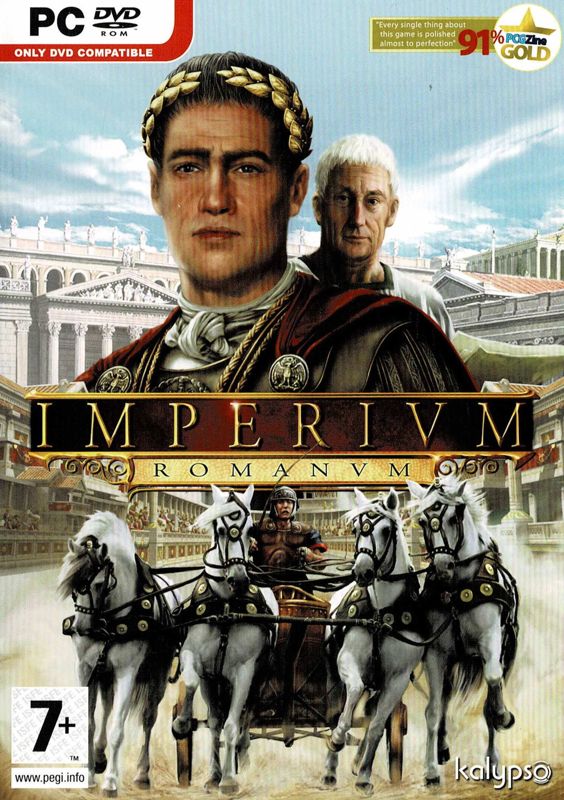
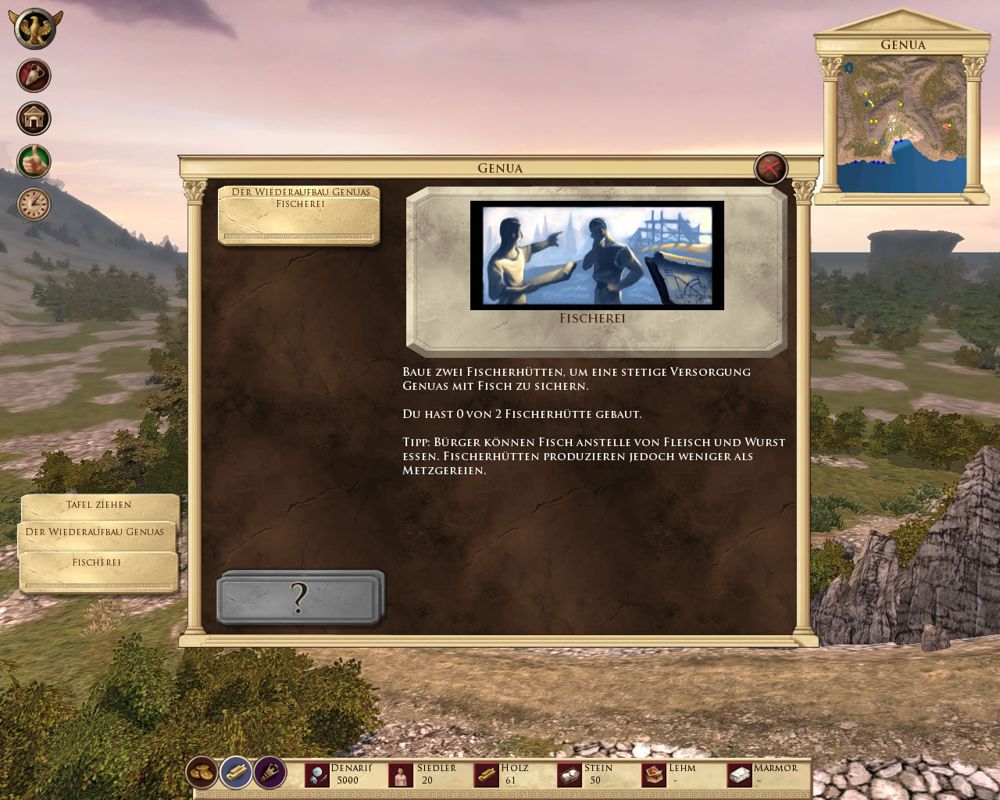
Imperium Romanum places you in the role of a Roman city planner, challenged to design and manage cities at the peak of the Empire’s power. Rather than focusing on warfare, the game emphasizes economic micromanagement: from harvesting raw materials to refining them in processing industries and distributing finished goods to your citizens. Every decision, from where to site your granaries to the layout of your aqueduct network, feeds into a tight logistical loop that demands careful planning and foresight.
(HEY YOU!! We hope you enjoy! We try not to run ads. So basically, this is a very expensive hobby running this site. Please consider joining us for updates, forums, and more. Network w/ us to make some cash or friends while retro gaming, and you can win some free retro games for posting. Okay, carry on 👍)
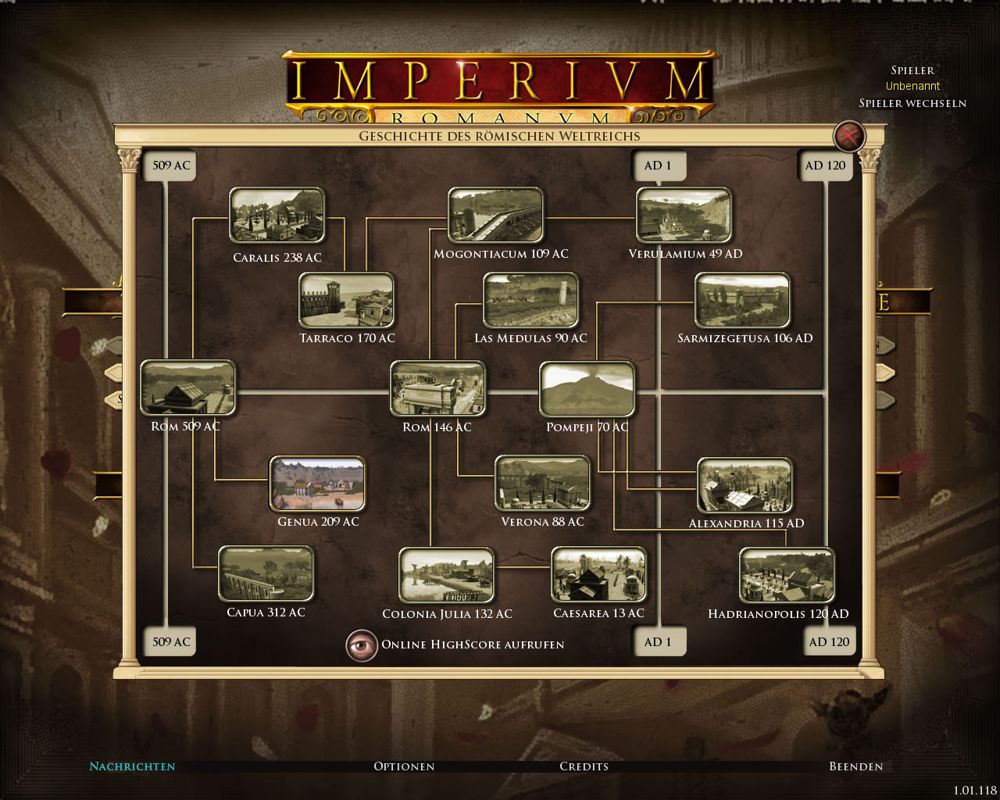
A unique twist in Imperium Romanum is its card-based mission system. Instead of a rigid, linear campaign, you hold a hand of objective cards and choose when to reveal each challenge. If you’d like to settle your city for hours before accepting your first mission, you can. Alternatively, ambitious planners can spring multiple missions upon themselves at once. Optional bonus quests further incentivize creative play, rewarding you with extra resources or building skins when you fulfill secondary goals.
Though combat exists, it plays only a marginal role. Military edifices and training grounds are required to keep border patrols safe, but large-scale battles are abstracted away. This keeps the focus squarely on constructing temples, schools, taverns, and labor districts. Between resource chains and citizen satisfaction metrics—such as food variety, entertainment, and religious devotion—there’s always another layer of optimization waiting in the wings.
Finally, Imperium Romanum’s difficulty curve caters to both newcomers and strategy veterans. Early scenarios guide you through resource basics, while later missions demand tighter production chains and intricate building layouts. Whether you’re rebuilding a small frontier town or overseeing grain distribution to Rome itself, the pacing rewards patience and strategic thinking.
Graphics
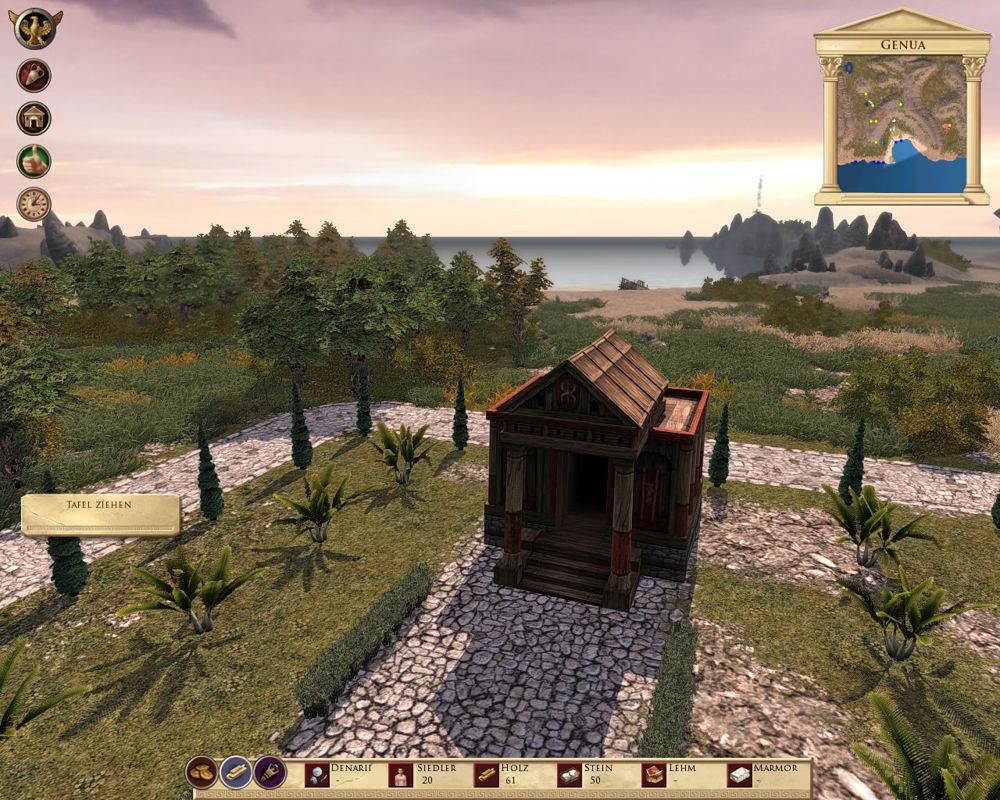
Visually, Imperium Romanum captures the look and feel of ancient Italy and the broader Mediterranean with its sun-drenched stonework, terracotta rooftops, and rolling countryside. Building models are richly detailed: you can admire the engraved reliefs on civic buildings or watch workers haul amphorae across cobblestone streets. Zooming in reveals bustling market stalls, animated citizens, and livestock grazing in pastures.
The game employs a warm, earthy color palette that evokes the era’s iconic architecture. Environmental effects—such as dust kicked up by chariot wheels, drifting banners in the breeze, and dynamic lighting at dawn and dusk—add ambiance without sacrificing performance. While not pushing the boundaries of next-gen graphics, Imperium Romanum’s art direction delivers an authentic Roman atmosphere that keeps you invested in your city’s day-to-day operations.
Animations are smooth and purposeful: grain carts roll along assigned roads, legionnaires march in formation, and temple ceremonies play out in subtle, looped vignettes. Even decorative monuments, like triumphal arches and colonnaded forums, have small particle effects—torchlight flickers and smoke drifts from sacrificial altars. These touches, while modest, reinforce the living-world illusion of your city.
On the downside, the terrain textures and unit models can feel repetitive over long play sessions. If you frequently start fresh cities, you’ll quickly recognize the same tile sets and building skins. However, optional decorative upgrades—unlocked via bonus missions—let you vary architectural motifs and introduce new color schemes, helping to refresh the visual landscape.
Story
Imperium Romanum does not offer a traditional narrative-driven campaign, but it weaves a cohesive historical tapestry through its mission cards. Each objective hints at real-world events—from the founding of colonies in Gaul to feeding the Eternal City during times of famine. Although the storyline is non-linear, it evokes a sense of progression as you rise from a humble frontier administrator to a respected senatorial planner.
The card mechanics occasionally reveal snippets of lore: a mission card may describe an upcoming barbarian raid, a religious festival, or a demand from the emperor himself. These narrative beats add context to otherwise mechanical tasks, motivating you to meet resource quotas and public order requirements so you can “unlock” the next piece of the Roman saga.
That said, if you seek a rich cast of characters or deep plot twists, you might find Imperium Romanum’s storytelling lightweight. Your persona remains the silent architect, and interactions with historical figures are limited to brief mission flavor text. Still, the game excels at portraying the scope of Roman civic duties, from constructing road networks to orchestrating public spectacles in the amphitheater.
For history enthusiasts, the game’s documentation and building descriptions offer glimpses into period technology, social structures, and religious practices. Each new structure you erect brings with it a short encyclopedia entry—transforming the game into a modest educational experience alongside its core simulation gameplay.
Overall Experience
Imperium Romanum is a satisfying city-building sim for players who relish meticulous economic design and period authenticity. The self-paced, card-driven mission system sets it apart from more rigid strategy titles, allowing you to craft your own narrative arc as a Roman planner. Every decision—whether optimizing grain supply routes or placing civic buildings to maximize citizen contentment—feels meaningful.
While combat is almost entirely abstracted, the strength of the game lies in its depth of resource management and the tangible satisfaction of seeing your city thrive. The visual presentation, complete with detailed architecture and ambient animations, immerses you in the era, even if the graphical repetition can wear thin over hundreds of hours.
Story and character depth may be secondary, but the mission cards and historical building descriptions offer enough flavor to keep history buffs engaged. The absence of a free-build sandbox mode may disappoint some, but the mix-and-match approach to mission timing gives you the freedom to experiment with different city layouts and growth strategies.
Ultimately, Imperium Romanum delivers a robust, focused simulation experience. If you crave a game that emphasizes economic logic, flexible objectives, and classical aesthetics, this title stands out among city-building offerings. It’s a compelling blend of historical ambiance and strategic rigor—ideal for anyone eager to orchestrate the rise of Roman civilization, one aqueduct at a time.


Reviews
There are no reviews yet.