 Retro Replay Retro Replay gaming reviews, news, emulation, geek stuff and more!



Retro Replay Review
Gameplay
Kohan: Ahriman’s Gift offers a fresh take on real-time strategy by focusing on cohesive units called Companies rather than individual soldiers. Each Company is led by a Captain, who can be customized with equipment and special abilities, allowing for deeper strategic planning. Resource management is streamlined; instead of micromanaging dozens of villagers, you secure resource nodes that feed directly into your war machine, keeping the pace brisk and focused on battlefield tactics.
(HEY YOU!! We hope you enjoy! We try not to run ads. So basically, this is a very expensive hobby running this site. Please consider joining us for updates, forums, and more. Network w/ us to make some cash or friends while retro gaming, and you can win some free retro games for posting. Okay, carry on 👍)
The game introduces a dynamic faction system with unique playstyles for the Kohan, the Shadow, and the new Ahriman-aligned forces. Campaign missions are designed to teach you how to field your armies effectively, from early-game harassment tactics to late-game siege strategies. A strong AI opponent constantly adapts to your movements, forcing you to rethink your approach rather than rely on stale rush tactics or static defenses.
Magic and special abilities add another layer of depth. Captains and mages can cast region-wide buffs or devastating area-of-effect spells, turning the tide of battle when used correctly. Spellcasting requires mana harvested from specific resource points, compelling you to contest these locations and manage your economy under pressure. This interplay keeps matches engaging and rewards players who balance offense, defense, and arcane power.
The multiplayer component, though reflecting the technology of its time, remains surprisingly robust. Skirmish matches against human opponents highlight the game’s balance and strategic nuance. Whether you’re coordinating flanking maneuvers with allies or exploiting the Shadow’s stealth units for a sneaky base strike, Kohan’s design ensures that no two battles feel the same.
Graphics
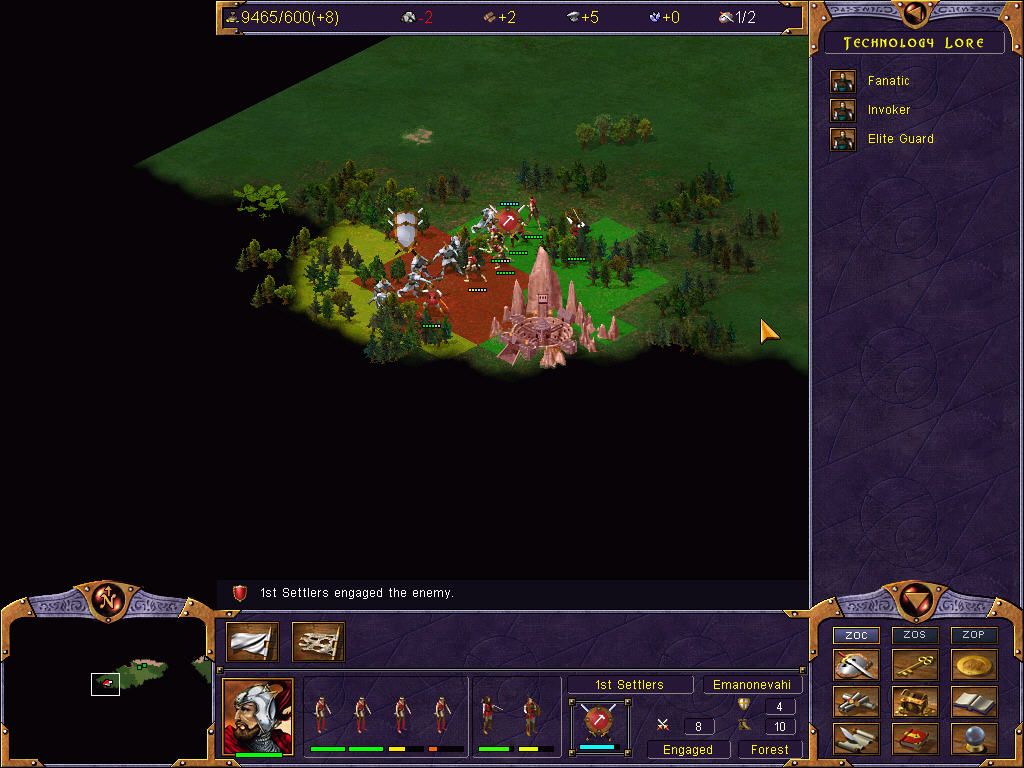
Released in 2001, Kohan: Ahriman’s Gift presents an isometric view with richly detailed terrain. Rolling hills, winding rivers, and dense forests are all rendered with enough clarity to guide unit placement and line-of-sight decisions. While textures may feel dated compared to modern standards, the art direction remains evocative, drawing you into the war-scarred world of Khaldun.
Unit models and animations are smooth and distinct. Each Company type, from heavy infantry to nimble skirmishers, has its own silhouette and movement style, reducing confusion during large-scale engagements. Spell effects—glowing runes underfoot, swirling dark energies, blazing fireballs—pop against the muted terrain, making magical combat a visual highlight.
The user interface is clean and functional. Vital information—unit health, resource counts, and active abilities—is presented in a non-intrusive bar along the bottom of the screen. Context-sensitive tooltips explain faction-specific units and upgrades, which helps new players acclimate quickly without breaking the flow of gameplay.
Cutscenes between missions blend painted backgrounds with real-time rendered units, establishing narrative stakes without lengthy cinematic interludes. Though resolution limitations of the era are apparent, the color palette and character designs convey the stark contrast between the mortal world of Khaldun and the creeping darkness of Ahriman’s forces.
Story
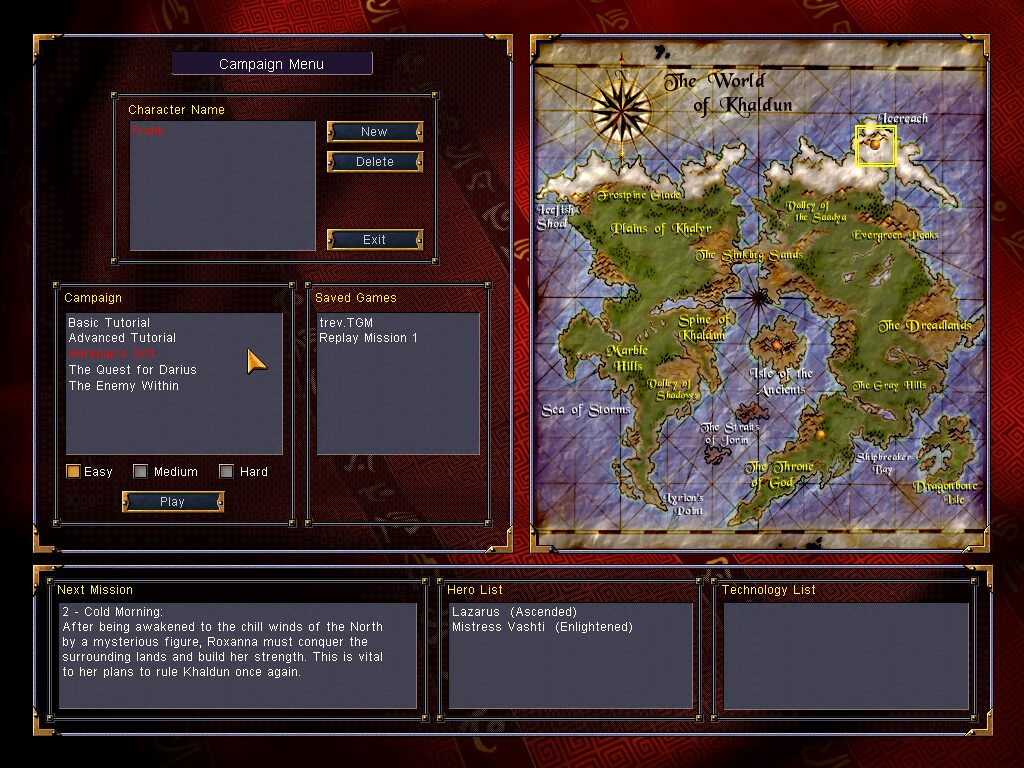
The narrative of Ahriman’s Gift unfolds across three intertwined campaigns. At its core lies the world of Khaldun, a realm that has known peace for generations, unaware that the forces of the Shadow are reawakening. The lore effectively sets the stage, detailing how immortal powers—both noble and vile—circle the mortal plane, ready to resume their ancient guerra.
Roxanna Javidan, chosen as the Shadow’s champion, serves as a compelling antagonist. Her unwavering conviction and access to dark magic provide a chilling counterpoint to the noble Kohan captains. As you progress, these opposing perspectives flesh out the stakes of the impending conflict, making each victory and setback feel narratively meaningful.
Missions are tied closely to story beats. Early objectives might involve rallying scattered Kohan settlements or defending resource strongholds, while later quests escalate to raiding ancient temples and confronting demonic hordes. The pacing ensures that new gameplay mechanics—such as Ahriman-specific units—are introduced naturally as the plot demands.
Dialogue and mission briefings are well written, striking a balance between epic fantasy and military precision. Voice-overs, though limited, add personality to key characters. While the overall plot may follow familiar high-fantasy tropes, its execution and integration with gameplay elevate it from being merely functional to genuinely engaging.
Overall Experience
Kohan: Ahriman’s Gift remains a standout title in the RTS genre thanks to its focus on company-based tactics, streamlined economy, and diverse faction mechanics. The learning curve is gentle yet rewarding, with early missions teaching core systems before challenging you with intricate scenarios that demand adaptive thinking and resource control.
Despite its age, the game’s atmosphere holds up well. The blend of isometric visuals, evocative music, and thoughtful sound design immerses you in the struggle for Khaldun. Whether you’re a veteran strategist seeking a fresh challenge or a newcomer enticed by lore of immortal conflicts, Kohan delivers a campaign experience that feels both grand and personal.
Replay value is strong, bolstered by skirmish play and the allure of unlocking every captain upgrade and spell. Multiplayer matches, when you can find opponents, showcase the game’s balanced factions and strategic depth. Even today, organizing a quick match reveals how well the core mechanics have aged.
In sum, Ahriman’s Gift is more than a historical footnote; it’s a thoughtfully designed RTS with unique twists that still resonate. Its emphasis on macro-level decisions, coupled with a compelling shadow vs. light narrative, makes it a worthwhile addition to any strategy enthusiast’s library.


Reviews
There are no reviews yet.