 Retro Replay Retro Replay gaming reviews, news, emulation, geek stuff and more!

Retro Replay Review
Gameplay
Leave Home is built around short, adrenaline-fueled sessions that challenge you to rack up as many points as possible within a fixed time frame. Each run feels urgent, pushing you to master both offense and evasive maneuvers before the clock runs out. The satisfaction comes from beating your personal best, and the game’s structure makes each minute count.
(HEY YOU!! We hope you enjoy! We try not to run ads. So basically, this is a very expensive hobby running this site. Please consider joining us for updates, forums, and more. Network w/ us to make some cash or friends while retro gaming, and you can win some free retro games for posting. Okay, carry on 👍)
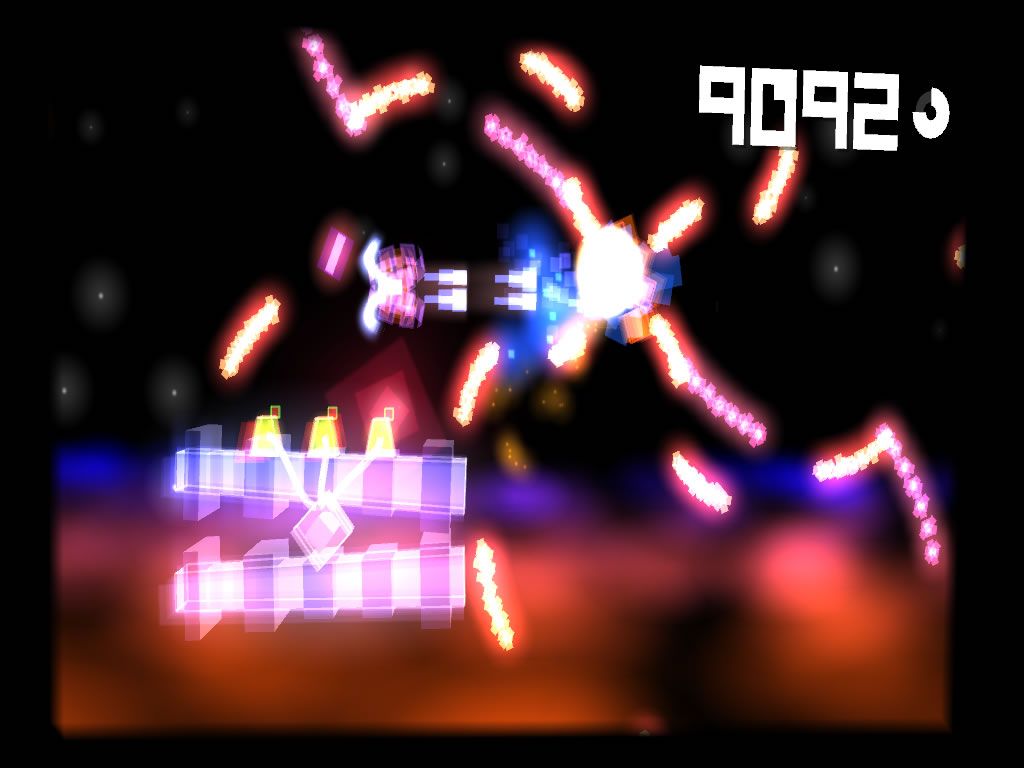
The dynamic difficulty system adapts to your performance in real time: perform well and the screen floods with more enemies for higher-point potential; struggle and the game eases up to help you recover. This feedback loop keeps every session fresh, as no two runs will present the same density or types of foes. Enemies drop blue chips when destroyed, offering extra reward for taking calculated risks in crowded battlefields.
Your ship can explode indefinitely, but each death drains the Anger Meter and enforces a brief respawn delay. This mechanic encourages cautious play without punishing mistakes too harshly. Movement is freeform across the screen, yet sudden environmental distortions force you to adapt on the fly—switching between weaving through narrow corridors and dodging volleys in a wide-open arena.
The Split Shot adds a strategic layer to the core shooting, letting you hold the fire button to reverse your firing arc or tap to lock it at a custom angle. Mastering this ability is essential for juggling incoming enemies from multiple directions and maximizing point returns. Overall, Leave Home’s gameplay loop is simple to learn but endlessly deep for players chasing perfection.
Graphics
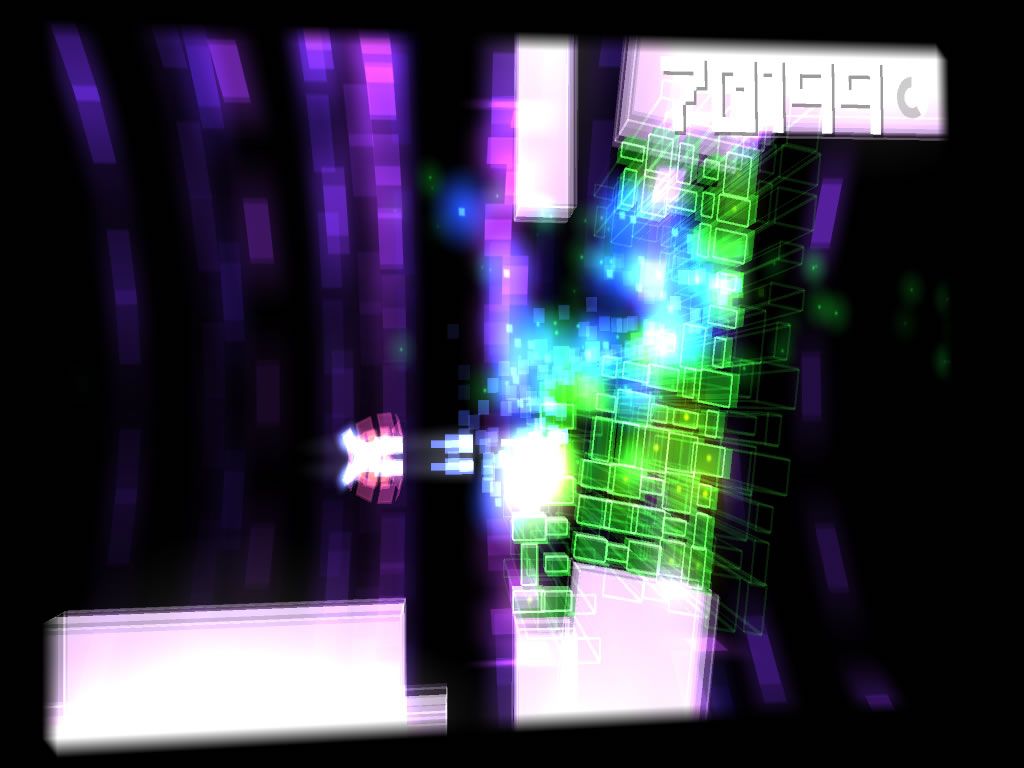
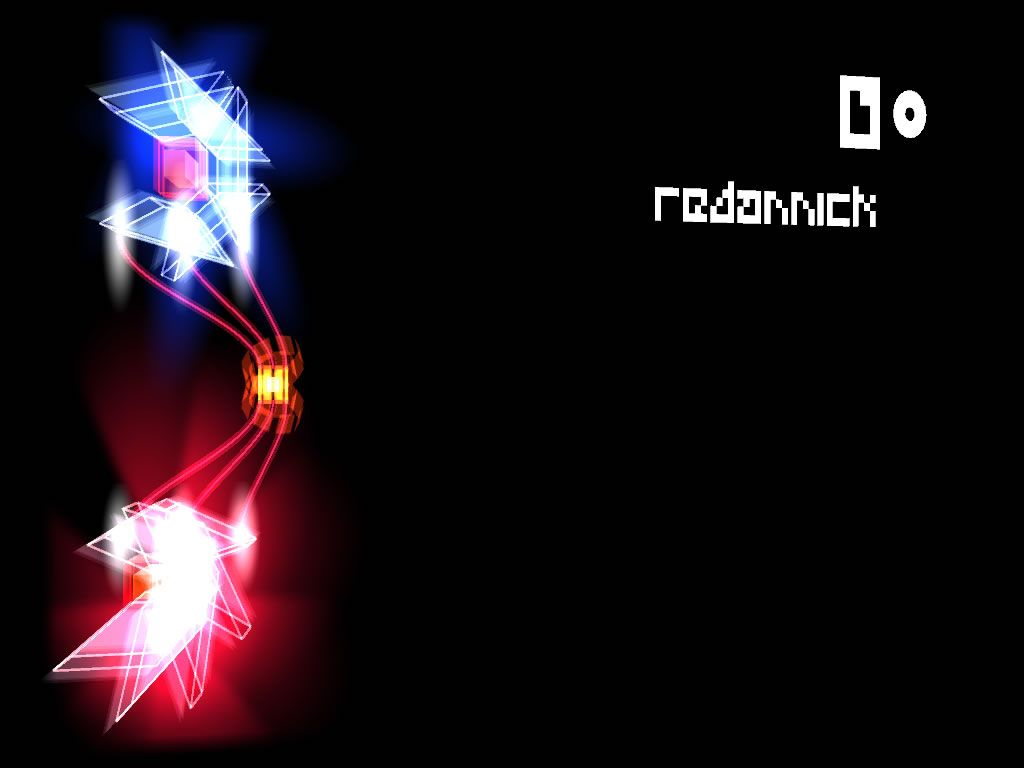
Visually, Leave Home embraces an abstract aesthetic where ships, foes, and hazards are represented as glowing shapes drenched in vibrant color and heavy blur. This stylized approach keeps the screen legible even when chaos erupts, while the blur effect adds a sense of speed and intensity. It’s less about realistic detail and more about communicating information through color and motion.
Dynamic environment distortions—such as warped grids or shifting geometries—are signaled by clear visual cues, ensuring you never feel blindsided. These moments break the routine of linear shooting, requiring quick adaptation to new spatial relationships. Randomized backgrounds and color palettes keep each session visually distinct, preventing fatigue over long play sessions.
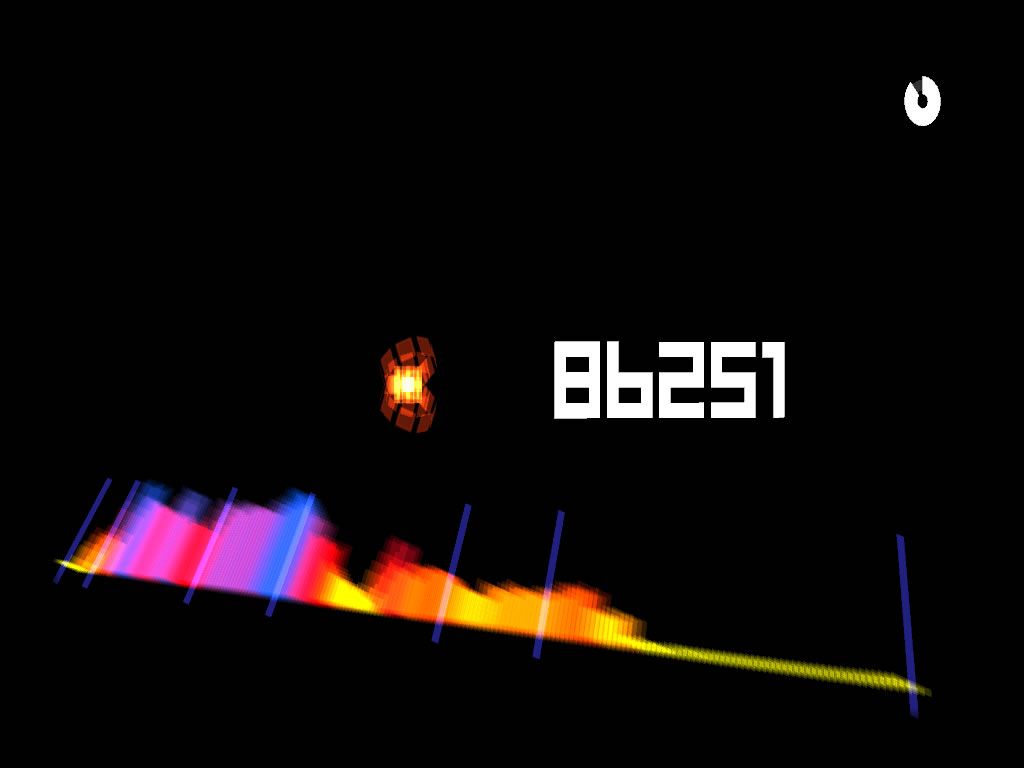
The user interface is minimalist but effective: your score, timer, and Anger Meter are always in view without cluttering the action. At the end of each run, a full-screen graphic of the Anger Meter provides a satisfying recap of how close you came to “overheating” under pressure. Unlock screens and challenge menus follow the same clean design, making progression feel seamless.
While some may miss detailed art or character design, the abstraction on offer here perfectly aligns with Leave Home’s focus on pure arcade thrills. The bold colors and motion blur keep you engaged, and the shifting environments lend a hypnotic quality that draws you into consecutive runs.
Story
Leave Home doesn’t rely on a traditional narrative or lore-heavy cutscenes—instead, it tells its story through gameplay and progression. The absence of a fixed backstory invites players to project their own motives onto the mission: are you escaping pursuit, testing your own limits, or simply surfing the cosmic grid for points?
The Anger Meter serves as a kind of emotional barometer, charting your struggle against overwhelming odds. Watching it deplete with each death creates a subtle storyline about managing frustration and retaining composure under fire. In a way, every run becomes a personal tale of rising tension and release when the timer finally hits zero.
Additional challenges, unlockable modes like Turbo and Full difficulty, and the five test stages introduce new “chapters” of the experience. Completing these milestones feels like turning pages in an abstract novella, where each achievement represents another victory in your ongoing duel with the game’s brutal scoring system.
Overall Experience
Leave Home excels as an arcade-style score chaser, combining quick sessions with a deep system of dynamic difficulty and strategic shooting mechanics. The abstract visuals and minimalist interface let the core gameplay shine, while the Anger Meter adds emotional stakes to every death. It’s a distilled space shooter experience that rewards both quick reflexes and thoughtful risk-taking.
Whether you’re a casual player looking for bite-sized bursts of action or a hardcore competitor hunting global leaderboard spots, Leave Home offers a compelling loop. The unlockable modes and challenges provide long-term goals beyond the standard sessions, ensuring the pursuit of mastery remains engaging.
For fans of classic arcade shooters and anyone who thrives on beating high scores, Leave Home delivers a focused, exhilarating package. Its blend of simplicity and depth makes it easy to pick up, hard to put down, and worth returning to again and again.



Reviews
There are no reviews yet.