 Retro Replay Retro Replay gaming reviews, news, emulation, geek stuff and more!


Retro Replay Review
Gameplay
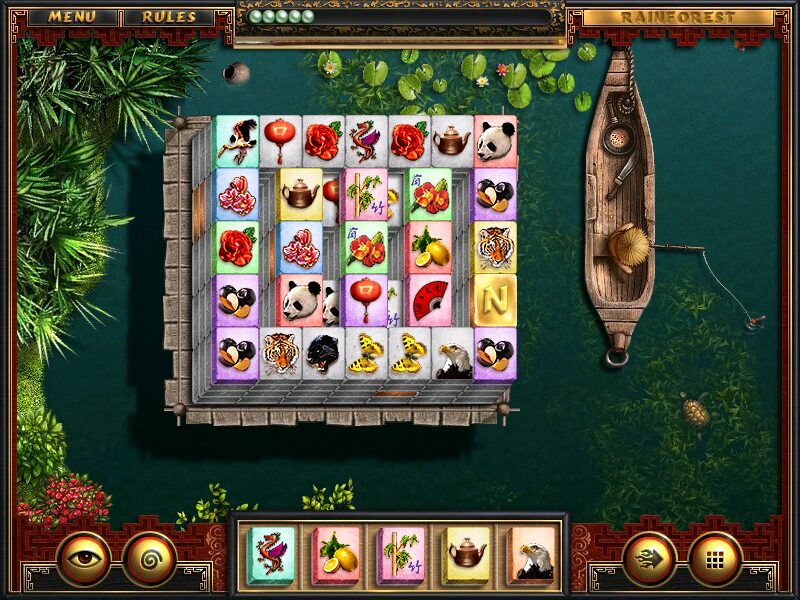
Liong: The Lost Amulets offers a robust foundation for both mahjong purists and casual puzzle lovers by dividing its core experience into Traditional and Adventure modes. In Traditional mode, players are presented with a classic mahjong challenge: a pile of tiles displaying pictures must be matched with corresponding pieces at the bottom of the screen. Only tiles with one free side—left or right—can be removed, adding a layer of strategic foresight as you plan each match to clear the board and spell out the word shown at the top.
(HEY YOU!! We hope you enjoy! We try not to run ads. So basically, this is a very expensive hobby running this site. Please consider joining us for updates, forums, and more. Network w/ us to make some cash or friends while retro gaming, and you can win some free retro games for posting. Okay, carry on 👍)
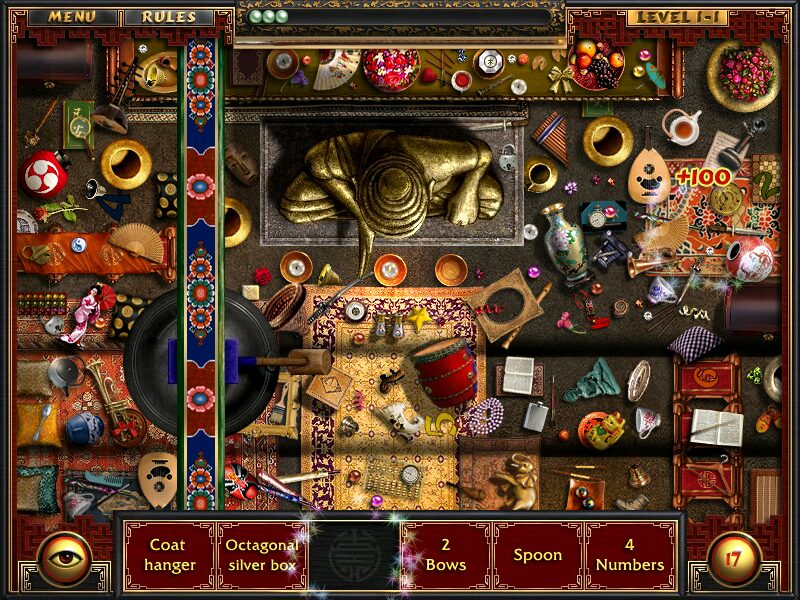
Adventure mode spices up the formula by introducing randomly selected mini-games between mahjong levels. A spinning wheel decides whether you’ll tackle Bingo, Hidden Object searches, a Memory concentration round, or a Tangram-style Tiling puzzle. These diversions not only break up the rhythm of tile-matching but also offer unique challenges that test different cognitive skills—from quick visual scanning to spatial reasoning.
Resource management is another compelling layer: scattered jade pearls can be spent on four distinct power buttons at the bottom of the screen. The Eye button (1 pearl) highlights removable tiles, the Twirl button (3 pearls) shuffles the layout, the Fire button (4 pearls) blasts away ten tiles, and the Grid button (5 pearls) eliminates fifteen. Balancing pearl collection and strategic use of these powers adds tension and decision-making to every level.
Difficulty ramps up gradually, introducing denser tile formations and more complex word targets as you progress. The mini-games also scale in challenge, with larger boards, subtler hidden-object differences, and trickier tangram placements. Whether you’re racing to clear your board under a time limit or taking a leisurely approach to match words, the gameplay loop remains satisfying and varied.
Controls are intuitive and responsive, with click-and-drag or tap-to-select options depending on your platform. Clear audio cues accompany tile removals and power-up activations, reinforcing your progress and signaling when pearls are earned. All of these design choices work in concert to keep you engaged, whether you have five minutes or an hour to play.
Graphics
The visual presentation of Liong: The Lost Amulets strikes a fine balance between readability and thematic flourish. Mahjong tiles are crisply rendered, each bearing distinct pictograms that are easy to distinguish at a glance. The word tiles at the bottom are displayed in a clean font that contrasts well against the richly colored backgrounds, ensuring that even lengthy letter strings remain legible.
Adventure mode transports you to a variety of exotic locales—ancient temples, verdant jungles, and misty ruins—each illustrated with hand-painted detail. These backdrops lend a sense of progression and exploration, so you’re not just clearing tiles but advancing through a cohesive world. Occasional animated flourishes, such as the wheel spin or the pearl collection sparkles, add a touch of polish without ever feeling gaudy.
Mini-games receive their own graphical treatments to suit their mechanics. The Bingo grid is bold and high-contrast, the hidden-object screens are densely packed with colorful trinkets, and the memory matches feature the same polished tile art as the main game. The Tiling puzzles present geometric shapes in bright, solid hues that stand out against the neutral playfield. Overall, visual clarity is never sacrificed for style.
Animations are smooth and snappy, from the satisfying “click” of matching pairs to the dramatic blast when the Fire button is activated. Loading times between levels are minimal, and transitions are accompanied by subtle soundscapes that reinforce the game’s adventurous tone. Whether you’re playing on a large monitor or a tablet, the art assets scale beautifully to maintain crisp lines and vibrant colors.
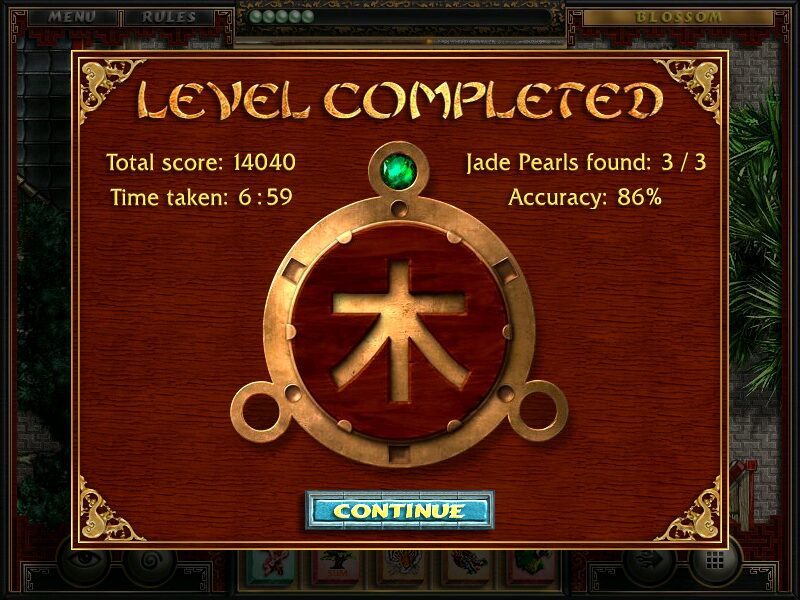
Even though Mahjong-style games can sometimes feel repetitive visually, Liong: The Lost Amulets keeps the aesthetics fresh by unlocking new tile sets and backdrops as you collect more amulets. This sense of visual reward motivates you to progress further, making every completed level feel like a small victory in both gameplay and style.
Story
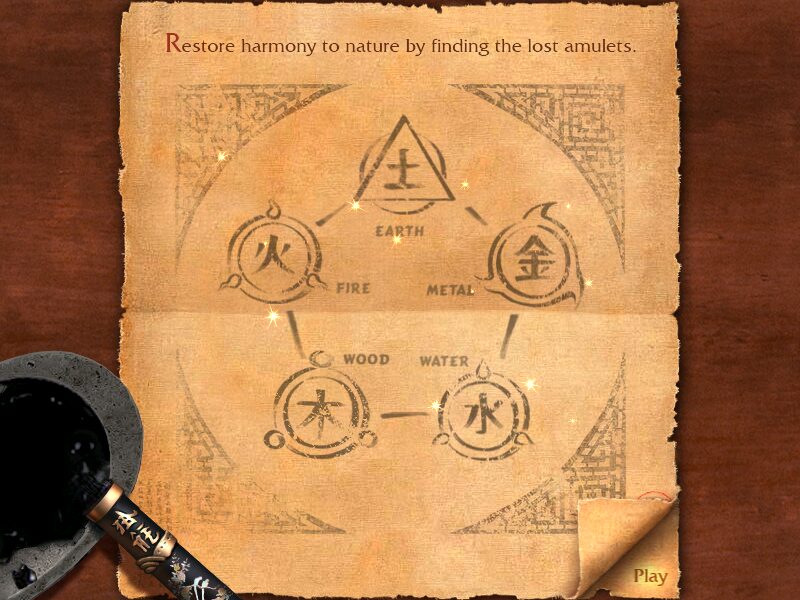
While the primary focus of Liong: The Lost Amulets is its puzzle mechanics, a lightweight narrative threads through the experience, giving context to each mahjong layout and mini-game. You assume the role of an intrepid explorer named Liong, on a quest to reclaim sacred amulets scattered across ancient temples. Each level represents a new chamber, courtyard, or hidden shrine where these artifacts lie in wait.
Between puzzle stages, short narrative vignettes—delivered through elegantly illustrated scrolls—offer glimpses of local legends, guardian spirits, and the mystical powers behind the lost amulets. These story interludes aren’t novel-length, but they infuse the puzzles with purpose and encourage players to press onward in hopes of uncovering the next revelation.
The game’s tone strikes a charming balance: it’s lighthearted enough to welcome casual gamers, yet atmospheric enough to satisfy those who crave a sense of adventure. You’ll encounter whimsical characters—a talking parrot guide, for example—who offer playful commentary and occasional hints. These narrative touches deepen immersion without ever detracting from the core mahjong experience.
As you progress, the stakes ramp up: the final amulets are said to unlock an ancient portal, and you’ll find yourself racing against an unseen rival. The story culminates in a grand reveal that ties together the collected tokens and gives a satisfying conclusion to your journey. Even if you’re here mainly for the puzzles, the narrative provides just enough flavor to keep each match meaningful.
Replay value also benefits from story-linked unlockables: special tile sets and secret mini-games become available only after reaching certain plot milestones. This encourages you to revisit earlier levels with new challenges in mind, extending the life of the title beyond the first playthrough.
Overall Experience
Liong: The Lost Amulets delivers a well-rounded puzzle adventure that appeals to both dedicated mahjong enthusiasts and casual gamers seeking bite-sized challenges. The dual-mode structure ensures you can either dive into pure tile-matching or enjoy a richer variety of mini-games that break up the routine. This flexibility makes it a great fit for quick sessions on mobile devices or longer marathon plays on desktop.
The addition of jade pearls and power buttons adds strategic depth without overcomplicating the interface. Collecting and spending resources feels rewarding, and you’ll find yourself weighing risk versus reward every time a tricky board appears. Mini-games not only provide welcome pacing changes but also serve as palate cleansers that keep the experience fresh.
Graphically, the game shines with vibrant art, smooth animations, and thematic backdrops that reinforce the sense of an archaeological adventure. The story, while not the main draw, offers enough narrative structure to keep you invested in Liong’s quest for the lost amulets. Cutscenes and character interactions—though brief—lend charm and motivation to continue exploring.
On the downside, seasoned mahjong players may find the core matching mechanics familiar, and Adventure mode’s random mini-game selection can occasionally feel uneven in pacing. However, these minor quibbles are overshadowed by the game’s overall polish, intuitive controls, and the sheer variety of puzzles on offer.
In conclusion, Liong: The Lost Amulets stands out as a polished, engaging take on the classic mahjong genre. Its mixture of traditional tile-matching, diverse mini-games, and light narrative spine creates an experience that’s easy to pick up yet hard to put down. Whether you’re aiming to clear levels, collect amulets, or simply unwind with colorful puzzles, this title delivers steady entertainment and plenty of replay value.


Reviews
There are no reviews yet.