 Retro Replay Retro Replay gaming reviews, news, emulation, geek stuff and more!
Retro Replay Review
Gameplay
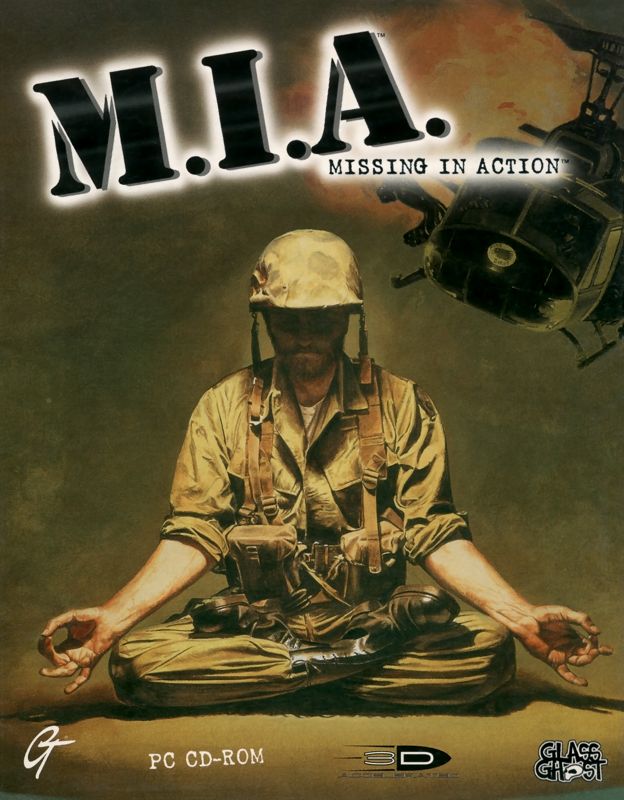
M.I.A.: Missing In Action delivers a relentless, action-packed helicopter experience set in the heart of the Vietnam War. Over the course of 26 varied missions, players pilot a succession of increasingly powerful choppers, each tailored for different combat roles. Early stages might cast you in a rescue role—locating MIA soldiers hidden in dense jungle—while later missions task you with heavy assault objectives like dismantling Vietcong camps or escorting a critically damaged aircraft to safety.
(HEY YOU!! We hope you enjoy! We try not to run ads. So basically, this is a very expensive hobby running this site. Please consider joining us for updates, forums, and more. Network w/ us to make some cash or friends while retro gaming, and you can win some free retro games for posting. Okay, carry on 👍)
The game’s radar system is a standout feature, providing real-time updates on both enemy and friendly positions. This adds a tactical layer to the otherwise frenetic aerial combat, encouraging players to think strategically about route planning and target prioritization. Spotting an enemy anti-air battery on the minimap and neutralizing it before it locks on to you can be the difference between mission success and a fiery crash.
Helicopter customization is handled implicitly through mission progression: every stage awards you a new aircraft with better firepower, armor, and handling. Early choppers feel nimble but under-gunned, while late-game gunships thunder across the sky with chain guns, rockets, and missile pods. This sense of tangible progression keeps each sortie fresh, as you’re constantly adapting to the strengths and weaknesses of your new ride.
Supporting your rotors is an arsenal of battlefield calls. Whether you need a curtain of napalm, SEAL team insertion, artillery barrages, or simple smoke and flare screens, the ability to summon these assets injects variety into every engagement. Juggling these support options against dwindling ammo reserves and mounting enemy fire makes each mission a careful balancing act of aggression and resource management.
Graphics
For a game rooted in a mid-90s release window, M.I.A. presents surprisingly detailed 3D environments. Sweeping jungle canopies give way to muddy clearings, rice paddies, and clustered villages, all rendered with crisp textures that hold up under scrutiny. Flight over the lush landscapes at dawn, dusk, or in the dead of night (with flares illuminating the treeline) provides a striking sense of place.
The real-life actor full-motion videos (FMVs) that brief you before each mission are grainy by modern HD standards but radiate authentic period charm. These sequences frame your objectives within a cinematic setting—grizzled commanders barking orders, urgent maps unfolding, helicopters lifting off against a smoky sky—and reinforce the stakes of the campaign.
Helicopter cockpits are modeled with an eye for detail: instrument needles twitch realistically under heavy fire, and exterior damage—bullet holes, smoke trails, ripped rotors—affects your flight behavior. Explosions and muzzle flashes light up the screen with brief, brilliant bursts, often leaving the surrounding foliage shaken and the camera momentarily jolted to mimic real rotor wash.
Performance remains solid even amidst the chaos of dozens of on-screen explosions, AI infantry, and support strikes. Frame rates dip only slightly during the most intense firefights, ensuring you stay locked on target without jarring stutters. On modern systems, the graphics hold up as a nostalgic window into classic 3D action design.
Story
While M.I.A. is far from a narrative-driven epic, it weaves a coherent throughline that captures the desperation and urgency of wartime helicopter crews. Each mission briefing paints a fragment of the broader conflict: downed pilots awaiting extraction, villages under siege, covert rescue operations deep behind enemy lines. The FMV sequences, though brief, ground the action in human stakes.
The sense of progression from rescuing lone soldiers to spearheading large-scale assaults mirrors the escalating intensity of the Vietnam conflict. You feel the weight of each decision—rescue delays could cost lives, and pressing too far into enemy territory without backup risks your entire crew. This tension underpins the gameplay, transforming routine objectives into life-or-death gambits.
Characterization is minimal but effective. You’re not told much about the helicopter pilots themselves, yet the urgency in their voices, the weariness in the command center, and the fleeting shots of rescued prisoners all lend emotional texture. These human moments, though sparse, punctuate the otherwise machine-focused engagements.
In the absence of dramatic plot twists or branching dialogues, the story succeeds by delivering authentic wartime scenarios. It never tries to be more than a backdrop for aerial combat, but it does enough to keep you invested in seeing the campaign through to its final mission.
Overall Experience
M.I.A.: Missing In Action is a high-octane ride for fans of helicopter combat and Vietnam War settings. The balance of fast-paced action, tactical radar play, and diversified mission objectives makes for a satisfying single-player campaign. Each mission feels distinct, and the steady arms race of helicopter upgrades provides a rewarding sense of growth.
Some modern players might find the FMV sequences and dated visuals quaint, but they contribute to the game’s period charm. The controls are responsive, the difficulty curve is firm but fair, and the support options—napalm, artillery, SEAL teams—add strategic flair without overcomplicating the core loop.
Replay value stems from chasing faster completion times, experimenting with different support combinations, or simply returning to favorite missions to blast apart enemy encampments. While there’s no multiplayer mode, the solo campaign’s length and variety ensure hours of aerial destruction.
Ultimately, M.I.A. caters to those seeking a retro-flavored, uncompromising helicopter shooter steeped in Vietnam War atmosphere. With its robust mission design, solid visuals, and immersive radio chatter, it stands as a memorable title for action aficionados looking to relive or discover the thrills of 3D helicopter warfare.


Reviews
There are no reviews yet.