 Retro Replay Retro Replay gaming reviews, news, emulation, geek stuff and more!
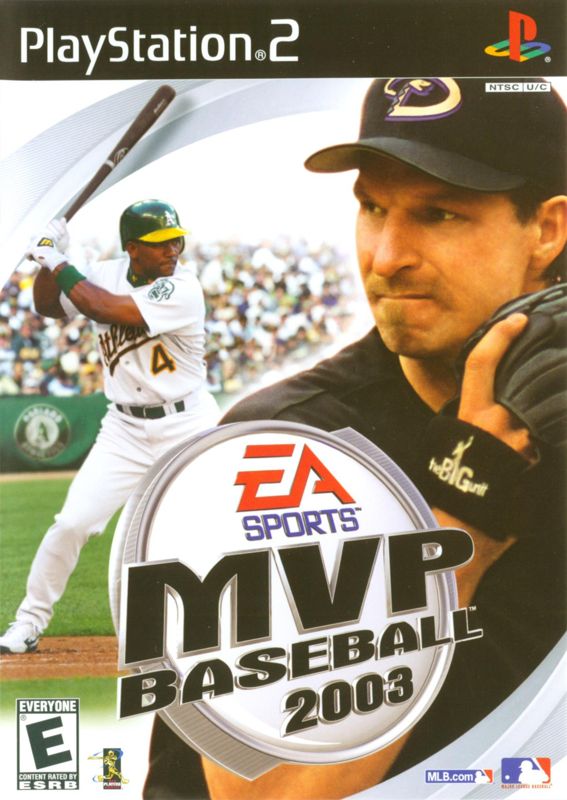
Retro Replay Review
Gameplay
MVP Baseball 2003 represents a significant leap forward for EA Sports, effectively replacing the aging Triple Play series with a fresh and dynamic experience. The controls strike a satisfying balance between accessibility and depth, allowing newcomers to pick up the stick quickly while giving veteran players ample room to master advanced batting stances, timing windows, and pitch selection. The game’s innovative batting interface features a responsive zone indicator that rewards precise timing, and its pitching system offers an array of curveballs, sliders, and changers—each with its own tell and release meter.
(HEY YOU!! We hope you enjoy! We try not to run ads. So basically, this is a very expensive hobby running this site. Please consider joining us for updates, forums, and more. Network w/ us to make some cash or friends while retro gaming, and you can win some free retro games for posting. Okay, carry on 👍)
One of MVP’s standout offerings is the Homerun Showdown mode, a departure from the traditional home run derby. Here, players compete to clear out-of-the-park targets in timed rounds, adding a strategic layer where shot placement matters as much as power. The mode feels fast-paced and exciting, encouraging both head-to-head local play and single-player challenges. It’s a fresh diversion from the usual exhibition matchups and earns its own spot in the main menu.
The newly introduced Franchise mode elevates the experience, taking you beyond the diamond into the boardroom. You manage payroll, sign free agents, set lineups, and track player development over multiple seasons. This deeper layer adds genuine weight to every in-game decision—trade away your ace, and you’ll feel the sting in subsequent starts. Managing farm systems and watching the next generation emerge provides a long-term hook that few baseball titles of the era could match.
Exhibition games remain a reliable staple, offering quick play sessions that are perfect for filling downtime. What sets MVP apart here is the attention to immersion: vendor carts trundle through the stands hawking hot dogs, and real-time crowd reactions include player-specific heckles and cheers. The result is a baseball simulation that feels lived-in, capturing the ambient noise and visual flair of a real ballpark.
Graphics
Visually, MVP Baseball 2003 is a marked improvement over its predecessor series. Stadiums are rendered with meticulous detail, from the ivy creeping along classic ballpark walls to the wave of flags atop outfield bleachers. Player models have a surprising level of polish: helmets glint under stadium lights, jerseys sport accurate creases, and each pitcher’s unique wind-up is faithfully recreated with smooth animation transitions.
The crowd is anything but static. Instead of a uniform sea of polygons, individual fans wave towels, do the wave in sections, or stand up for a key at-bat. On-field vendors weaving through the stands and concession stands flanking the foul lines heighten the sense of place. The dynamic lighting engine adjusts seamlessly from day to night games, casting realistic shadows and lens flares when the sun dips below the stadium roof.
Pitch trajectories are crisp and easy to follow: you can see that curveball arc fade right before it crosses the plate, and a fastball’s backspin is visible against the sky. Bat cracks resonate with visual flair—cue the exaggerated flying stitches when a solid hit rockets into the gap. The frame rate holds steady even in intense multiplayer sessions, ensuring that sudden throws to the plate or diving catches don’t stutter or slow down.
While player faces lack the lifelike likenesses seen in modern releases, each athlete’s body language and posture are distinct enough to differentiate stars from rookies. Uniform decals, scoreboard displays, and nuances like chalk lines and dirt scuffs all contribute to a game that, despite its age, still feels compellingly authentic on the graphical front.
Story
As with most sports simulations, MVP Baseball 2003 does not follow a linear narrative in the traditional sense. However, the game crafts its own emergent storylines through the Franchise mode, where your decisions shape seasons of triumph and heartbreak. Trading a veteran slugger at the deadline or watching a top prospect blossom in Triple-A imparts a sense of personal investment and narrative continuity that few baseball games of its time offered.
The commentary team—while not delivering play-by-play drama in the way RPGs do—fills the airwaves with anecdotes, player stats, and behind-the-scenes tidbits. Their observations change based on in-game performance: a rookie’s unexpected home run spawns chatter about “one to watch,” while slumps are met with gentle ribbing. This running commentary deepens the illusion that you’re at the center of an unfolding baseball saga.
Between innings, highlight reels and replay cinematics underscore pivotal moments, creating a patchwork of mini-stories that accumulate over the course of a season. Seeing your game-winning single in a quick-cut montage is surprisingly exhilarating, reinforcing the emotional highs of your on-field achievements. The lack of a scripted story mode is hardly a detriment—MVP lets you write your own baseball saga.
The narrative potential shines brightest when your Franchise team unexpectedly makes a deep playoff run. The combination of roster management, in-game heroics, and crowd ambiance coalesces into a story that feels organically earned. You’re not just playing a game; you’re living the arc of an underdog squad defying the odds.
Overall Experience
MVP Baseball 2003 delivers a robust, multifaceted baseball simulation that excels in both presentation and playability. From the satisfying crack of the bat to the subtle swish of a curveball, every audio-visual cue has been designed to pull you deeper into the ballpark atmosphere. The control scheme remains intuitive yet rewards precision, whether you’re laying down a drag bunt or painting the corners with a changeup.
The depth of Franchise mode ensures hours of strategic engagement, while Homerun Showdown and quick exhibition games cater to bite-sized sessions or party play. Customization options, including stadium sequencing, line-up editing, and difficulty adjustments, allow players to tailor the experience to their preferences. Add in the unique crowd heckles and vendor animations, and MVP feels less like a sterile video game and more like a living sports broadcast.
For fans of either arcade-style immediacy or a more cerebral management sim, MVP Baseball 2003 strikes a rare balance. While graphics have advanced in the years since its release, the game’s core mechanics and atmosphere still hold up remarkably well. If you’re seeking an engaging baseball title that blends immersive presentation with substantive depth, MVP remains a standout choice.
In a crowded field of sports titles, MVP Baseball 2003 distinguishes itself through its comprehensive modes, engrossing ambiance, and finely tuned gameplay. It’s a game that not only captures the technical nuances of baseball but also the emotional highs and lows that make the sport great. Whether you’re a casual fan or a die-hard baseball strategist, MVP offers an enduring and entertaining package.


Reviews
There are no reviews yet.