 Retro Replay Retro Replay gaming reviews, news, emulation, geek stuff and more!

Retro Replay Review
Gameplay
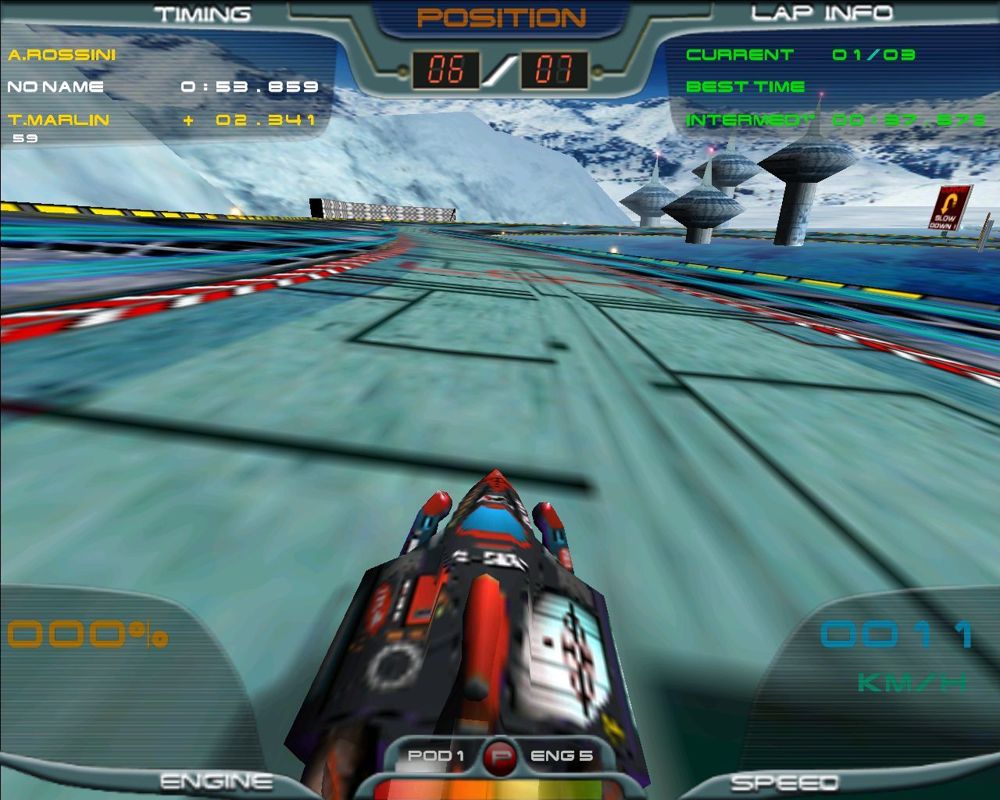
Nelson Piquet’s Grand Prix: Evolution throws you into the cockpit of a hyper-velocity hovercraft in the year 2100, where magnetic levitation and high-power turbines let you reach breakneck speeds up to 1200 km/h. The core loop revolves around piloting your craft on magnetic tracks, finding the perfect balance between hugging the central acceleration lane and flirting with the slower repeller fields to carve tighter turns. This balance of risk and reward feels fresh and addictive, turning each race into a high-stakes dance of precision and daring.
(HEY YOU!! We hope you enjoy! We try not to run ads. So basically, this is a very expensive hobby running this site. Please consider joining us for updates, forums, and more. Network w/ us to make some cash or friends while retro gaming, and you can win some free retro games for posting. Okay, carry on 👍)
The progression system ties directly into your on-track performance. Winnings from each Grand Prix can be invested back into your team’s vehicles, unlocking upgraded turbines, improved magnetic coils, and advanced aerodynamic skids. Managing upgrades becomes a strategic layer: do you boost raw top speed for the long straights or prioritize handling for the twisty lunarscapes? Occasional pitstops add another strategic wrinkle, forcing you to decide whether losing a few seconds now could net you faster lap times later.
Nelson Piquet’s Grand Prix: Evolution also caters to a broad skill range with six AI difficulty levels. Beginners can cruise against more forgiving opponents, while veterans can test their reflexes and track knowledge at the highest setting. Multiplayer support lets you challenge friends or online rivals, turning those finely honed skills into bragging rights. Overall, the gameplay loop is tight, exhilarating, and packed with enough customization to keep you invested lap after lap.
Graphics
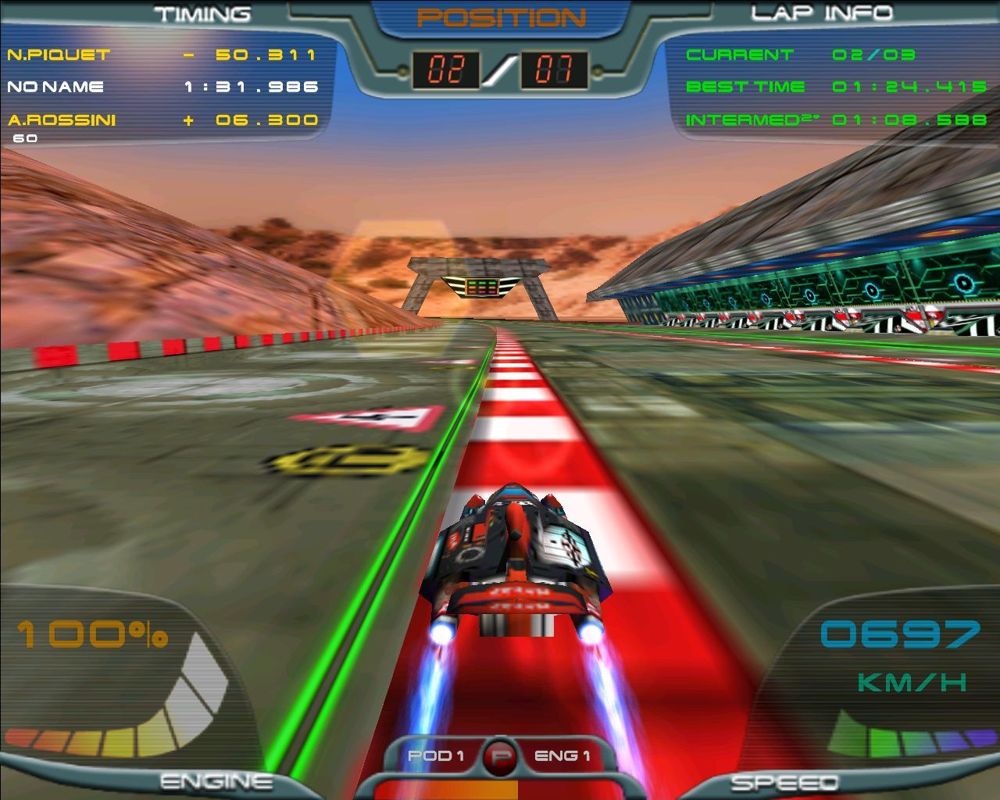
The visuals in Grand Prix: Evolution strike a strong balance between sci-fi flair and trackside realism. Each circuit features crisp track textures and dynamic lighting that captures the sense of soaring through alien landscapes. As you whip around corners on the Moon’s barren plains or rocket along neon-lit skyways high above Earth, the combination of sharp graphics and motion blur delivers an intense sense of speed.
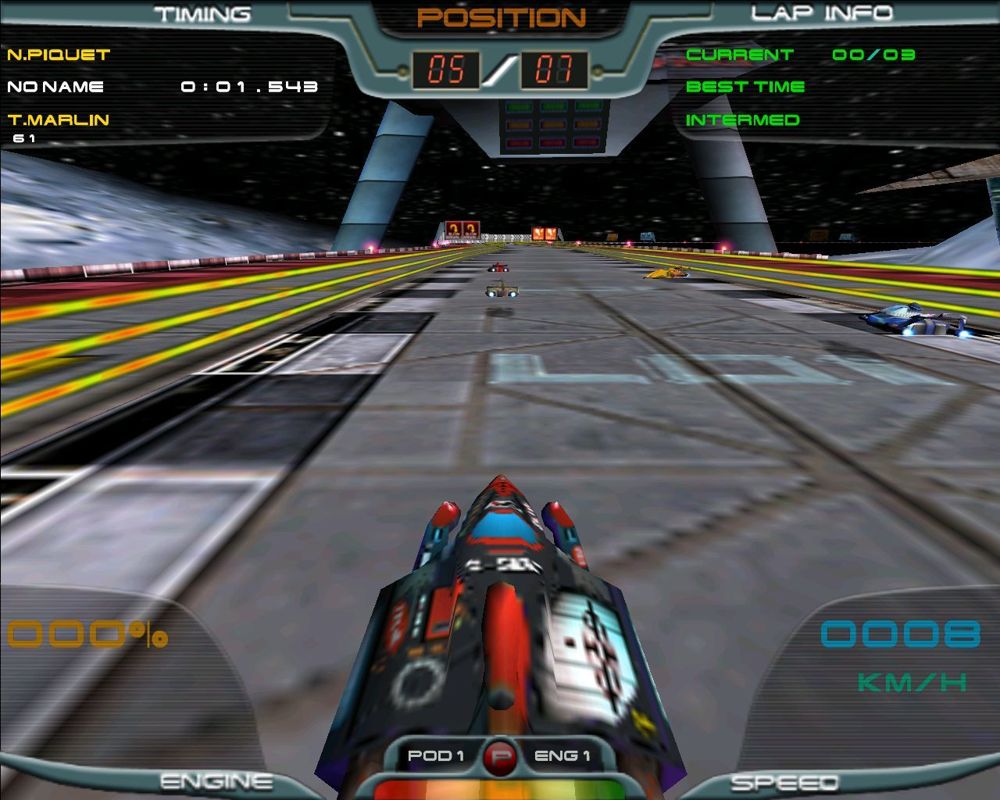
Diversity of environments is a major highlight. From the dusty regolith of Martian valleys to shimmering domes on Europa, the planetary vistas are both imaginative and technically polished. Subtle details—like distant city lights, swirling dust devils, or reflective turbine flares—enhance immersion without overwhelming your view. The HUD stays clean and futuristic, displaying speed, lap times, and damage indicators with minimal distraction.
Performance remains rock-solid even during the most frenetic races. Frame rates stay consistent across platforms, with negligible pop-in or texture streaming issues. Visual effects such as heat haze, magnetic field flares, and spark showers when skidding into repeller lanes all contribute to a visceral sense of impact. Whether you’re blasting through a solar eclipse or dodging floating debris on an asteroid belt, the graphics engine holds up beautifully.
Story
While Grand Prix: Evolution is primarily a racing simulator, it weaves a simple yet engaging narrative through its championship structure. You start as a rookie pilot on Earth, looking to make a name for yourself in the elite GPE league. As you win races and accumulate points, you unlock exotic venues further out in the Solar System, each with its own environmental hazards and cultural flair.
The game salutes the legacy of Nelson Piquet by framing each event as a stepping stone in your career—echoing the real-world journey from local circuits to world championships. Brief but impactful cutscenes introduce rival teams, showcase your mechanics fine-tuning your craft, and celebrate your podium finishes. These story beats never overstay their welcome, providing just enough context to care about your progression without interrupting the flow of racing.
Rivalry is another subtle narrative thread. Each of the eight GPE teams has its own identity, from the high-tech lunar outfit to the fiery solar-array specialists on Venus. AI opponents taunt you on the grid, and championship standings create a sense of urgency as you chase the top spot. The progression and rivalries give you a genuine “underdog to champion” feeling that drives you forward.
Overall Experience
Nelson Piquet’s Grand Prix: Evolution stands out as a must-play for fans of futuristic racing. Its blend of breakneck speeds, strategic use of repeller fields, and meaningful upgrade paths create a gameplay experience that’s both immediate and deep. Whether you’re carving perfect apexes on Earth tracks or mastering alien circuits in the outer reaches of the Solar System, the game keeps you engaged with constant new challenges.
The rich variety of courses and adaptable AI difficulty ensure that novices and veterans alike find their sweet spot. Multiplayer adds replay value, letting you prove your mettle in head-to-head showdowns. Graphically, the game impresses with a stable performance and imaginative worlds that transport you across the Solar System without sacrificing clarity or speed.
While the narrative remains concise, it accomplishes its goal of giving context to your racing ambitions and forging a connection to rival teams. Altogether, Grand Prix: Evolution delivers a thrilling, polished package that captures the spirit of high-octane racing in a futuristic setting. If you’ve been yearning for a hyper-velocity racer with depth and style, this title should be at the top of your list.


Reviews
There are no reviews yet.