 Retro Replay Retro Replay gaming reviews, news, emulation, geek stuff and more!
Retro Replay Review
Gameplay
O2Jam delivers a rhythm-based gameplay experience that is both accessible and challenging. Unlike arcade titles such as IIDX or Pop’n Music, O2Jam is designed for the standard keyboard, lowering the barrier to entry for new players. Notes cascade down predefined lanes in time with the music, and the player must press the corresponding keys with precise timing to score points. Accuracy is graded on a scale that rewards perfect timing while still allowing room for small errors, making each session a test of rhythm recognition and finger dexterity.
(HEY YOU!! We hope you enjoy! We try not to run ads. So basically, this is a very expensive hobby running this site. Please consider joining us for updates, forums, and more. Network w/ us to make some cash or friends while retro gaming, and you can win some free retro games for posting. Okay, carry on 👍)
A standout feature in O2Jam’s gameplay is the incorporation of “freeze holds.” These long notes require the player to press and hold a key at the start of the note, then release it exactly at the end. While DDR and Pump It Up also use holds, O2Jam simplifies scoring by counting each freeze hold as exactly two steps, regardless of its length. This mechanic adds variety and strategic depth to charts, forcing players to think carefully about timing transitions between holds and rapid note sequences.
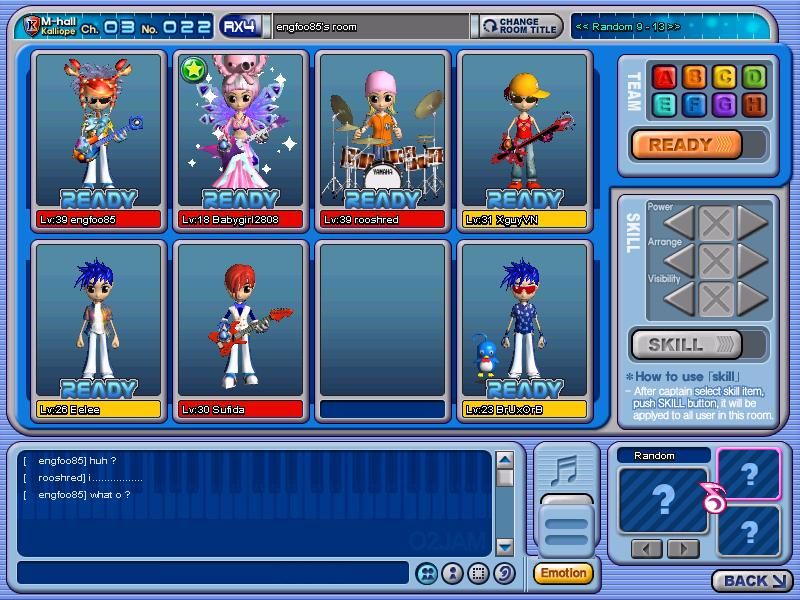
O2Jam offers multiple play modes to suit different preferences and group sizes. The Single mode caters to solo practice sessions, while Versus and Album modes allow up to eight players to compete head-to-head or play a string of songs in succession. Couple mode even lets two players share a single keyboard for split-screen play, promoting cooperative or competitive gameplay on the same machine. This flexibility makes O2Jam ideal for casual gaming nights or more serious rhythm battles among friends.
Progression is tied to both experience points and a gem currency system. Players earn gems and XP by passing songs, and higher accuracy yields greater rewards. After reaching mid-level ranks, multiplayer participation becomes mandatory to gain further XP, encouraging community engagement. Additionally, periodic missions at every fourth level challenge players to meet specific criteria—such as maintaining fewer than ten misses on a designated chart—before they can advance. These missions offer unlimited retries, ensuring players are motivated to improve rather than grind low-level content indefinitely.
Graphics
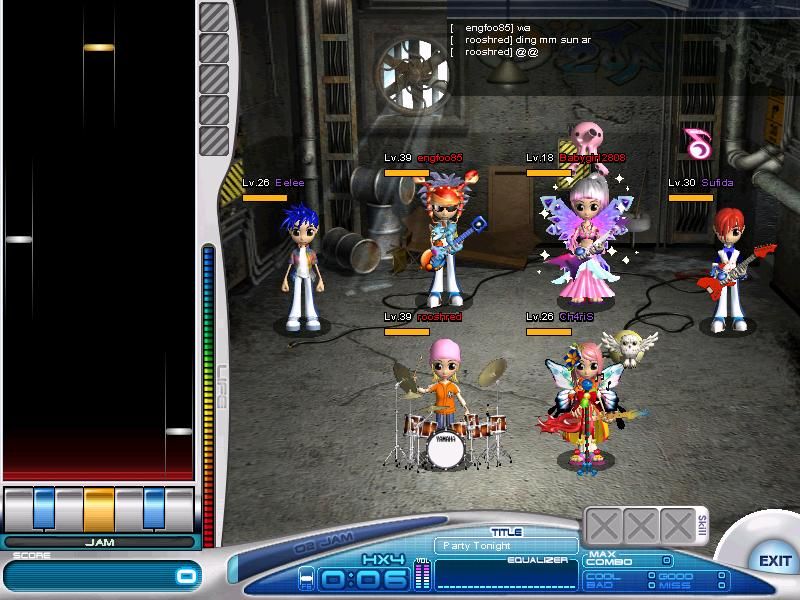
Visually, O2Jam is styled with a clean, functional interface that emphasizes clarity over flashiness. The note highways are distinct and brightly colored, ensuring that falling notes are easily visible against the backdrop. Each lane corresponds to a keyboard key, with subtle shading effects to help players track multiple lanes at once. While the graphics may not push the boundaries of modern game engines, their simplicity serves the fast-paced gameplay well by minimizing distractions.
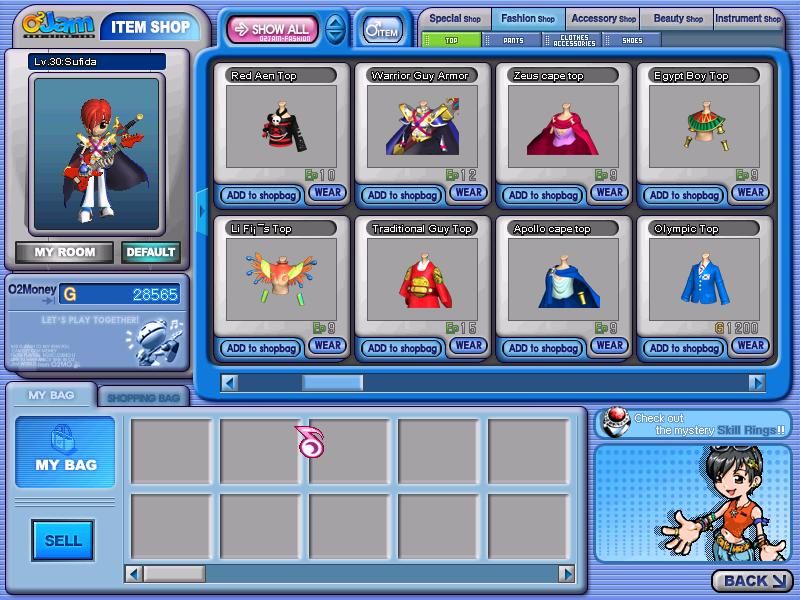
Avatars and customization options add personality to the visual presentation. Players can unlock or purchase various outfits, accessories, and even rings that grant temporary song modifiers such as Vanish or Sudden. Although most cosmetic items are purely aesthetic, the rings introduce brief game-play disruptions—adding an extra layer of visual flair to standard note patterns. Background animations during songs feature abstract shapes and rhythmic pulses, designed to sync with the music without overwhelming the core note display.
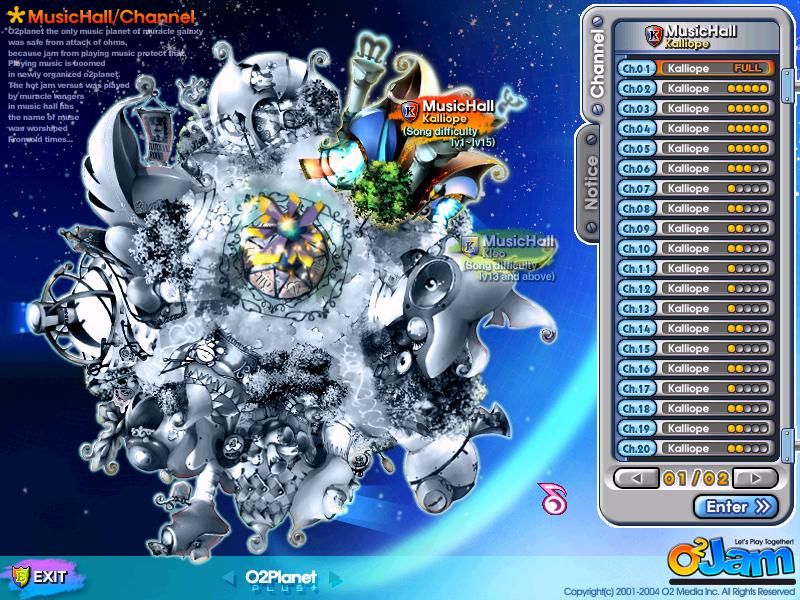
Menus and HUD elements are intuitively laid out, with clear indicators for score, combo, and accuracy in real time. The design choices prioritize readability, so even on mid-range hardware, players experience smooth framerates and responsive controls. Song selection screens show thumbnails, difficulty ratings, and player-specific best scores, helping users quickly gauge which charts match their skill level. Overall, the graphics package strikes a practical balance between form and function.
Story
As with most music rhythm titles, O2Jam does not feature a traditional narrative or storyline. Instead, the “story” is woven through its eclectic song library and incremental progression systems. Each track offers its own musical journey—ranging from upbeat electronic beats to slower, melodic pieces—allowing players to create a personal connection through their performance and improvement over time.
The progression mechanics and mission challenges serve as a meta-narrative, guiding players along a path of skill development. By structuring level-up requirements around increasingly difficult songs, O2Jam fosters a sense of accomplishment akin to “unlocking chapters” in a story. Players witness their own growth as they conquer new charts and refine their timing, giving the game a unique, self-directed storyline centered on mastery.
Community events and multiplayer rooms expand this narrative further by enabling friendly competition and collaboration. Versus and Album modes encourage players to challenge peers or team up, creating shared experiences that evolve organically. Although there is no linear plot, the communal achievements and leaderboard climbs collectively craft an ongoing saga of personal progress and social engagement.
Overall Experience
O2Jam stands out as an approachable yet deep rhythm game that caters to both casual players and serious enthusiasts. The keyboard-based interface makes it easy to jump in without purchasing specialized peripherals, and the tiered missions ensure that newcomers are guided through progressively harder challenges. Whether you’re competing solo in Single mode or battling eight friends in Versus, the core loop of hitting notes to the beat is consistently rewarding.
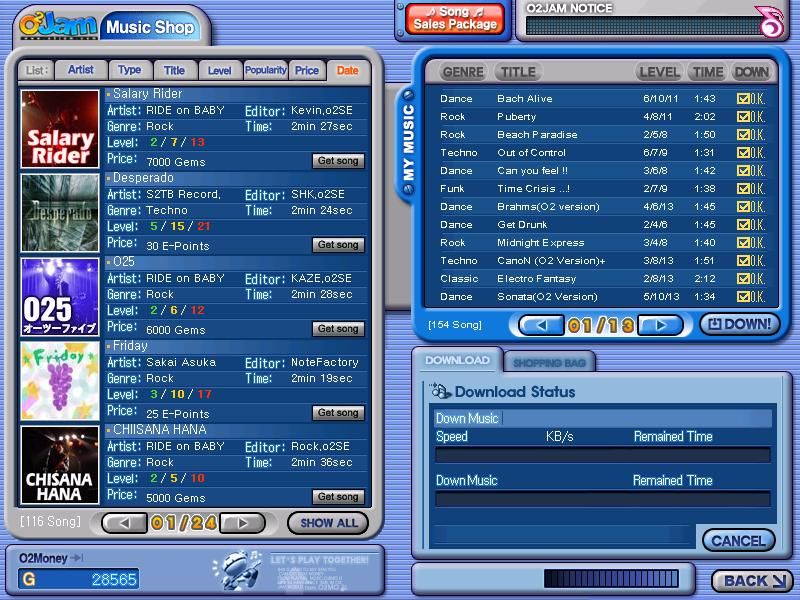
The monetization strategy blends free progression with optional microtransactions. Gems earned in-game can purchase basic avatar items and a limited song selection, while e-points unlock premium cosmetics and special rings. Although spending real money accelerates access to certain items, nothing in the premium shop affects core performance, preserving a fair environment where skill remains the key determinant of success.
With a vibrant song catalog, flexible play modes, and a motivating level system, O2Jam offers lasting replay value. The user interface remains responsive even on older machines, and the simple yet effective graphics keep the focus squarely on gameplay. For anyone seeking a keyboard-friendly rhythm game that balances challenge and accessibility, O2Jam is a compelling choice that delivers hours of musical enjoyment.


Reviews
There are no reviews yet.