 Retro Replay Retro Replay gaming reviews, news, emulation, geek stuff and more!



Retro Replay Review
Gameplay
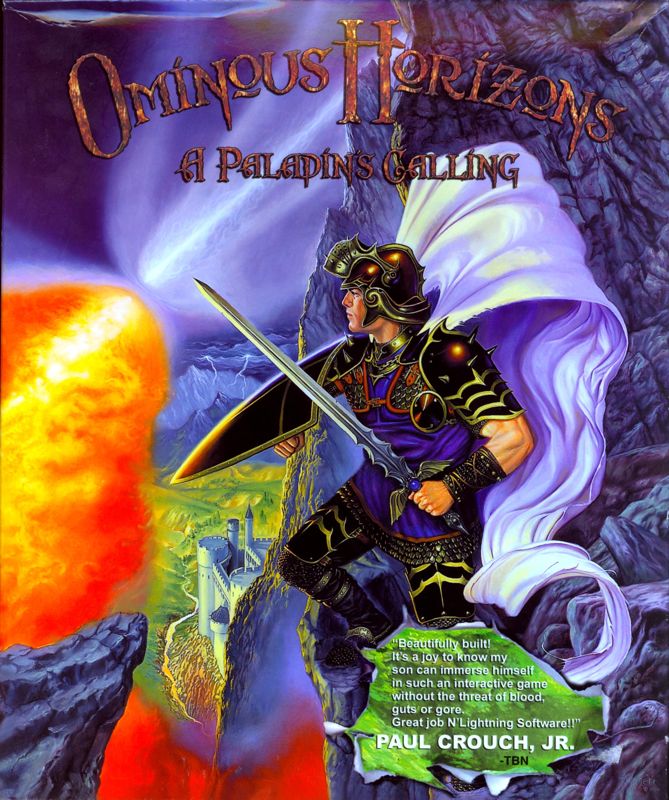
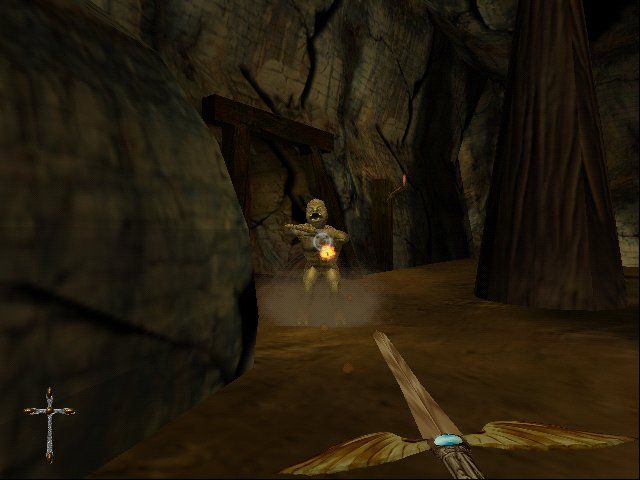
Ominous Horizons: A Paladin’s Calling casts you directly into the boots of a medieval warrior on a divine quest to recover Gutenberg’s stolen Bible. At its core, the game blends first-person shooter mechanics with light RPG elements, offering fast-paced melee combat and ranged holy energy attacks from your Sword of the Spirit. You’ll find weapons and upgrades scattered across sprawling castle keeps, ruined monasteries, and forested waypoints, encouraging exploration as much as head-on combat.
(HEY YOU!! We hope you enjoy! We try not to run ads. So basically, this is a very expensive hobby running this site. Please consider joining us for updates, forums, and more. Network w/ us to make some cash or friends while retro gaming, and you can win some free retro games for posting. Okay, carry on 👍)
The sword itself evolves in satisfying ways: initial strikes are swift but simple, while later upgrades add area-of-effect blasts, temporary shields, or life-stealing beams. Alongside your primary weapon, you’ll discover two additional relics—each with its own upgrade path—so you can tailor your build. The pickups system lets you stash healing potions, scrolls for defensive wards, and crafting materials for weapon enhancements, striking a commendable balance between action and resource management.
Interaction with NPCs plays a meaningful role, too. Friendly friars might ask you to recover lost manuscripts that unlock side-quests, while merchant blacksmiths offer limited-time deals on weapon mods. Dialogue choices are brief but impactful, occasionally opening hidden routes or revealing lore tidbits about 15th-century Mainz and the birth of the printing press. These varied gameplay loops—questing, combat, and trading—keep the pacing brisk and engaging.
Stealth sections pepper the adventure, demanding careful timing to sneak past guards in cathedral catacombs or sabotage enemy siege engines. Though not as refined as dedicated stealth titles, these segments provide welcome pacing changes and heighten tension before major confrontations. Boss battles against demonic knights and warlords leverage all your acquired skills, challenging you to blend swordplay, holy magic, and environmental hazards to claim victory.
Graphics
Visually, Ominous Horizons delivers a richly detailed vision of 1455 Germany. Stone walls of the Mainz Cathedral, flickering torchlight in narrow corridors, and the rolling vineyards beyond city gates are rendered with a painterly flair that evokes illuminated manuscripts. Textures are crisp, and dynamic shadows cast by your sword’s holy aura add atmospheric depth when exploring darker areas.
Character models strike a balance between realism and stylization: your Paladin’s ornate armor features finely engraved crosses and runes, while NPCs exhibit facial animations that convey urgency during critical story moments. Enemy designs range from grotesque imps to corrupted knights, each carrying thematic consistency with the game’s blend of divine purpose and demonic corruption. Occasional facial clipping or stiff gestures break immersion, but these minor hiccups don’t detract significantly from the overall visual polish.
Lighting and particle effects stand out in combat, where holy flares burst against shadowed backgrounds, and dust motes float through sunbeams in abandoned chapels. Performance is generally solid on mid-range hardware, maintaining smooth frame rates outdoors and in most interior environments. However, some draw-in of distant objects can occur in the expansive Rhineland countryside, so consider tweaking level-of-detail settings if you spot distant pop-in.
Cutscenes seamlessly transition into gameplay, using the same engine assets to maintain consistency. These cinematics employ realistic camera angles and subtle depth-of-field effects, ensuring that narrative highlights—such as the moment you return Gutenberg’s Bible—resonate visually as well as emotionally.
Story
Set against the revolutionary backdrop of Gutenberg’s printing press, the narrative of Ominous Horizons intertwines historical fact with dark fantasy. The theft of the first printed Bible by malevolent forces ups the stakes beyond academic curiosity, transforming your mission into a cosmic struggle between light and darkness. Early dialogue establishes the stakes—how one stolen text could alter the course of history—and gives weight to each encounter.
The story unfolds over a series of chapters, each centered on recovering sacred pages that piece the Bible back together. Along the way, you meet a cast of memorable characters: a repentant scribe-turned-rebel, a mystic hermit harboring secrets about demon-kind, and Gutenberg himself, whose gratitude and philosophical musings deepen your connection to the world. Side-quests often reveal personal tales of villagers suffering under demonic influence, adding human stakes to the grand narrative.
Narrative pacing is well-judged: tense stealth missions alternate with high-octane battles, while exploration of ruined abbeys uncovers journal entries that build context. Although certain plot beats predictably follow fantasy tropes—redemption arcs, betrayal by a trusted ally—the writing remains engaging, with sharp dialogue that captures the religious zeal and intellectual fervor of the era.
Key story moments feature voice-acted performances that are generally strong, though a few lines feel overly dramatic. Music swells appropriately during climactic scenes, weaving choral chants and medieval instrumentation to underscore the game’s spiritual themes. The result is a narrative that, while not wholly original, resonates thanks to its historical framing and the palpable urgency of retrieving a world-changing artifact.
Overall Experience
Ominous Horizons: A Paladin’s Calling offers a cohesive blend of action, exploration, and historical fantasy. Its strengths lie in satisfying combat mechanics, atmospheric visuals, and a storyline that taps into one of history’s pivotal innovations. Players seeking a first-person adventure with a divine twist will find plenty to enjoy in its 12–15 hour main campaign, with additional side-quests extending playtime for completionists.
Audio design enhances immersion, from the clang of steel on steel to ambient church bells echoing through nighttime villages. The soundtrack, comprised of orchestral scores and Gregorian-inspired chants, reinforces the sense of undertaking a sacred mission. Minor technical hiccups—occasional pop-in or NPC animations—are overshadowed by the game’s consistent performance and engaging world-building.
Replayability stems from optional quests, multiple weapon upgrade paths, and a “Purity” system that tracks how often you resort to stealth versus direct combat, unlocking unique abilities on subsequent playthroughs. While the narrative remains largely linear, the freedom to approach missions with varied tactics encourages experimentation.
Ultimately, Ominous Horizons fulfills its promise as a faith-driven fantasy shooter, delivering a memorable journey through medieval Germany’s shadowy realms. Whether you’re drawn by the historical premise of Gutenberg’s era or the thrill of wielding divine power against demonic foes, this title stands as a compelling choice for fans of action-RPG hybrids and immersive historical settings.


Reviews
There are no reviews yet.