 Retro Replay Retro Replay gaming reviews, news, emulation, geek stuff and more!
Retro Replay Review
Gameplay
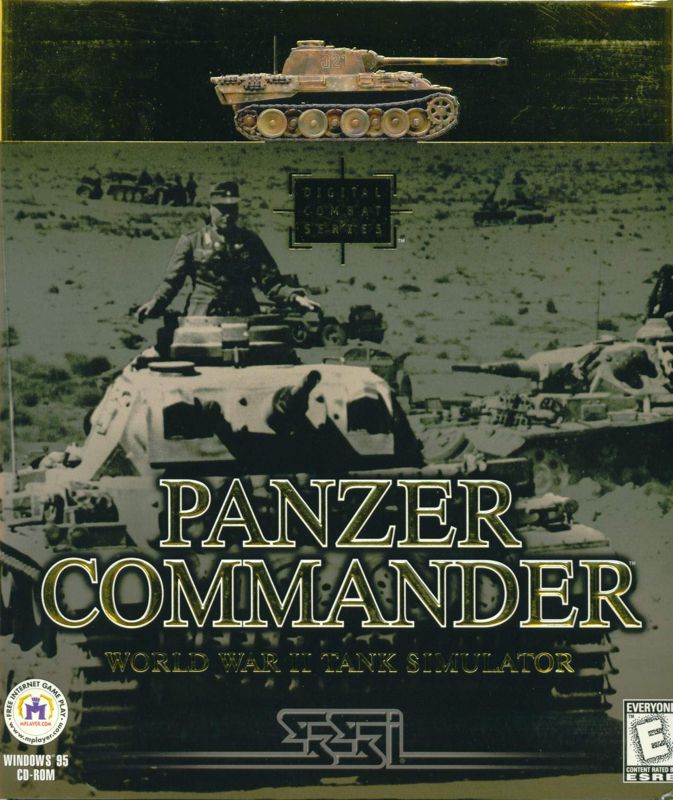
Panzer Commander places you in the command seat of a WWII tank platoon, offering a hands-on approach to armored warfare. You’ll select from German, Russian, US, or British forces, each bringing distinctive tanks, weapon calibers, and tactical doctrines to the battlefield. The core loop revolves around completing one of 40 standalone scenarios or diving into one of three distinct German and Russian campaigns, so there’s a clear sense of progression whether you choose to tackle bite-sized missions or an extended war effort.
(HEY YOU!! We hope you enjoy! We try not to run ads. So basically, this is a very expensive hobby running this site. Please consider joining us for updates, forums, and more. Network w/ us to make some cash or friends while retro gaming, and you can win some free retro games for posting. Okay, carry on 👍)
Controls strike a balance between accessibility and depth: driving your tank forward, angling the hull, and adjusting your turret traverse feel responsive, while managing stabilization, ammo types, and radio commands adds a meaningful layer of complexity. Terrain plays a significant role, too—rivers, hills, and forests can slow you down or conceal you from enemy sightlines. You’ll need to master hull-down positions and flanking maneuvers if you hope to survive encounters with enemy armor and anti-tank guns.
Enemy AI generally stays on patrol routes or defensive positions, but can react dynamically to flanking attempts and artillery strikes. Friendly AI wingmen follow orders reliably, though pinpoint coordination can be tricky under fire. A robust mission briefing screen helps you plan routes and objectives, while a real-time tactical map keeps you aware of changing battlefield conditions—though it sometimes requires sharp observation to pick out distant enemy units.
Graphics
Visually, Panzer Commander embraces a semi-realistic art style. Tank models showcase crisp textures and detailed components: hatches, gun mantlets, and tread links all carry distinct polygon counts, reflecting the era’s engineering. Battlefields feature rolling fields, damaged villages, and scarred roads that set the stage for armored clashes, though tree foliage and distant terrain occasionally lack the richness seen in more modern sims.
Explosions and shell impacts deliver satisfying feedback, with dust clouds and splintered masonry marking each direct hit. Lighting dynamics work well to underscore early-morning fog or the glare of midday sun, though shadow transitions can feel abrupt. Water effects in flooded fields or river crossings add an extra layer of immersion, complete with ripples and splashes as tanks lumber through shallow depths.
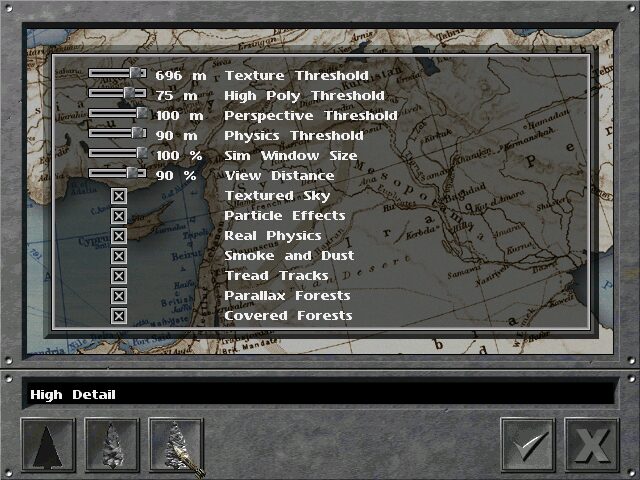
Performance remains smooth on modest hardware, with adjustable settings for draw distance, texture resolution, and particle effects. Even during intense engagements with multiple tanks and artillery bursts, frame rates stay stable. The UI is functional, with clear icons for ammo type and damage status, but occasionally feels dated compared to contemporary wartime simulators.
Story
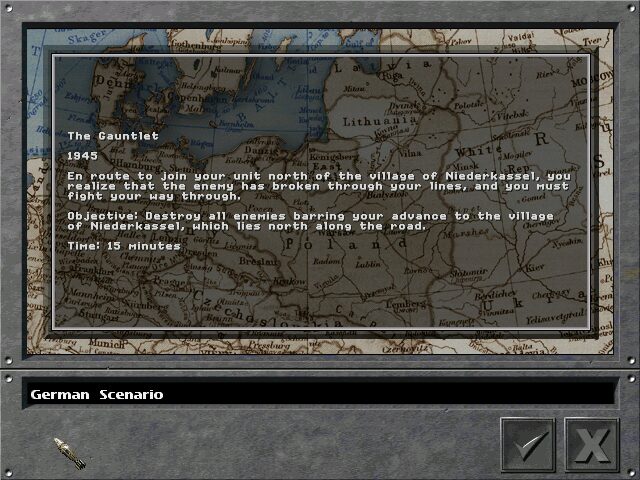
Rather than weaving a cinematic narrative, Panzer Commander opts for scenario-driven storytelling. Each standalone mission presents historical objectives—whether it’s breaking through enemy lines or holding strategic crossroads—and comes with a concise briefing that sets the tactical stakes. While there are no voiced characters or cutscenes, the text-based mission summaries evoke the period’s urgency and chain-of-command tension.
The three German and Russian campaigns build a larger arc by stringing together related objectives, forcing you to defend or counterattack across shifting frontlines. You’ll witness the ebb and flow of momentum as supply lines stretch thin or reinforcements arrive just in time. This structure fosters a sense of continuity, even without elaborate dialogue or in-engine cutscenes, and encourages you to treat each victory as part of a broader war strategy.
Although character development is minimal, the game’s dedication to historical authenticity shines through unit insignias, period-accurate maps, and vehicle rosters. Reading mission debriefs and enemy order-of-battle notes adds context to each deployment, helping you appreciate the tactics and limitations faced by WWII tank commanders on both sides of the conflict.
Overall Experience
Panzer Commander delivers a robust armored-warfare simulator that balances historical detail with approachable mechanics. The breadth of content—from dozens of standalone missions to multi-stage campaigns—offers extensive replay value. Whether you’re mastering the Soviet T-34’s sloped armor or exploiting the Tiger I’s long-range firepower, each engagement tests your tactical acumen.
While it may not boast cutting-edge graphics or an immersive narrative-driven campaign, the game’s core strengths lie in its scenario variety and solid tank-handling model. Friendly and enemy AI complement one another to create dynamic skirmishes, even if occasional pathfinding quirks surface. Customizable difficulty settings allow both newcomers and veterans to find a fitting challenge.
For enthusiasts of World War II simulations, Panzer Commander represents a satisfying middle ground between hardcore realism and arcade simplicity. Its powerful mission editor and scenario roster invite you to craft new battles long after the campaigns conclude. If leading a platoon across Europe’s shattered fields appeals to you, this title stands as a worthwhile addition to your collection.


Reviews
There are no reviews yet.