 Retro Replay Retro Replay gaming reviews, news, emulation, geek stuff and more!


Retro Replay Review
Gameplay
Pharaoh’s gameplay shines as a complex yet accessible city-building experience set against the backdrop of ancient Egypt. Players start by guiding a single family unit through the early dynasties, gradually unlocking new buildings, resources, and technologies as they advance. Unlike many city simulators of its time, Pharaoh weaves economic micromanagement—such as balancing grain production with population needs—and large-scale monument projects into a cohesive system that keeps you engaged for hours.
(HEY YOU!! We hope you enjoy! We try not to run ads. So basically, this is a very expensive hobby running this site. Please consider joining us for updates, forums, and more. Network w/ us to make some cash or friends while retro gaming, and you can win some free retro games for posting. Okay, carry on 👍)
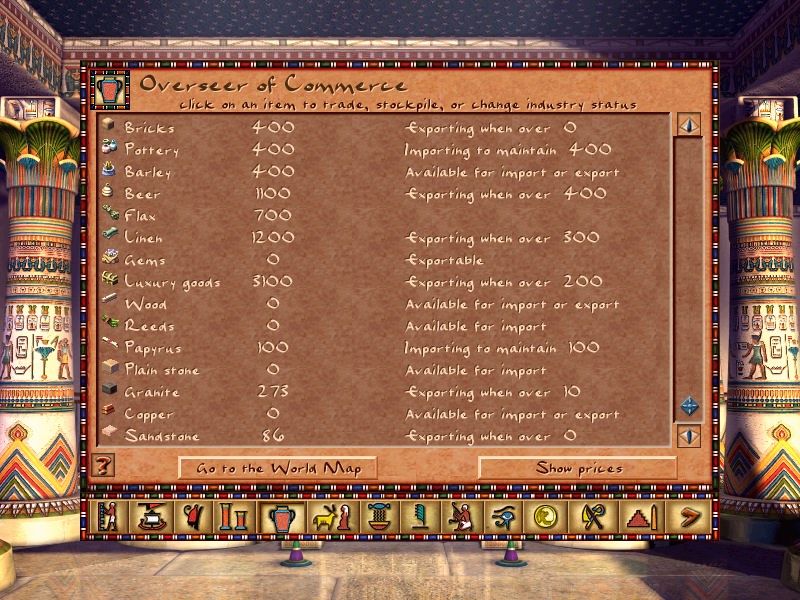
Resource management goes well beyond simple tax collection. You’ll need to optimize irrigation canals, manage farmland rotations, and ensure a steady food supply to prevent famine. Trade routes add another layer of depth: establishing safe paths across the Nile and beyond Egypt’s borders allows you to import luxury goods like wine, incense, and exotic animals. This dynamic trade system encourages you to adapt to shifting supply and demand, making each scenario feel fresh.
Military and defense are seamlessly integrated into the gameplay loop. As you grow your city, ward off periodic invasions by Nubian raiders or Libyan tribes, reinforcing border forts and training charioteers to protect your holdings. This risk–reward balance ensures that placid city-building never becomes monotonous; you must remain vigilant even when your economy flourishes. The AI opponents, while not overly aggressive, will test your strategic planning at key intervals.
Finally, the scenario-driven structure provides clear objectives—build a massive temple within a deadline or achieve a certain population level—while offering enough sandbox freedom to express your creativity. Mission briefings are informative but never hand-hold too much, striking a satisfying balance between guidance and player-driven experimentation. Whether you’re erecting a humble mud-brick village or orchestrating the construction of the Great Pyramid, each challenge feels rewarding.
Graphics
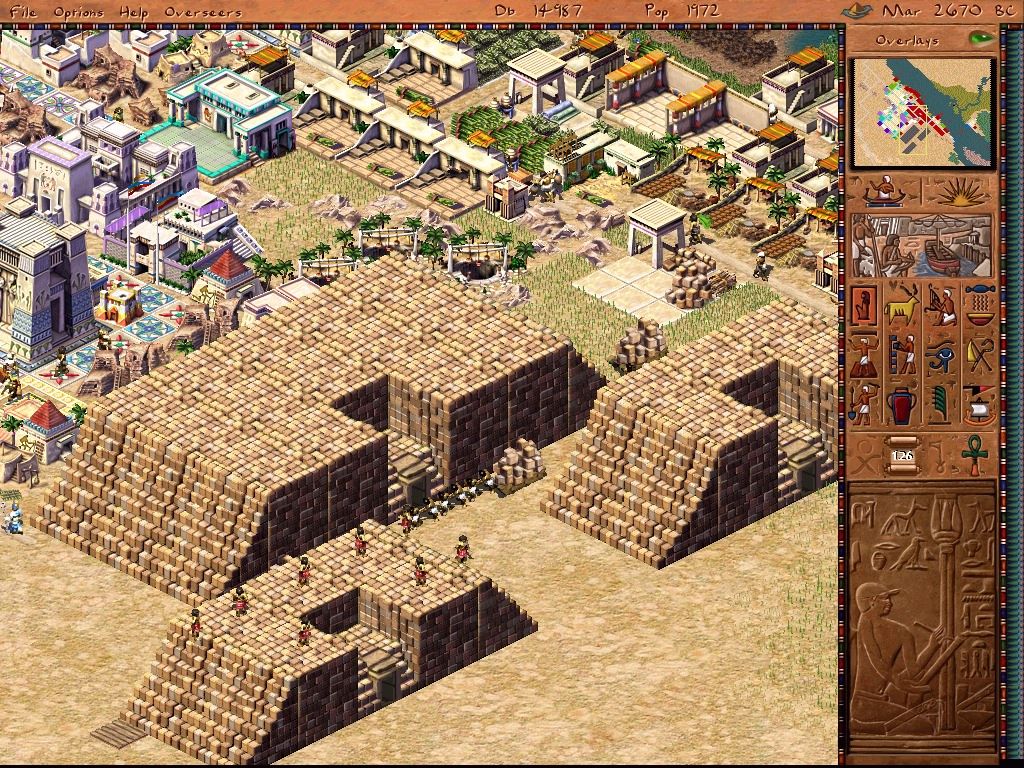
For its era, Pharaoh delivers a stunning isometric presentation that immerses you in the golden age of Egypt. The color palette captures the sun-baked sands, lush Nile delta oases, and stone-built monuments with remarkable fidelity. Subtle lighting effects highlight changes in time of day, giving bazaars a bustling, warm glow at noon and casting long shadows across desert roads in the late afternoon.
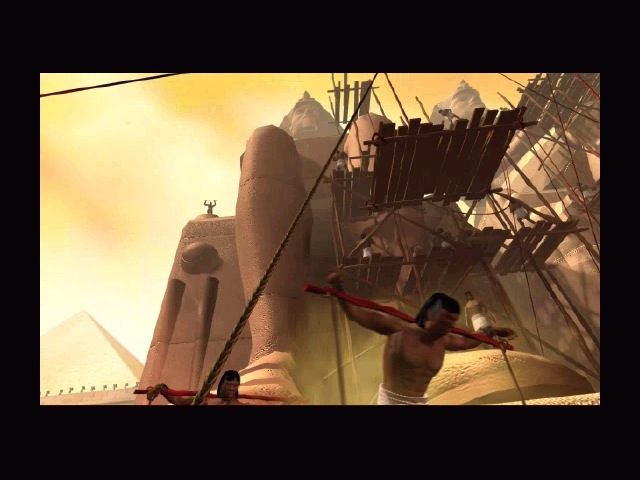
The game’s sprite-based animation brings your city to life. Farmers walk to and from the fields, traders wheel carts along bustling streets, and workers haul blocks onto pyramid scaffolding. These small touches, combined with flowing riverbanks and vibrant palm trees, lend a living, breathing quality to what could otherwise be a static map. Seasonal changes, such as the inundation of the Nile, are especially well-rendered, visually signaling the start of planting season.
While modern gamers may find the resolution low by today’s standards, the detailed textures and carefully crafted tile sets stand the test of time. Monument interiors, visible in cutscenes, showcase ornate hieroglyphics and richly painted walls that reflect the culture’s artistry. Even the user interface—composed of thematic papyrus scrolls and sandstone buttons—reinforces the historical ambiance without sacrificing clarity.
Story
Pharaoh doesn’t follow a linear narrative in the typical sense; instead, it tells its story through historical campaign scenarios that span several dynasties. Each mission places you in control of a different governor’s lineage, encouraging you to build up your family’s prestige and ultimately ascend to the throne. This framework provides an ongoing sense of progression and achievement.
The historical context is woven into mission briefings and in-game events. Advisors reference real-life pharaohs, and you learn about significant architectural milestones—such as the construction of the White Chapel or the Great Hypostyle Hall—through gameplay. These narrative snippets offer educational value without bogging down the action, making the learning experience both entertaining and organic.
Cutscenes and advisor dialogues are concise yet flavorful, enriching the world with tales of divine favor, court politics, and the occasional supernatural warning from Egyptian gods. While not a full-fledged storyline with branching paths, these vignettes serve their purpose, highlighting the stakes of your decisions and underscoring the delicate balance between human ambition and divine will in ancient Egypt.
Ultimately, Pharaoh’s story framework is more of a springboard for your own city-building saga. The sense of legacy—seeing your family rise from regional governors to the revered emblem of Egypt—adds emotional weight to each stone you lay. This personalized narrative arc keeps you invested in even the most routine administrative tasks.
Overall Experience
Pharaoh remains an addictive blend of strategic depth and creative freedom. The learning curve can feel steep at first, especially when juggling irrigation, trade, and defense simultaneously. However, once you master the fundamentals, each new dynasty presents fresh opportunities to refine your approach and tackle increasingly ambitious projects.
The soundtrack and ambient sounds further enhance the experience, with flute melodies and rhythmic drumming evoking the spirit of ancient Egypt. Combined with the period-authentic sound effects—stone chiseling, market haggling, river lapping—the audio design creates an immersive backdrop that never grows tiresome, even during extended play sessions.
Replayability is another strong suit. With over 50 scenarios spanning early Old Kingdom settlements to the grand temples of the New Kingdom, Pharaoh offers dozens of hours of gameplay. The scenario editor lets you craft custom challenges or revisit your favorite maps with new goals, ensuring that no two playthroughs feel identical.
While its interface and graphics show their age compared to contemporary titles, Pharaoh’s core design principles—meaningful resource management, strategic depth, and a rich historical setting—have influenced countless city-builders since. For fans of SimCity-style games seeking a more focused, narrative-driven experience, Pharaoh stands as a timeless classic that rewards patience and creativity.



Reviews
There are no reviews yet.