 Retro Replay Retro Replay gaming reviews, news, emulation, geek stuff and more!
Retro Replay Review
Gameplay
Prism: Guard Shield builds its core gameplay around a blend of stealth and tactical action that echoes the simplicity of early recruitment titles like America’s Army, but with a near-future twist. Players take on the role of a PRISM operative, tasked with neutralizing terrorist threats in high-value locations such as Washington, D.C., and San Francisco. Each mission begins with a thorough briefing that lays out your objectives, from covert reconnaissance to outright engagement, giving you clear purpose as you navigate sprawling urban environments.
(HEY YOU!! We hope you enjoy! We try not to run ads. So basically, this is a very expensive hobby running this site. Please consider joining us for updates, forums, and more. Network w/ us to make some cash or friends while retro gaming, and you can win some free retro games for posting. Okay, carry on 👍)
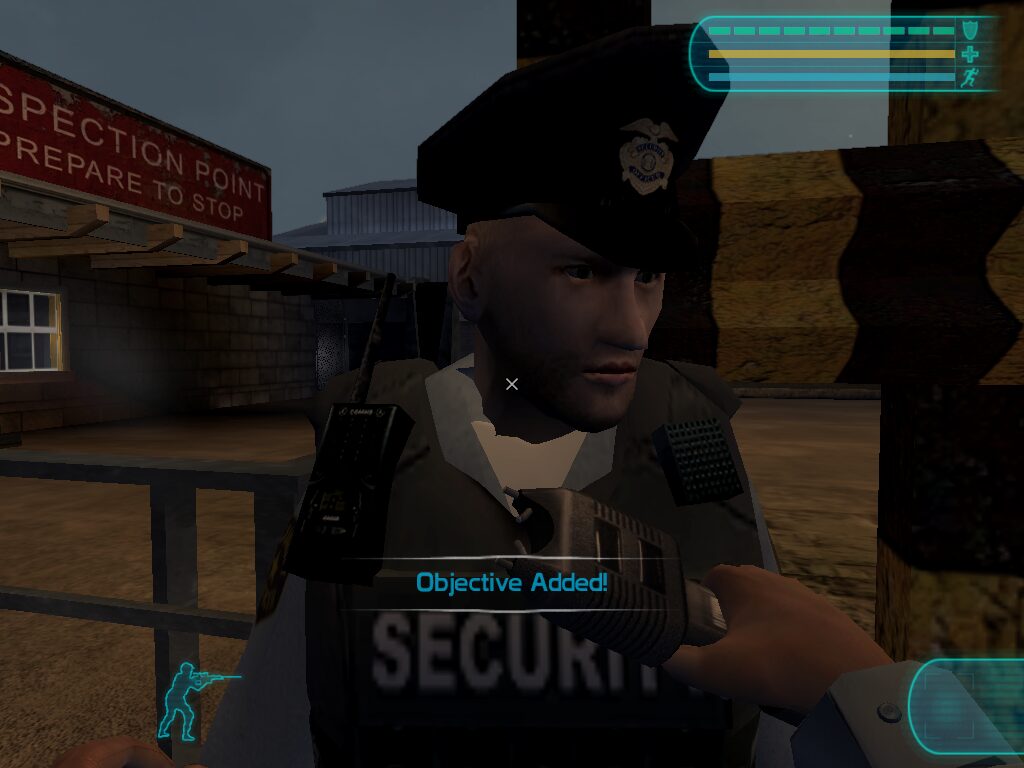
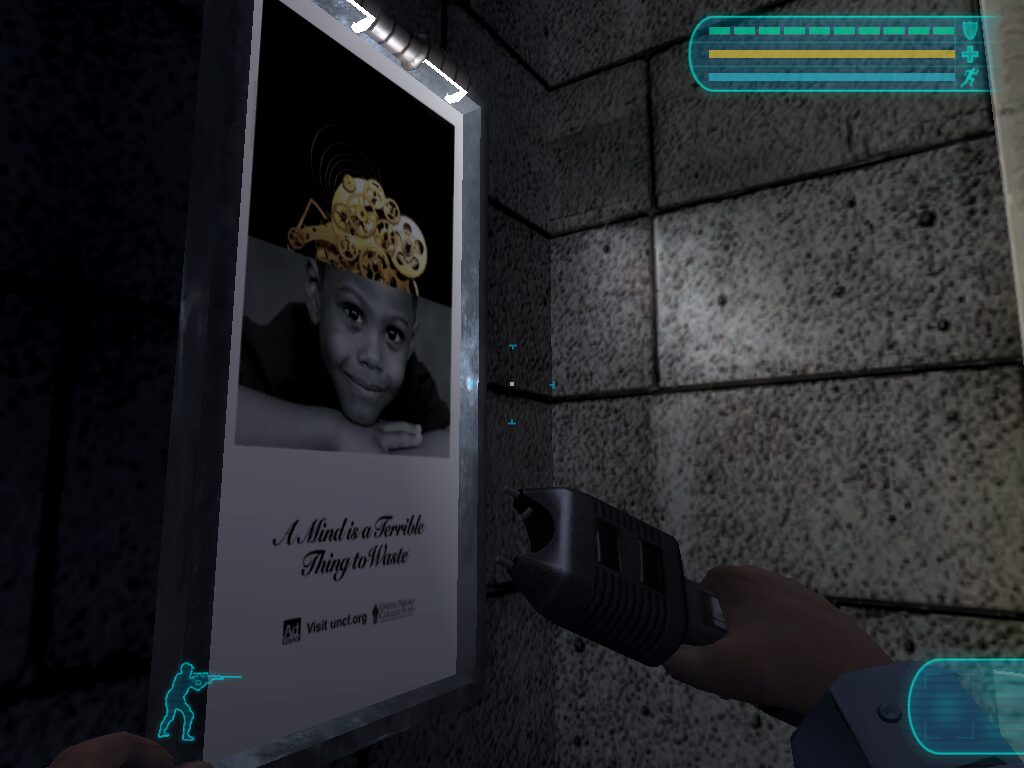
The game’s arsenal of eight near-future weapons offers a surprisingly deep variety of playstyles. Silenced firearms and a Taser stun-gun reward patient, stealth-oriented players, while heavier weapons excel in direct confrontations. Unique tools like the Hover Camera and Picture-In-Picture mode add layers of tactical depth, allowing you to scout ahead, mark targets, or coordinate ambushes without walking into the line of fire yourself. Night Vision mode further amplifies the tension, transforming dimly lit corridors into lethal playgrounds of shadows.
Multiplayer in Prism: Guard Shield splits neatly into two distinct experiences. Cooperative Mission Mode lets you and friends tackle AI-driven terrorist cells, each player choosing mission objectives that often require synchronicity and teamwork—breaching doors simultaneously or covering one another during a fall-back. Tactical Combat Mode shifts the focus to classic one-on-one or team-versus-team deathmatches, pitting squads of PRISM operatives against each other in arenas that range from a deserted island to a bustling football stadium.
The mission design balances linear objectives with open-ended routes, encouraging multiple playthroughs to find new entry points or smart flanking paths. Enemy AI exhibits basic but effective behaviors, such as calling for backup or seeking cover when under fire, keeping encounters tense without feeling handicapped. The addition of release 3’s extra levels and weapons only deepens the gameplay pool, ensuring both newcomers and returning players have fresh challenges to tackle.
Graphics
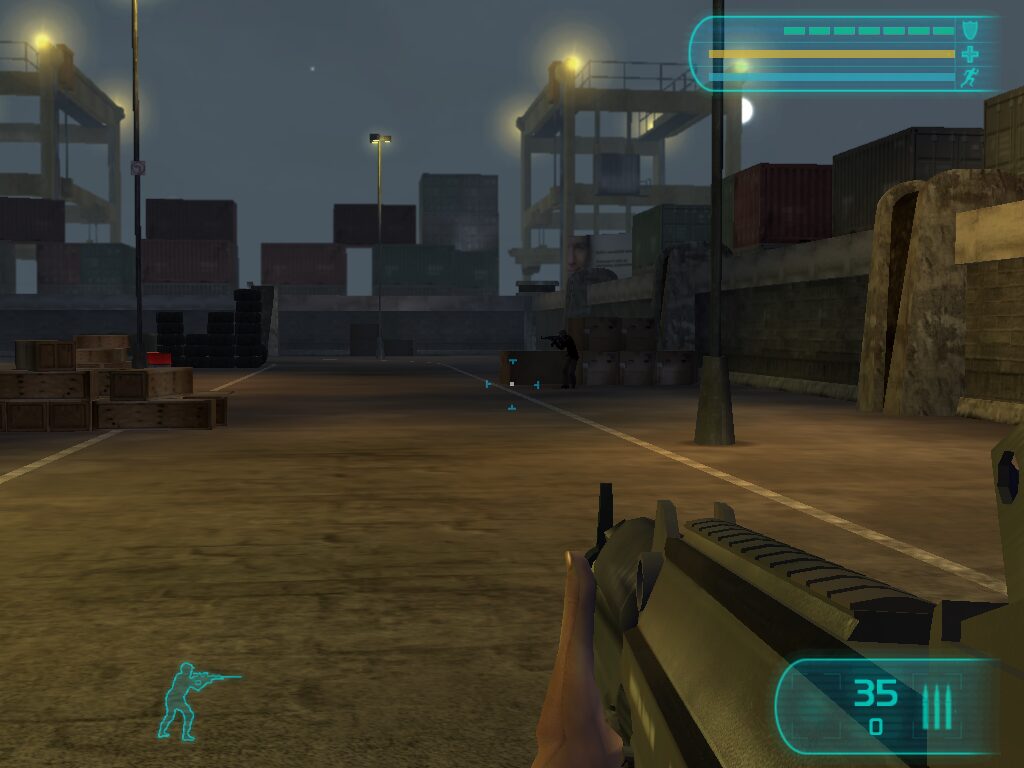
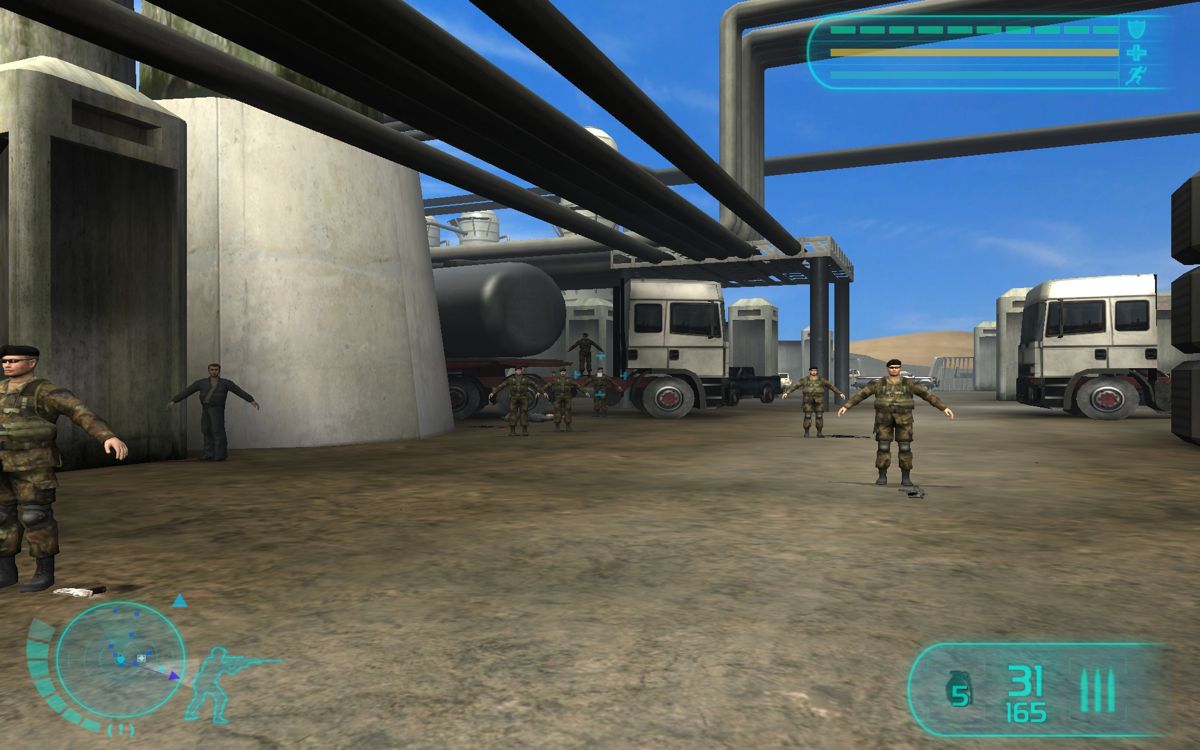
Prism: Guard Shield may lack the photorealism of modern AAA titles, but its visuals hold up well for a free promotional game from 2008. Environments—from the neon-lit streets of downtown San Francisco to the cavernous halls of a secure oil refinery—are rendered with crisp textures and dynamic lighting that accentuates the game’s stealth mechanics. Shadows dynamically shift as you move, giving genuine tension to every creak and corner.
Character models and weapon designs reflect the near-future setting with believable detail. Operatives’ gear is functional rather than flashy: subdued camo, streamlined helmets, and compact holsters that hint at practicality over showmanship. Enemy combatants, too, wear realistic uniforms and gear, helping maintain immersion. Animations are serviceable, though occasionally stiff during melee takedowns, but they rarely detract from the overall experience.
One of the most impressive graphical features is the Picture-In-Picture mode, which overlays a live feed from your Hover Camera or remote CCTV hack. This dual-view display runs smoothly, allowing you to keep track of multiple angles without stuttering or frame drops. Night Vision mode swaps to a high-contrast green filter that, while simplistic, effectively enhances visibility in dimly lit areas and reinforces the game’s espionage feel.
Despite its age, Prism: Guard Shield maintains stable performance on modest systems thanks to its scalable engine. Frame rates stay consistent even during multi-enemy gunfights or in large open maps, making it an accessible choice for players without high-end hardware. Overall, the graphics may not dazzle today’s standards, but they deliver a coherent aesthetic that complements the game’s tactical pulse.
Story
At its heart, Prism: Guard Shield is a recruitment-style narrative designed to showcase the U.S. Army National Guard’s mission while delivering an engaging near-future thriller. You step into the role of a PRISM (Pre-emptive Reconnaissance and Identification Security Mainframe) operative entrusted with safeguarding the homeland from clandestine terrorist cells. The plot unfolds through mission briefings, radio chatter, and environmental storytelling rather than cutscenes, giving players the sense of being on the front lines rather than watching from afar.
The storyline progresses logically from low-key surveillance operations to high-stakes assaults on critical infrastructure. Missions at an airport, train station, and an oil refinery each introduce new narrative wrinkles—sabotage attempts, hostage emergencies, or hidden biochemical threats—that keep the pace brisk. Release 3 expands this arc with fresh locales, such as a sporting event at a packed stadium, raising the stakes and emphasizing the global scope of PRISM’s mandate.
What the game lacks in character development, it compensates for with atmosphere. Post-9/11 anxieties are woven subtly into mission dialogues and the omnipresent threat of surveillance. The face-recognition mechanics and ability to commandeer traffic cameras give a sense of Orwellian oversight that fits snugly into the modern debate on security versus privacy. While it’s clearly a promotional tool, the narrative balance between patriotism and cautionary intrigue prevents it from feeling overtly didactic.
Overall, the story functions as a sturdy backbone for the gameplay. It never becomes an award-winning script, nor does it overstay its welcome—missions are succinct, with each chapter driving home the perils of extremist networks. For players seeking a context-rich shooter that goes beyond a basic “run-and-gun” formula, Prism’s narrative framework delivers just enough plot to sustain engagement.
Overall Experience
Prism: Guard Shield succeeds as both a free teaser of National Guard operations and a standalone tactical shooter. Its blend of stealth mechanics, varied mission structures, and near-future gadgets offers an experience that feels more polished than most zero-cost promotional titles. Whether you’re sneaking through dimly lit corridors with a silenced pistol or coordinating a multi-player breach, the gameplay remains consistently engaging.
Multiplayer modes add significant replay value, especially Cooperative Mission Mode, where communication and role-specialization elevate every round. While the player base may not rival major commercial shooters, the dedicated community that formed around release 3’s extra maps keeps matches lively. Tactical Combat Mode, though less nuanced than the co-op experience, serves as a fun arena for those who favor direct confrontation over subterfuge.
Graphically, the game holds up on modern systems without demanding top-tier hardware, making it accessible to a wide audience. Its realistic environments, functional HUD, and stable performance ensure immersion stays intact. Storywise, Prism draws you in with its plausible near-future premise and steady mission cadence, even if it doesn’t break new ground in narrative design.
For prospective players curious about military-style shooters or those with an interest in the National Guard’s recruitment initiatives, Prism: Guard Shield offers a compelling, no-cost entry point. Its thoughtful mix of stealth, teamwork, and action provides a memorable experience that, despite some dated elements, remains surprisingly fresh more than a decade after its release. If you’re looking for a free, cooperative-friendly shooter with a patriotic edge, Prism is well worth a download.



Reviews
There are no reviews yet.