 Retro Replay Retro Replay gaming reviews, news, emulation, geek stuff and more!
Retro Replay Review
Gameplay
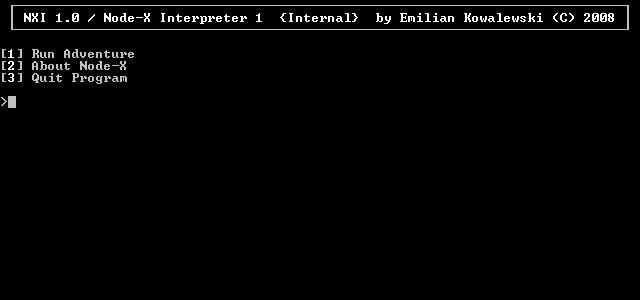
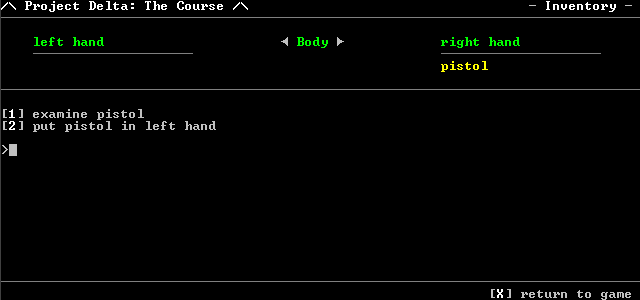
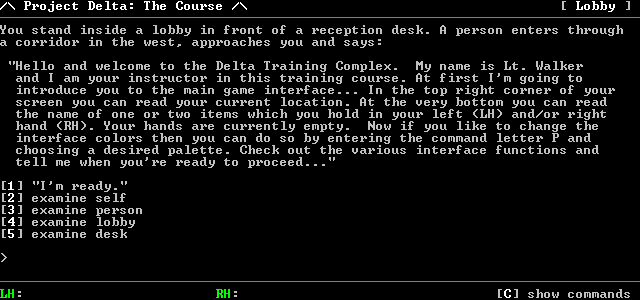
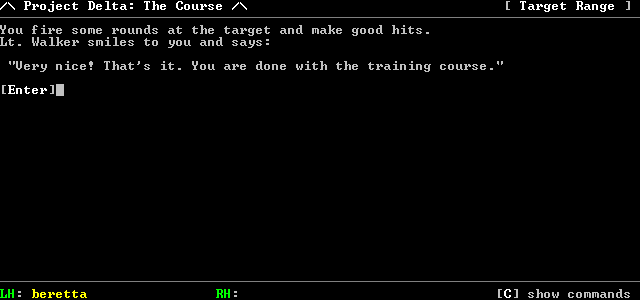
Project Delta leverages the Node-X choose-your-own-adventure engine to deliver a surprisingly fluid interactive experience. Players take on the role of a female military operative navigating a series of training exercises administered by Lt. Walker. While the term “puzzles” might be generous, the light inventory-management tasks offer just enough variety to break up the steady rhythm of decision points without overwhelming newcomers to the genre.
(HEY YOU!! We hope you enjoy! We try not to run ads. So basically, this is a very expensive hobby running this site. Please consider joining us for updates, forums, and more. Network w/ us to make some cash or friends while retro gaming, and you can win some free retro games for posting. Okay, carry on 👍)
The branching narrative structure ensures that each choice—whether sorting ammunition, prioritizing gear, or responding to Lt. Walker’s situational prompts—carries weight. Although the challenges are straightforward, they serve as useful pace-setters between dialogue nodes and action sequences. Experienced players will appreciate how the Node-X framework dynamically adapts to their decisions, opening new dialogue paths and training scenarios that encourage replayability.
Combat itself takes place in a controlled shooting range environment, emphasizing precision and timing over reflex-driven firefights. You calibrate your sights, select the appropriate rounds from your limited inventory, and adjust your stance under Lt. Walker’s watchful eye. This streamlined approach reinforces the sense that Project Delta is as much an authoring system demo as it is a self-contained adventure.
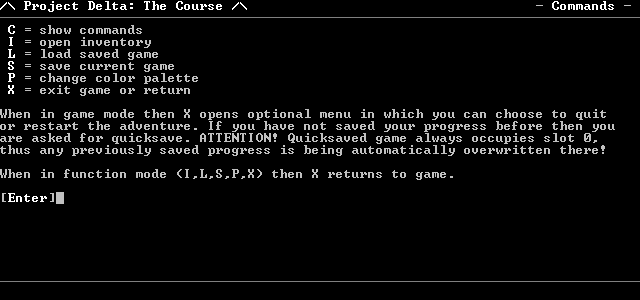
Control responsiveness is solid throughout, with intuitive menus and clear prompts guiding you through each exercise. While hardcore tactical fans may find the mechanics too light, those looking for a narrative-driven training simulation will find the gameplay loop both accessible and engaging.
Graphics
Project Delta’s visual presentation is clean and functional, prioritizing clarity over flashy effects. The shooting range environment is rendered in crisp detail, with realistic weapon models and modular props that reinforce the military setting. Textures are modest but well-optimized, ensuring smooth performance even on mid-range hardware.
Character models, including the protagonist and Lt. Walker, are sufficiently detailed to convey emotion during dialogue exchanges. Facial animations remain somewhat static, yet the well-timed voice lines and body language compensate for any lack of visual dynamism. Camera angles shift subtly to highlight critical decision points, keeping the focus firmly on the story beats.
The UI design is perhaps the game’s strongest graphic asset. Node-X’s dialogue branches are presented in a clean, easy-to-read overlay, with color-coded choices that immediately signal potential consequences. Inventory icons are self-explanatory, making quick gear swaps and resource checks a breeze.
Lighting effects are minimal but effective: overhead fixtures cast realistic shadows in the training hall, while subtle muzzle flashes add authenticity to each shot. Overall, the graphics serve the game’s purpose as a demonstration tool—clear, concise, and free of unnecessary visual clutter.
Story
At its core, Project Delta is a narrative showcase for Node-X’s branching dialogue mechanics. You follow an unnamed female soldier through a series of training sessions overseen by the stern but fair Lt. Walker. Though the stakes are low—confined to a top-secret military installation—the personal insights you unlock through choice-driven exchanges give the story surprising depth.
Each training module doubles as a narrative vignette. Should you prioritize precision drills over speed runs? Do you bond with two soldiers sharing a bunk, or focus solely on nailing your marksmanship scores? These seemingly minor decisions shape your character’s rapport with Lt. Walker and open unique side conversations that hint at a broader world beyond the firing range.
While Project Delta doesn’t pretend to be an epic war saga, it does excel at showing how small moments can inform character development. Optional dialogue branches reveal snippets of the protagonist’s backstory—her motivations for enlisting, her relationship with her squad, and her determination to prove herself in a male-dominated environment.
Replay value hinges on exploring every narrative branch. With multiple endings tied to performance metrics and interpersonal choices, the game nudges you to revisit scenarios and uncover hidden exchanges. As a proof of concept, it convincingly demonstrates how a choose-your-own-adventure can balance mechanical challenges with meaningful storytelling.
Overall Experience
Project Delta stands out as both a concise military training sim and a pitch-perfect demo for the Node-X authoring system. Its tight focus on inventory management and dialogue choices keeps the experience brisk—clocking in at roughly one hour for a full run—while still delivering enough branching paths to warrant repeat playthroughs.
For players seeking a digestible, narrative-driven adventure with light tactical elements, Project Delta hits the mark. The streamlined gameplay loop, combined with clean graphics and a focused storyline, underscores the game’s role as a platform demonstration without feeling undercooked or incomplete.
Potential buyers should temper expectations: this is not a sprawling AAA title but rather a polished vignette designed to illustrate Node-X’s flexibility. That said, its approachable mechanics, engaging character interactions, and emphasis on choice make it a worthwhile pick for fans of interactive fiction and military training simulations alike.
In the end, Project Delta proves that a well‐executed concept, even on a smaller scale, can leave a lasting impression. It’s a testament to what the Node-X system can achieve and a solid standalone experience for anyone intrigued by branching narratives and tactical training scenarios.

Reviews
There are no reviews yet.