 Retro Replay Retro Replay gaming reviews, news, emulation, geek stuff and more!
Retro Replay Review
Gameplay
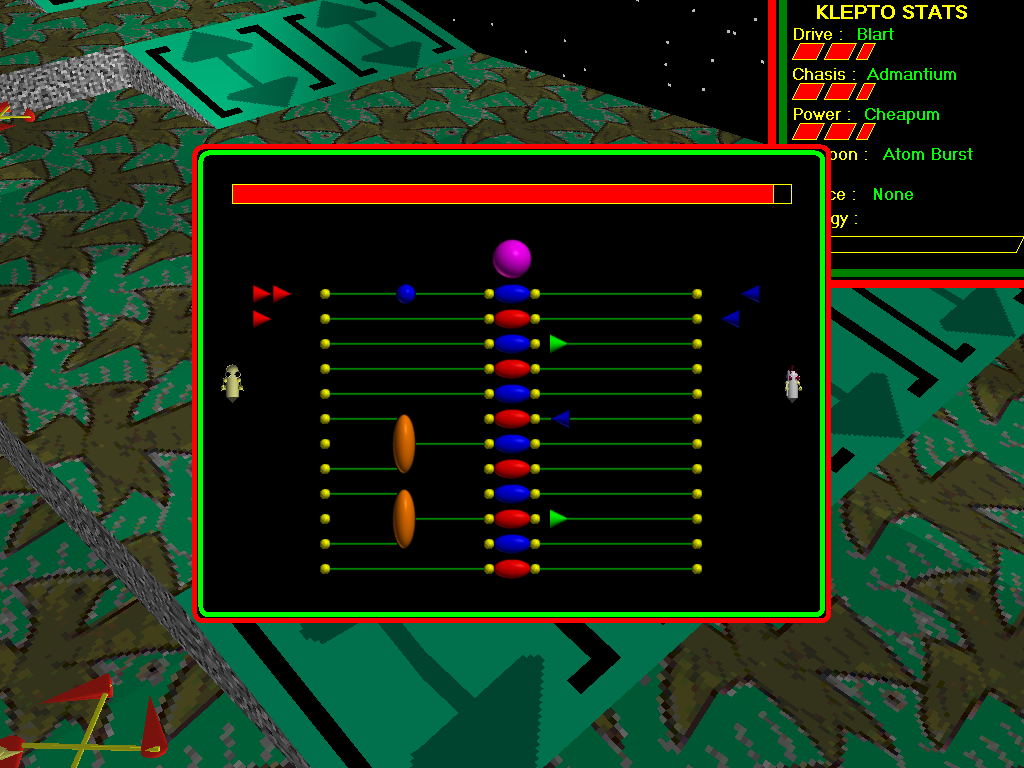
Quazatron’s gameplay strikes a satisfying balance between action and strategy, drawing clear inspiration from the legendary Paradroid while carving out its own identity. You take control of KLP-2, or “Klepto,” navigating an underground citadel teeming with hostile machines. Combat can be approached in multiple ways: direct shooting, ramming enemies to send them tumbling from catwalks, or using Klepto’s signature grapple to initiate a tense circuit-board mini-game.
(HEY YOU!! We hope you enjoy! We try not to run ads. So basically, this is a very expensive hobby running this site. Please consider joining us for updates, forums, and more. Network w/ us to make some cash or friends while retro gaming, and you can win some free retro games for posting. Okay, carry on 👍)
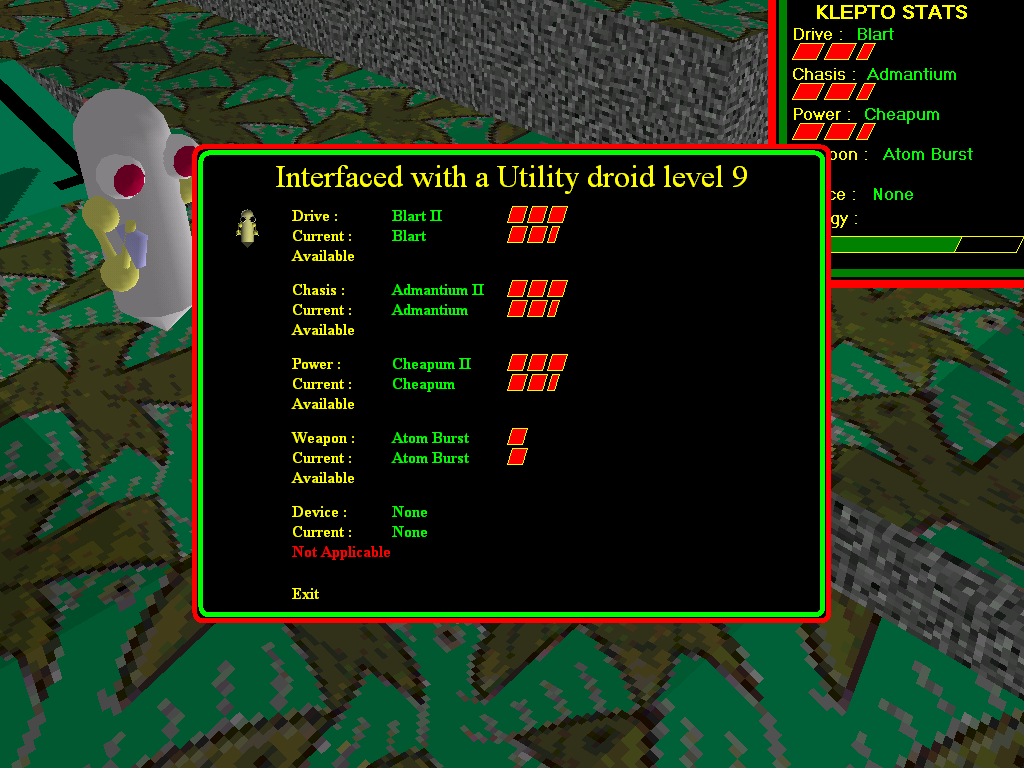
The grapple mechanic elevates encounters into a cerebral contest. When activated, it pauses the main view and brings up a top-down grid where you and the enemy race to complete circuit connections. Victory not only neutralizes the threat but also allows you to salvage weapon upgrades, armor plating, or mobility enhancements from the wrecked robot. This risk-reward system encourages thoughtful engagement rather than mindless button-mashing.
Exploration is just as rewarding as combat. Each level of the citadel is laid out with lifts, secret alcoves, and guarded power cells. Traversing from floor to floor demands both foresight and resource management: ammunition is finite, and damaged components can hamper Klepto’s performance. The sense of progression is palpable as you upgrade your robot’s systems and press deeper into the labyrinthine complex.
Graphics
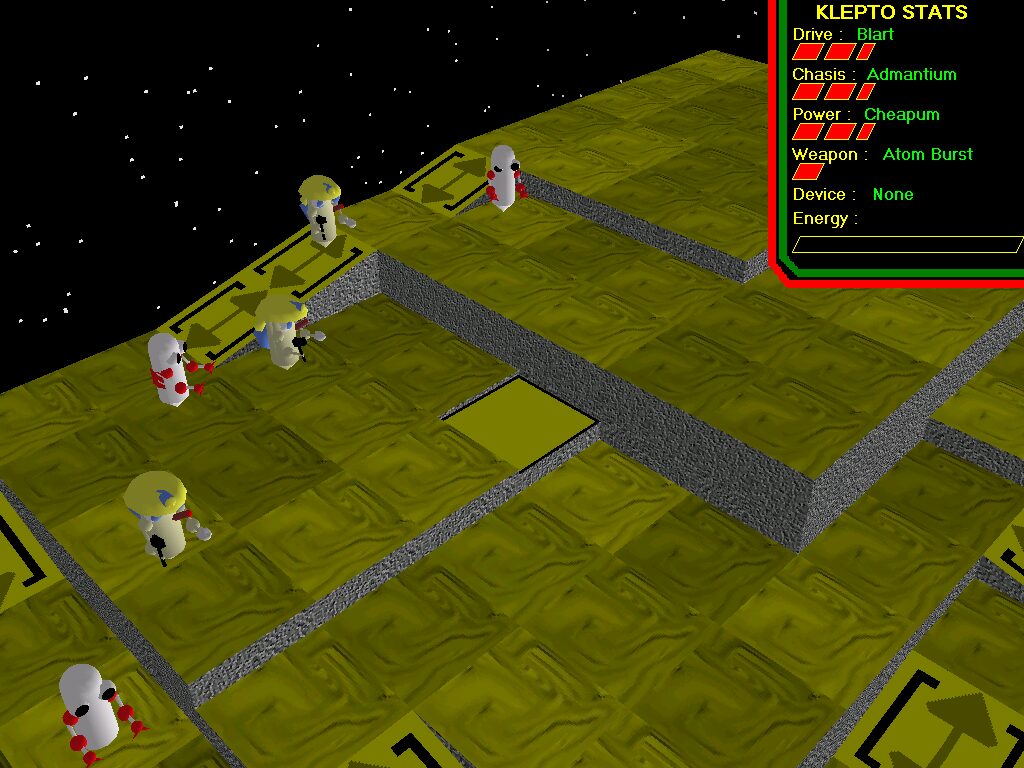
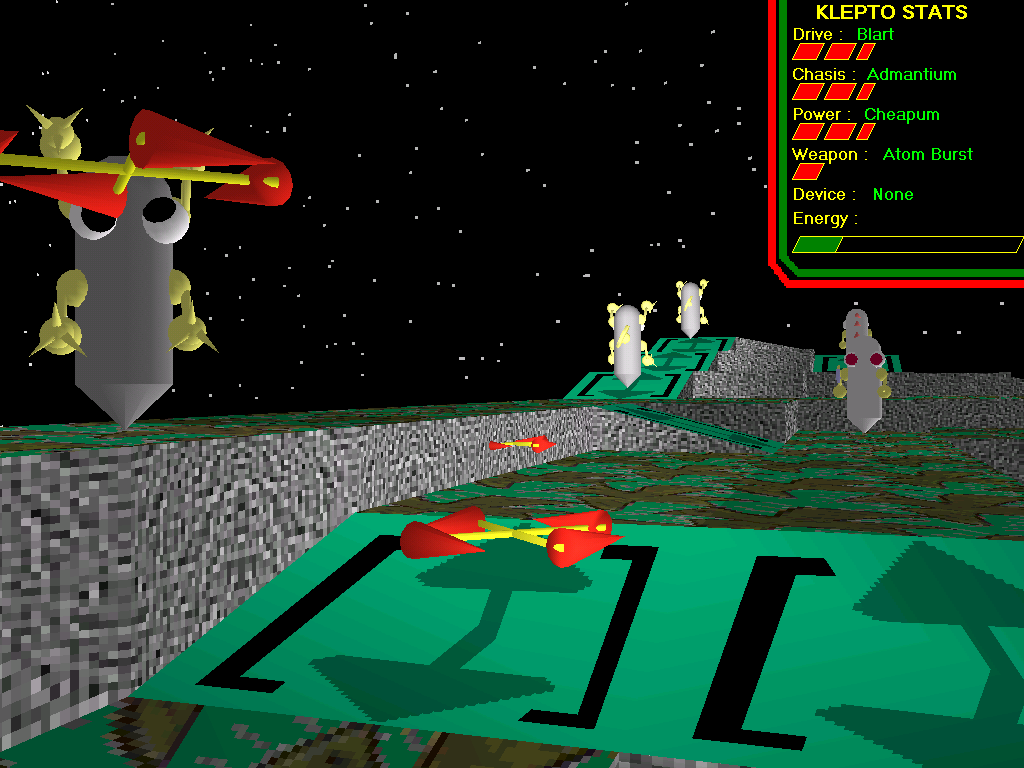
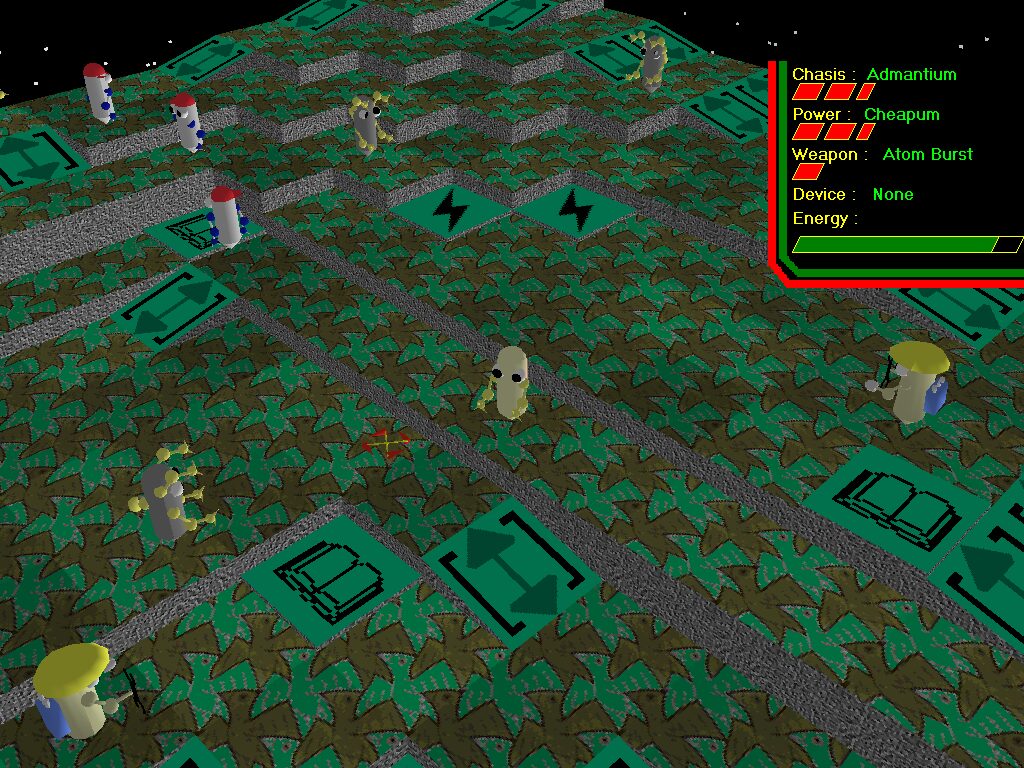
One of Quazatron’s biggest draws is its transformation from 2D bitmaps to fully realized 3D environments. The original 1986 version relied on static, isometric sprites, but this freeware remake renders the citadel in crisp, textured polygons, complete with dynamic lighting and atmospheric shadows. Each corridor feels lived-in, with flickering overhead lamps and conveyor belts that hum with mechanical life.
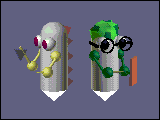
Enemy robots are modeled with surprising detail, reflecting their different combat roles—some bristle with heavy cannon mounts, others resemble agile scouts. The camera offers a fluid third-person vantage that smoothly transitions between action shots and grapple mini-games. While the frame rate occasionally dips in rooms populated with dozens of foes, it never becomes a serious hindrance to gameplay.
Particle effects for explosions and sparks are modest but effective, lending weight to each collision or blast. Textures on walls and floors vary from rusted metal walkways to high-tech control panels, helping players differentiate each level at a glance. In all, the graphical overhaul modernizes the experience without compromising the original’s utilitarian charm.
Story
At its core, Quazatron offers a straightforward premise: Klepto, an experimental robot, is dispatched to purge a rogue robot network from a subterranean stronghold. There’s no grand cinematic exposition, but the game’s sparse narrative works in its favor, letting the player’s progress and scavenged upgrades tell the tale of survival and machine evolution.
Environmental storytelling fills in the gaps. Graffiti-like warning signs on walls, half-destroyed machinery, and the occasional audio log hint at the undoing of the citadel’s original architects. As you delve deeper, the atmosphere grows more oppressive, suggesting that something far more dangerous awaits beyond the reinforced doors.
Though minimalistic, the narrative stakes are reinforced by the gameplay loop: every robot you defeat and every upgrade you claim brings Klepto closer to his creators’ unknown objectives. The lack of cutscenes or dialogue ensures uninterrupted action, catering to players who prefer to uncover lore organically rather than through lengthy exposition.
Overall Experience
Quazatron succeeds as a faithful yet polished homage to a classic 1986 robot-battle title. Its freeware model makes it accessible to anyone curious about retro-inspired action, while the depth of its combat systems and upgrade mechanics provides lasting appeal. Whether you’re a veteran of old-school isometric shooters or a newcomer to the genre, there’s plenty to appreciate.
Replay value comes from experimenting with different loadouts and tackling higher-difficulty citadel floors. Speedrunners and completionists will find satisfaction in mastering the grapple mini-game and uncovering every hidden chamber. The community around this freeware release also contributes custom maps and tweaks, extending its lifespan even further.
In conclusion, Quazatron’s blend of 3D visuals, strategic mini-games, and modular upgrades forms an engaging package that honors its heritage while feeling fresh and modern. It offers a challenging, rewarding journey through a hostile robot stronghold—and best of all, it won’t cost you a penny to join the fray.


Reviews
There are no reviews yet.