 Retro Replay Retro Replay gaming reviews, news, emulation, geek stuff and more!
Retro Replay Review
Gameplay
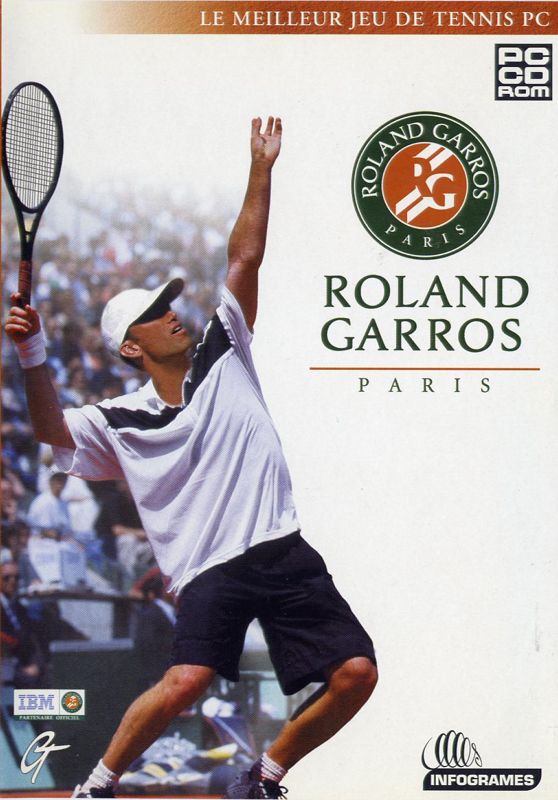
Roland Garros French Open – Paris 1999 delivers a straightforward yet surprisingly deep tennis simulation that is accessible to both newcomers and seasoned enthusiasts. With only two buttons dedicated to topspin and slice, the game pares down complex tennis mechanics to their essence. By combining these buttons with directional inputs, players can craft a variety of shot types, from aggressive forehand drives to delicate drop shots.
(HEY YOU!! We hope you enjoy! We try not to run ads. So basically, this is a very expensive hobby running this site. Please consider joining us for updates, forums, and more. Network w/ us to make some cash or friends while retro gaming, and you can win some free retro games for posting. Okay, carry on 👍)
The introduction of a predictive crosshair, appearing shortly before the ball reaches the avatar, marks a clever compromise between realism and playability. At that moment, all movement ceases, allowing the gamer to focus solely on the ball’s destination. This system not only lowers the barrier to entry for casual players but also demands precise timing and strategic shot placement at higher difficulty levels.
With 13 distinct difficulty settings, the pacing and challenge evolve markedly as you progress. Beginners can enjoy long rallies and forgiving AI, while veterans will appreciate ruthless opponents exploiting every weakness in their game. The option to play a single match or embark on a full season spanning 16 championships keeps the experience fresh; a quick exhibition at Roland Garros or an all-year campaign across renowned clay venues is just a menu selection away.
Another highlight is the inclusion of 100 playable characters—male and female pros and up-and-comers, each with unique strengths and weaknesses. While the game does not display detailed attribute bars during matches, seasoned players will quickly discern serve speed, baseline consistency, and net agility. Experimenting with different competitors and adjusting your tactics court by court creates a compelling incentive to replay over and over.
Graphics
For its time, Paris 1999’s visuals strike a fine balance between clarity and character. Player models are polygonal yet distinct, allowing you to recognize your chosen competitor by hairstyle, kit colors, and unique serving stances. Animations are fluid—particularly notable on clay courts, where the characteristic dust clouds kick up with each slide and pivot.
The four court surfaces—clay, grass, hard, and indoor carpet—each exhibit their own aesthetic flair. The red clay of Roland Garros is rich and textured, while the grass courts are lush and vibrant, though the color palette can feel somewhat muted under the era’s limited lighting effects. Indoor arenas benefit from brighter, more uniform illumination, showcasing crisp lines and stark contrasts.
Stadium crowds, ball boys, and umpire chairs round out the presentation, giving matches a credible atmosphere. While detailed facial expressions are beyond the game’s reach, the roar of the crowd—conveyed through digitized samples—adds tension and excitement during break points or long rallies. Camera angles are largely fixed behind the baseline, emphasizing the cerise hue of the clay and the geometry of the court.
Menus and in–game overlays are cleanly designed. Shot indicators and scoreboards blend into the action without obscuring vital areas of play. Though modern players might find the graphics quaint by today’s standards, the attention to surface detail and court ambiance retains a nostalgic charm that will resonate with retro sports aficionados.
Story
As a pure sports title, Roland Garros French Open – Paris 1999 lacks a traditional narrative. Instead, it crafts its own tale through the progression of a season-long campaign. Beginning as an unseeded contender, you navigate qualifiers, mid-tier events, and the grand slam of Roland Garros itself. Each victory feels earned, with trophy presentations and photo ops in the game’s encyclopedia serving as milestones.
The in-game encyclopedia functions as a pseudo storybook, chronicling past French Open champions and noteworthy tournaments. Rich with black-and-white photographs, player statistics, and historical anecdotes, this feature educates as much as it entertains. Over time, you build not only a character’s résumé but also a mental timeline of tennis lore.
Subplots emerge organically through matchups. Facing a dominant clay-court specialist or a big-server at a decisive semifinal can feel like chapters in a broader career epic. Even with no voiced dialogue or cutscenes, the ebb and flow of victories and defeats weaves a compelling narrative of ambition, resilience, and the quest for Roland Garros glory.
The lack of off-court distractions—no management sim elements, no relationship minigames—places pure focus on the sport. In doing so, the game forges its own identity: a digital pilgrimage to the tannic-rich courts of Paris, where every rally contributes to an invisible storyline only you can script.
Overall Experience
Roland Garros French Open – Paris 1999 stands as a testament to the late ’90s approach to sports gaming: simple controls, targeted depth, and an emphasis on replay value. Its season mode, variety of courts, and extensive character roster provide countless hours of match play, catering to both quick pick-up sessions and marathon tournament runs.
The learning curve is inviting—two-button mechanics and clear visual cues smooth the initial hurdle—but the higher difficulty levels ensure that mastery takes dedication. This blend makes the game suitable for families, casual enthusiasts, and competitive players seeking a nostalgic challenge. Local multiplayer matches, in particular, become social events, evoking living-room rivalries and communal celebration of aces and match points.
Graphically, the title captures the essence of clay-court tennis in 1999, from the dusty skid after a sliding backhand to the muted roar of a capacity crowd. While modern shaders and physics engines have long surpassed its presentation, the game’s artistic choices remain coherent and engaging. The encyclopedia, in addition, delivers an educational angle seldom seen in its contemporaries.
Ultimately, Roland Garros French Open – Paris 1999 is more than a dated sports sim—it’s a slice of tennis history, wrapped in an accessible package that still holds up for enthusiasts of classic gaming. Whether you’re chasing your first Grand Slam victory or simply reliving the golden era of polygonal pros, this title offers a satisfying, clay-stained journey that lingers long after the final point.

Reviews
There are no reviews yet.