 Retro Replay Retro Replay gaming reviews, news, emulation, geek stuff and more!

Retro Replay Review
Gameplay
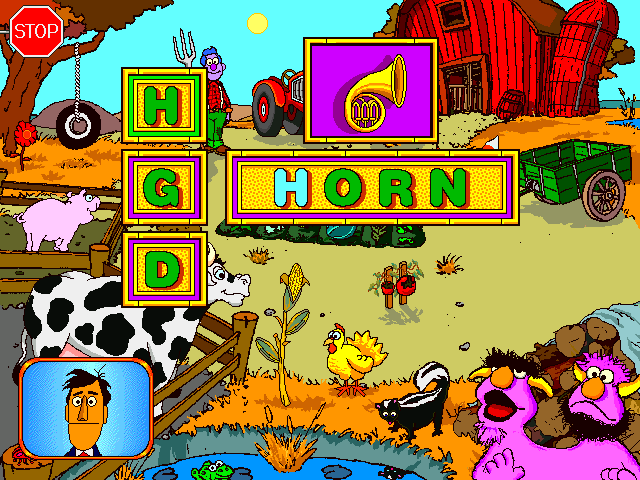
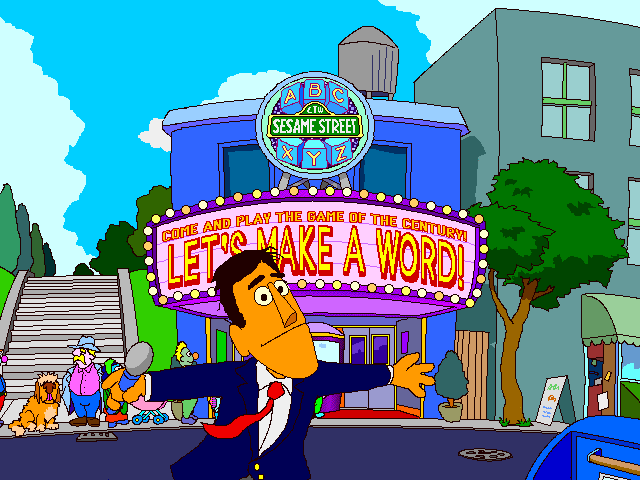
Sesame Street: Let’s Make a Word! presents its gameplay as an interactive game show, hosted by Guy Smiley. Children step into the role of contestants, moving through a series of mini‐games designed to reinforce letter recognition, spelling, and vocabulary. Each round focuses on a specific word or set of letters, prompting young players to piece together words by selecting the correct tiles or matching objects to their corresponding names.
(HEY YOU!! We hope you enjoy! We try not to run ads. So basically, this is a very expensive hobby running this site. Please consider joining us for updates, forums, and more. Network w/ us to make some cash or friends while retro gaming, and you can win some free retro games for posting. Okay, carry on 👍)
The involvement of familiar characters like Big Bird, Elmo, Oscar the Grouch, and the Two‐Headed Monster adds a layer of comfort and motivation for preschoolers. As players progress, these characters provide guidance—offering hints, celebrating correct answers, and gently correcting mistakes. This supportive feedback loop is essential for maintaining engagement without creating frustration.
Interactivity is heightened by clickable objects throughout the game. Every time a child clicks on an image—whether it’s an apple for “A” or a ball for “B”—a brief animation plays, reinforcing the connection between the word and its visual representation. These animations not only reward correct interactions but also encourage exploration, making the educational process feel like playful discovery.
The pacing of the mini‐games is deliberately unhurried, allowing young learners to absorb instructions and process feedback at their own speed. There’s no timer pushing them forward, which reduces anxiety and fosters a safe environment for experimentation. Parents and educators will appreciate how the game’s structure respects the attention spans and developmental stages of its target audience.
Graphics
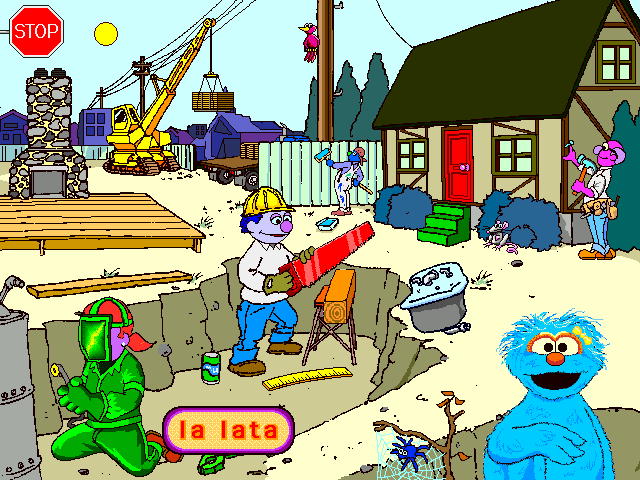
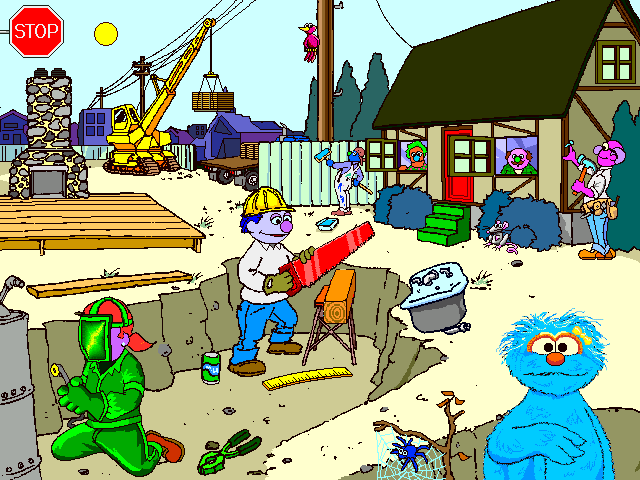
Visually, Sesame Street: Let’s Make a Word! captures the vibrant, child‐friendly aesthetic of the beloved TV series. Backgrounds are rendered in bright, primary colors that keep the screen uncluttered and easy to navigate. This clarity ensures that the focus remains on the letters, words, and interactive elements critical to the learning experience.
The character sprites are faithful to their television counterparts, complete with recognizable costumes and facial expressions. Big Bird’s warm smile, Elmo’s exuberance, and Oscar’s trademark scowl are all present, bringing an authentic Sesame Street feel to the title. The Two‐Headed Monster’s dual personalities emerge through subtle differences in tone and movement, adding charm to each mini‐game interaction.
Animations triggered by object clicks are simple yet engaging. A bouncing ball, a chirping bird, or a twirling pencil reward correct selections, reinforcing positive learning outcomes through visual feedback. While these animations are not graphically complex, their consistent presence keeps young players engaged and encourages repeated play.
Menus and instructional screens employ clear typography and intuitive iconography. Large, easy‐to-read text and voice‐over prompts work in tandem to guide children through each activity. The absence of distracting visual effects means that players can concentrate fully on the educational content without unnecessary sensory overload.
Story
While Sesame Street: Let’s Make a Word! doesn’t feature a traditional narrative arc, the game’s unifying premise revolves around Guy Smiley’s energetic hosting. Each mini‐game is introduced as a new “episode” in an ongoing word‐building broadcast, lending a loose storyline that ties the activities together.
The appearance of beloved Sesame Street residents functions as episodic cameos rather than a linear plot. For instance, Elmo might introduce a spelling challenge in one round, while Oscar the Grouch offers his grumbling wisdom in another. This format keeps each session fresh, as players never quite know which character will guide them next.
The absence of Kermit the Frog is notable, likely reflecting the real‐world loss of Jim Henson. However, the remaining cast’s performances are heartfelt and professional. Players familiar with the TV show will immediately recognize the voice actors and the personalities they bring to their roles, creating continuity between the screen and the software.
Though there is no overarching conflict or climax, the game’s “contest” structure provides its own sense of purpose. Kids strive to earn virtual applause from the studio audience and unlock new word sets, giving them achievable milestones that mimic the satisfaction of reading their first real‐world words.
Overall Experience
Sesame Street: Let’s Make a Word! succeeds as an educational tool that feels more like fun than formal study. By leveraging the charm of recognizable characters and the excitement of a game show, it holds the attention of preschoolers while steadily reinforcing core literacy skills. The absence of high‐pressure elements ensures that children learn at their own pace, fostering confidence and curiosity.
Replay value is strong thanks to multiple word categories and randomized letter arrangements. Even after repeated playthroughs, the mini‐games feel fresh, as players encounter different objects and spelling challenges each time. Parents and educators will appreciate that the content remains relevant without becoming repetitive.
The combination of on‐screen text, clear voice‐overs, and interactive animations addresses a variety of learning styles. Visual learners benefit from bright imagery and motion, auditory learners from professional voice acting, and kinesthetic learners from the hands‐on clicking and dragging mechanics.
Overall, Sesame Street: Let’s Make a Word! is a thoughtfully designed title that balances education and entertainment. It leverages the ingrained trust and affection audiences have for Sesame Street, offering a safe, enriching environment for early literacy development. Whether played at home or in a preschool setting, this game provides a delightful introduction to reading and spelling that sets the stage for future academic success.



Reviews
There are no reviews yet.