 Retro Replay Retro Replay gaming reviews, news, emulation, geek stuff and more!
Retro Replay Review
Gameplay
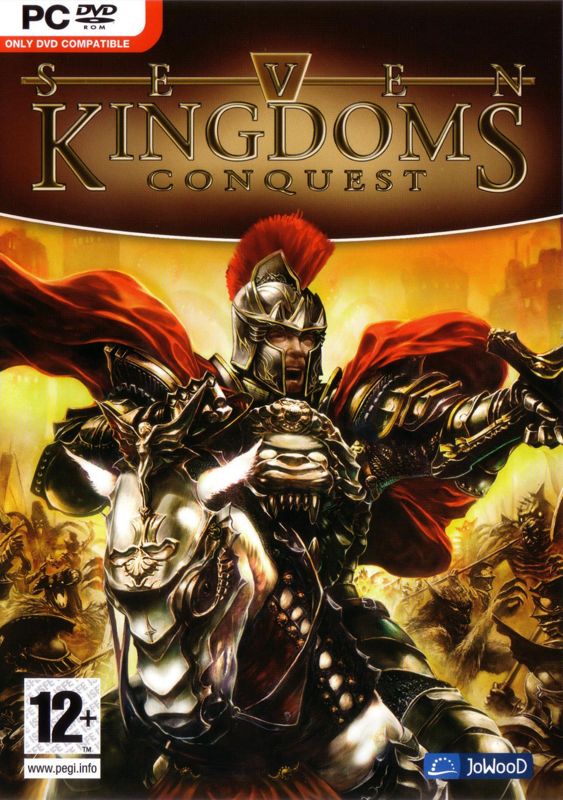
Seven Kingdoms: Conquest builds on classic real-time strategy foundations by pitting two entirely distinct sides against one another: the Humans, advancing through seven historical ages from Bronze Age to Modern Era, and the Demons, who command seven nightmarish realms such as Plague, Fire, and Ice. Each faction boasts its own tech tree, unit roster, and economic model—Humans rely on steady resource gathering and city building, while Demons harness dark rituals and mana to summon otherworldly beasts. This dichotomy keeps each match feeling fresh, whether you’re plotting a methodical human expansion or unleashing a demonic horde.
(HEY YOU!! We hope you enjoy! We try not to run ads. So basically, this is a very expensive hobby running this site. Please consider joining us for updates, forums, and more. Network w/ us to make some cash or friends while retro gaming, and you can win some free retro games for posting. Okay, carry on 👍)
Base construction remains intuitive, with clear building roles and upgrade paths. However, Conquest introduces deeper layers of espionage and diplomacy: you can bribe enemy governors, steal resources under cover of darkness, or forge temporary alliances against stronger foes. These mechanics reward creative playstyles and encourage adaptability, since the AI will react to treaties and betrayals in ways that can shift the tide of battle.
Beyond the sprawling single-player campaign—which spans 5,000 years of conflict—the game offers a robust Skirmish mode and four multiplayer variants, each defined by unique victory conditions such as artifact hunts, king-slaying, or timed objectives. Whether you prefer a classic annihilation match or a race to secure relics, there’s an option that suits both casual friends and competitive clans.
AI opponents range from cautious diplomats to aggressive warmongers, and difficulty settings adjust not only enemy strength but also economic bonuses and behavior patterns. This ensures newcomers can learn at a manageable pace, while RTS veterans can face a brutal gauntlet. Add in hot-seat and LAN support, and Conquest cements itself as a playground for both solo strategists and multiplayer communities.
Graphics
The visual presentation of Seven Kingdoms: Conquest strikes a balance between functional clarity and thematic flair. Units and buildings are rendered in a stylized, hand-painted aesthetic that remains legible even when dozens of troops crowd the battlefield. Textures aren’t hyper-realistic, but the art direction evokes the grand sweep of history and the sinister aura of demonic magic.
Maps range from sun-baked deserts and lush river valleys to volcanic craters and frozen wastelands, each with environmental hazards that influence tactical decisions. Dynamic weather effects—such as sandstorms that reduce visibility or blizzards that slow movement—add another strategic dimension, without bogging down performance on mid-range systems.
User interface elements are clean and logically organized: resource counters, mini-map, and unit panels never feel crowded. Tooltips provide quick reminders of special abilities, and a detailed civilopedia guides new players through ages, realms, and faction strengths. Occasional UI lag can be noticed in massive late-game clashes, but overall things remain smooth even with dozens of spell effects and particle animations on screen.
Story
The narrative of Seven Kingdoms: Conquest unfolds over millennia, opening in 3000 BC in Mesopotamia and concluding in a speculative near future. Human campaigns focus on forging alliances among city-states, discovering new technologies, and fending off the encroaching demon armies that seek to enslave humanity. In contrast, Demon missions pit players against divine artifacts and powerful sorcerers as they attempt to shatter seals and free their dark master.
Each of the seven human ages introduces fresh objectives—build the first iron forge in the Bronze Age, launch trebuchets in the Middle Ages, or deploy mechanized infantry in the Modern Era—while revealing layers of lore through voiced briefings and in-engine cutscenes. Demonic scenarios feel suitably unsettling, framed by eerie atmospheres, occult runes, and soundtracks steeped in chanting vocals and distorted horns.
Though the overarching plot is linear, side quests and optional objectives encourage exploration of hidden temples and ancient ruins. Finding these secrets not only grants powerful bonuses but also deepens the worldbuilding, illustrating how magic and mortals have clashed through the ages. While the story occasionally leans on familiar fantasy tropes, strong writing and varied mission design keep it engaging until the end.
Overall Experience
Seven Kingdoms: Conquest excels at blending historical progression with high-fantasy stakes, offering both a sprawling campaign and versatile multiplayer options. Its accessible interface and scalable AI make it approachable for newcomers, yet the interplay of diplomacy, espionage, and realm-specific powers provides enough depth to satisfy hardcore strategists.
Replayability is a strong suit: random map generation in Skirmish mode, coupled with faction asymmetry, ensures no two matches feel the same. Regular balance patches and a mod-friendly architecture also foster an active community, where custom maps and scenario editors allow for endless experimentation.
Performance is solid across a range of hardware, with only minor slowdowns in sprawling late-game brawls. Sound design and music underscore the epic scale of each battle, and tooltips plus tutorial missions help flatten the learning curve. All told, Conquest represents a worthwhile purchase for anyone seeking a strategic epic that spans both human triumph and infernal horror.
Whether you want to rewrite the annals of history or unleash demonic devastation, Seven Kingdoms: Conquest offers a richly featured RTS package that keeps you coming back for more. Its careful balance of depth, narrative scope, and competitive modes makes it a standout installment in the beloved Seven Kingdoms series.


Reviews
There are no reviews yet.