 Retro Replay Retro Replay gaming reviews, news, emulation, geek stuff and more!
Retro Replay Review
Gameplay
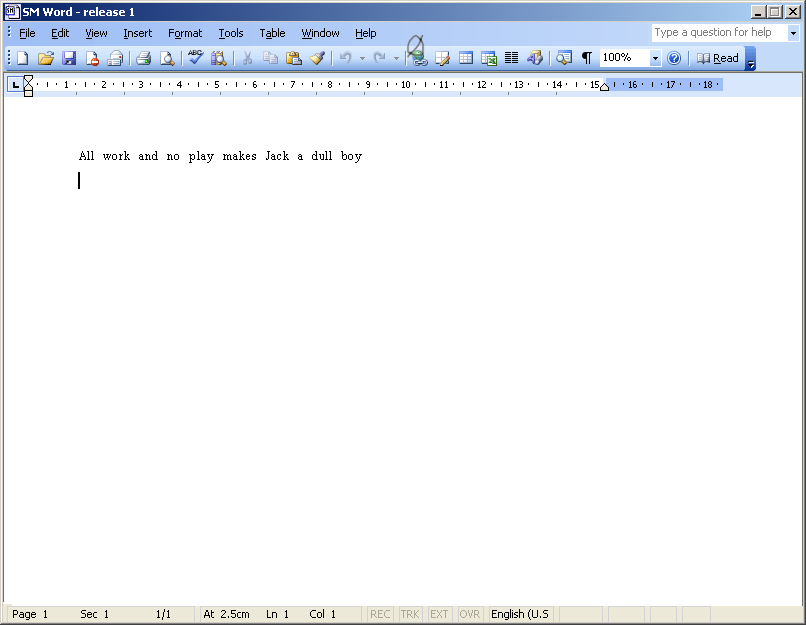
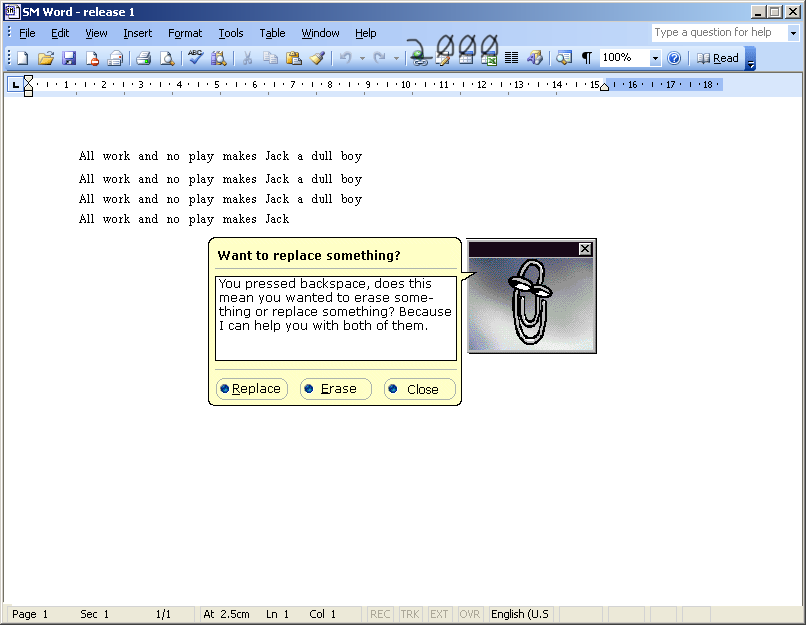
SM Word revolves around a deceptively simple premise: type the phrase “All work and no play makes Jack a dull boy” repeatedly until the game’s simulated system can no longer cope with your relentless monomania. At first glance, this looks like the bare minimum—after all, it’s just typing, right? But SM Word uses this repetitive task to create a palpable sense of tension and absurdity, forcing you to confront the banality of your task as you hear your own keystrokes echoing back at you through your speakers and microphone.
(HEY YOU!! We hope you enjoy! We try not to run ads. So basically, this is a very expensive hobby running this site. Please consider joining us for updates, forums, and more. Network w/ us to make some cash or friends while retro gaming, and you can win some free retro games for posting. Okay, carry on 👍)
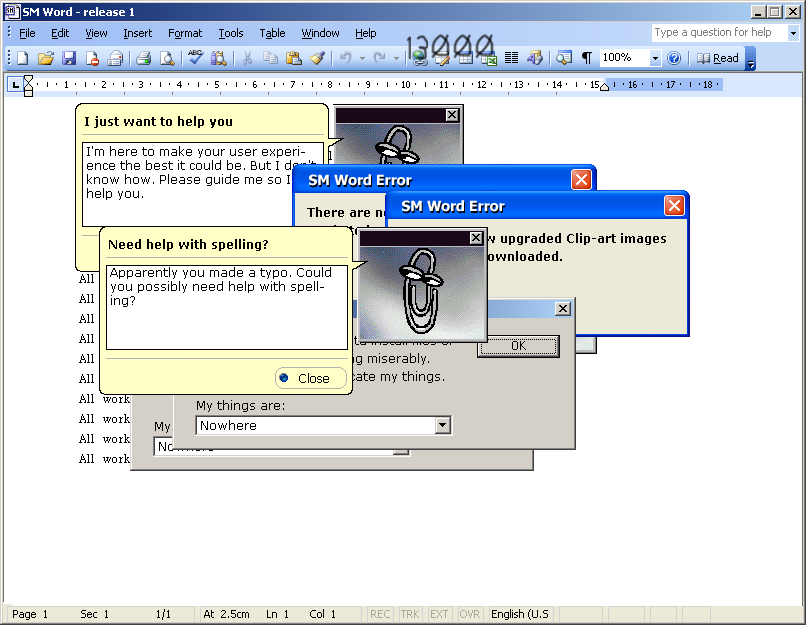
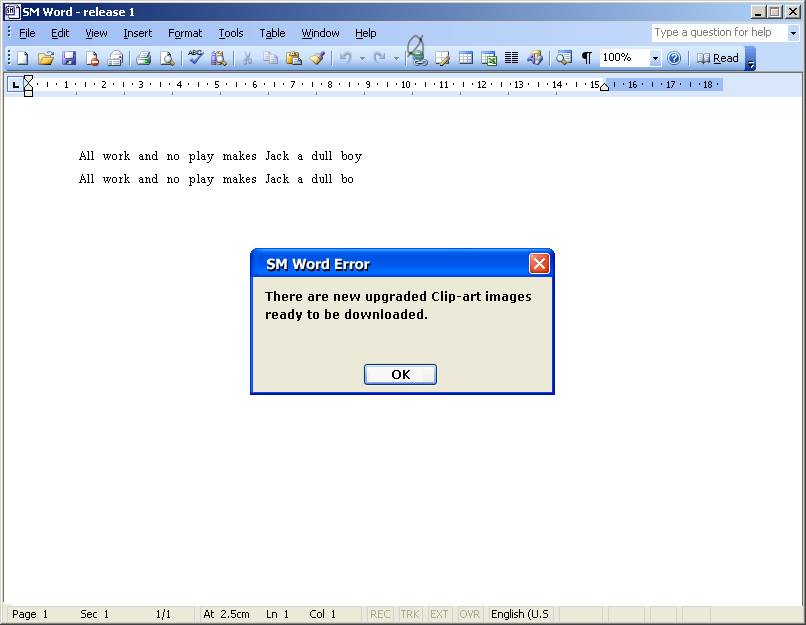
As you type, a cascade of pop-up notifications begins to intrude on your progress: error messages, update reminders, simulated antivirus warnings, and even mock productivity tips. Dismissing these interruptions is a frantic affair—you mash keys, click randomly in the style of a frustrated office worker, and even shout into a mic if you’ve enabled voice feedback. This mechanic, inspired equally by the Nintendo DS touch-screen antics and Sega’s Typing of the Dead, keeps your hands busy and your nerves frayed.
These simulated system dialogs aren’t mere window dressing; they form the core of the challenge. The game tracks how quickly you clear each pop-up and punishes hesitation with more intrusive alerts. Eventually, the avalanche of notifications overwhelms the program, resulting in a dramatic crash sequence that ends your session. It’s a brief game loop, but one that relies on pacing, timing, and the growing comedy of computer madness to engage players.
Graphics
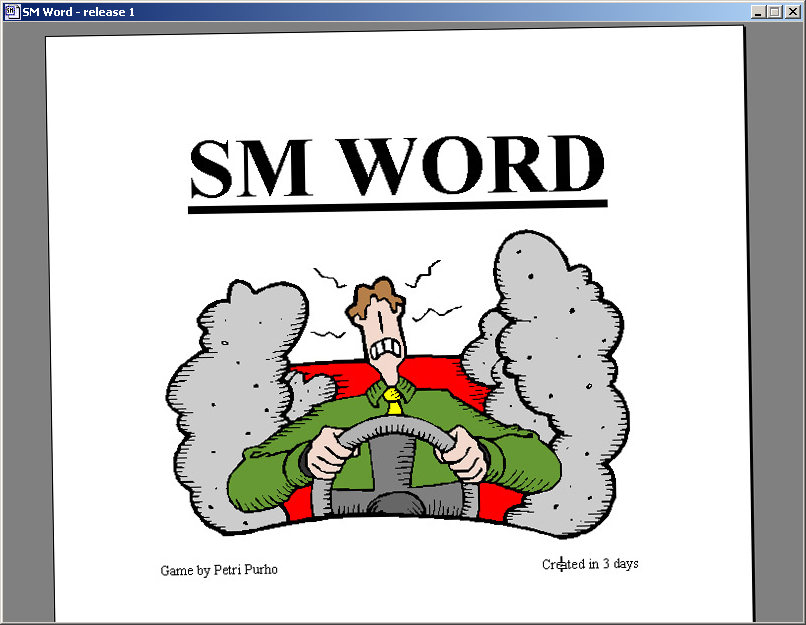
SM Word’s visual style is built around nostalgia for classic word processors, complete with off-white backgrounds, monospace fonts, and a blinking cursor that feels straight out of the 1980s. The UI deliberately mimics industry-standard software, right down to the “Help” menu that hardly ever helps. This minimalism works in the game’s favor, reinforcing the theme of corporate software bloat and the Sisyphean struggle of modern productivity tools.
The pop-up windows themselves are rendered with comical exaggeration: bright warning triangles, obtrusive banners, and gaudy progress bars that crawl at a maddening pace. Animations are simple but effective, with each dialog box sliding onto the screen accompanied by an alarm sound or office-suit email chime. The choice to forgo flashy 3D graphics keeps the focus on the absurdity of the interruptions rather than on high-fidelity visuals.
Even the crash sequence is presented in stark, lo-fi glory: the screen flickers, text overlaps in unreadable gibberish, and a parody BSOD (Blue Screen of Death) invites you to “Press Any Key to Continue Suffering.” It’s a clever visual gag that draws a direct line from home computing frustrations to interactive entertainment. This graphic simplicity is not a limitation but a deliberate design choice that amplifies the game’s dark humor.
Story
On paper, SM Word has no traditional storyline. There’s no protagonist, no quest, no branching narrative—just you and your keyboard. However, a meta-narrative emerges through the repeated phrase, referencing Jack Torrance’s descent into madness in Stanley Kubrick’s 1980 adaptation of Stephen King’s The Shining. The absurdist repetition of “All work and no play makes Jack a dull boy” becomes a mantra, driving home the horror of monotony.
By evoking Jack Nicholson’s iconic performance and Kubrick’s clinical, obsessive vision, SM Word positions itself as a digital homage to creative burnout and software-induced insanity. Each pop-up is like a word of caution: when productivity tools become oppressive, the mind can unravel. There’s no explicit character arc, but the game’s structure forces you to inhabit the manic viewpoint of someone trying desperately to remain productive and failing spectacularly.
In that sense, the story is as much about you as the game. Your growing frustration, colorful language into the mic, and eventual acceptance of the crash are part of the narrative. SM Word turns the player into the protagonist of their own office horror story, reminding us that technology meant to help can sometimes be the greatest tormentor of all.
Overall Experience
SM Word is a short, intense burst of office-themed satire that plays like performance art. It lasts only a few minutes—long enough to convey its message and get you legitimately worked up, but not so long that the joke wears thin. Its clever design and dark humor make it a memorable novelty, especially for anyone who has ever hated auto-updates or dreaded the spinning wheel of death.
While the core loop may feel repetitive by design, the game succeeds in creating an emotional arc: calm focus, mounting irritation, frantic coping, and cathartic collapse. The mix of typing mechanics and simulated system abuse keeps you engaged, even if you know exactly what’s coming. Voice-feedback features add a performative dimension, encouraging you to vent your real-world frustrations into the mic.
In the end, SM Word is less about high scores and more about the experience of digital torment turned entertainment. It’s a brief but potent reminder that sometimes the simplest ideas—when executed with wit and precision—can leave the biggest impression. Recommended to fans of experimental indie titles, computer humor, and anyone who’s ever felt personally victimized by a “helpful” software update.


Reviews
There are no reviews yet.