 Retro Replay Retro Replay gaming reviews, news, emulation, geek stuff and more!
Retro Replay Review
Gameplay
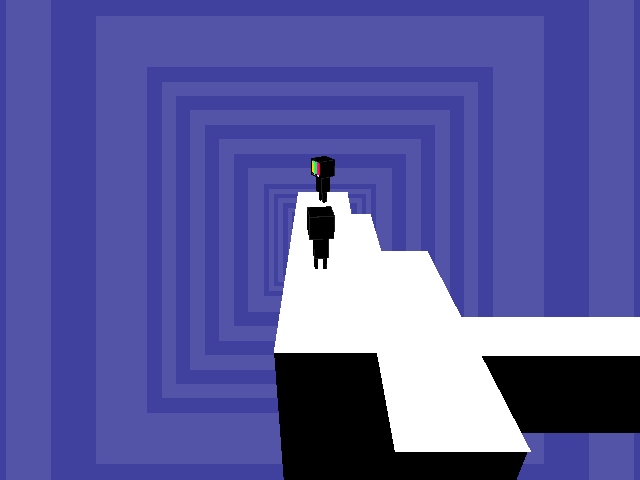
Takishawa is Dead places you in tight, precision-based 3D environments where every jump and maneuver counts. The core objective is straightforward: track down the elusive criminal known as Takishawa and claim the bounty on his head. While the premise may sound simple, the layered platform puzzles scattered across interconnected screens ramp up the challenge, requiring precise timing and a keen sense of spatial awareness.
(HEY YOU!! We hope you enjoy! We try not to run ads. So basically, this is a very expensive hobby running this site. Please consider joining us for updates, forums, and more. Network w/ us to make some cash or friends while retro gaming, and you can win some free retro games for posting. Okay, carry on 👍)
Controls are intuitive but demand practice. You’ll navigate using standard movement and jump buttons, while additional keys let you zoom and rotate the camera. Mastering these camera controls is essential—many jumps hinge on judging depth accurately or lining up platforms that are obscured from certain angles. The ability to interact with NPCs adds a layer of engagement, offering hints, lore tidbits, or even optional side objectives that can ease your hunt for Takishawa.
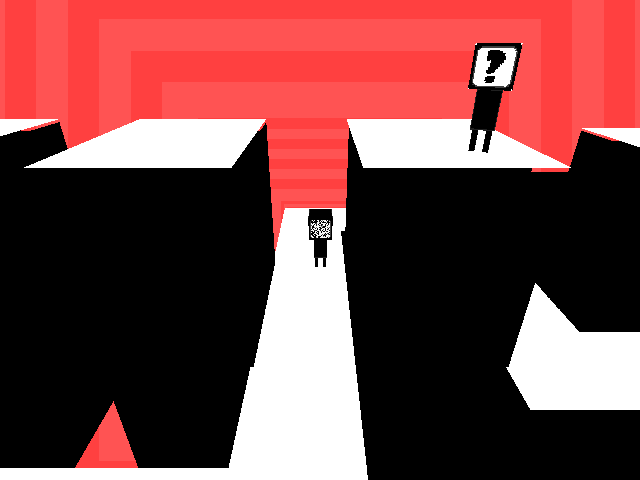
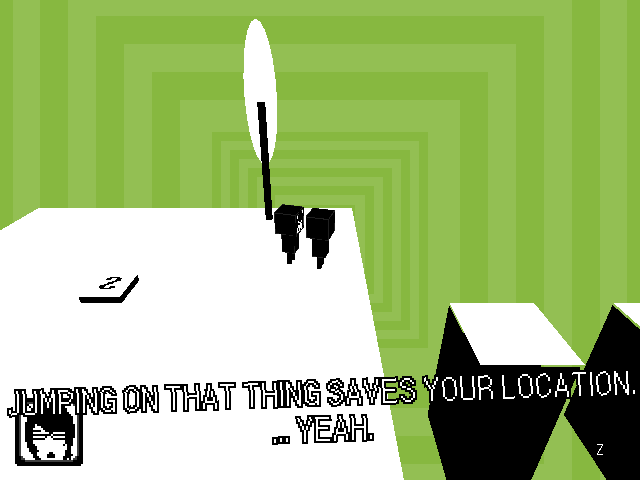
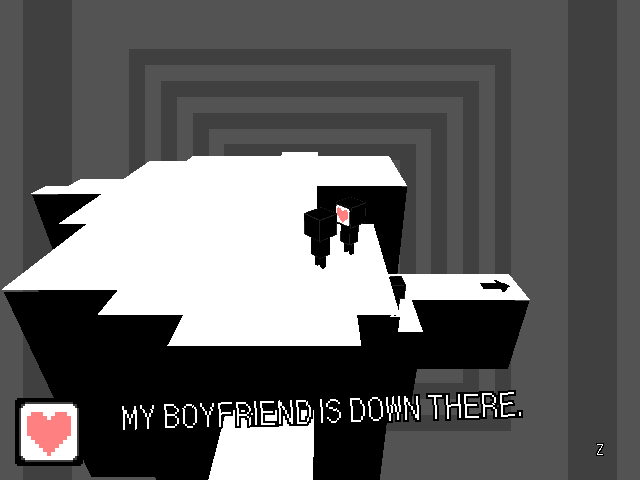
The world design is non-linear, with multiple paths often branching off in different directions. Screens are linked by arrow-guided platforms, and while you’ll face a series of mandatory puzzles to advance, there are frequently secret routes or alternate approaches to explore. Unlimited lives mean you can experiment without fear of a game over, and strategically placed save points let you retry tough sections without retracing too much ground.
Graphics
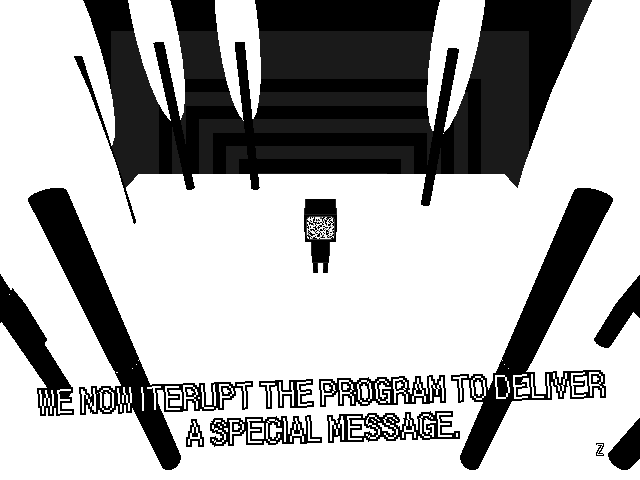
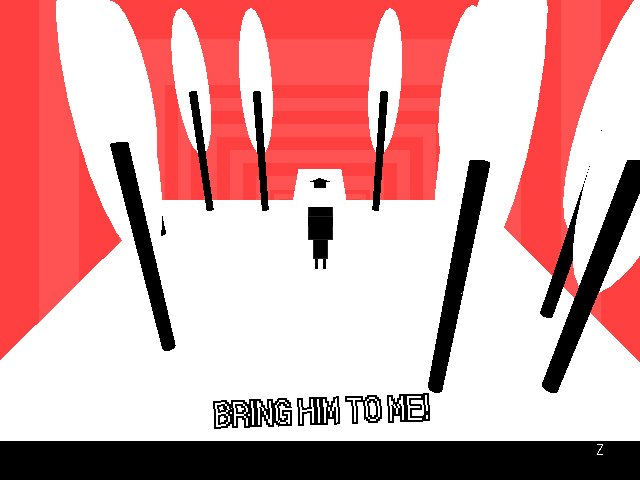
Visually, Takishawa is Dead embraces a clean, stylized 3D aesthetic that prioritizes clarity over photorealism. Platforms, obstacles, and key landmarks are brightly colored or boldly lit to stand out against more muted backgrounds, helping you keep your bearings in complex level layouts. The art direction leans into sharp geometric shapes, making each puzzle element distinct and easily recognizable.
Lighting and shadow play a crucial role in depth perception—an important factor when you’re gauging jumps from varying heights. Dynamic camera zooms reveal hidden pathways, while rotation lets you scout upcoming challenges from multiple angles. Though occasional visual clutter can arise in busier scenes, the overall presentation remains cohesive, ensuring that critical platforms or hazards never get lost in the scenery.
Level variety contributes to the game’s visual appeal. Each screen introduces new color palettes, environmental motifs, or architectural styles. Whether you’re vaulting across neon-lit industrial chambers or scaling ancient stone ruins, the environments feel thoughtfully crafted. Subtle particle effects or ambient animations—like drifting fog or flickering lights—add atmosphere without distracting from the core platforming action.
Story
At its heart, Takishawa is Dead tells a straightforward revenge-and-reward tale. You are the bounty hunter, tasked with capturing the criminal mastermind Takishawa. The game doesn’t bog you down with lengthy cutscenes; instead, it delivers world details piece by piece through brief NPC interactions and environmental hints.
Although the narrative is minimalistic, it successfully motivates your journey from one screen to the next. Characters you meet along the way—locals, informants, or even other hunters—offer snippets of backstory, tease upcoming dangers, or occasionally mislead you in amusing ways. These exchanges may be brief, but they help the world feel lived-in and keep the chase feeling urgent.
Exploration doubles as storytelling. Hidden notes, cryptic graffiti, and scattered journals flesh out the larger conflict between you and Takishawa, providing context to each puzzle-laden environment. The lack of a heavy-handed plot allows the gameplay to shine, while still giving you enough narrative breadcrumbs to stay invested in the hunt.
Overall Experience
Takishawa is Dead stands out as a challenging platformer that rewards patience and skill. The unlimited lives system encourages experimentation—mistakes are simply opportunities to learn new jump timings or camera angles. Save points are generously placed, mitigating frustration without diluting the difficulty.
Nonlinear level design and multiple branching paths add replay value, inviting you to revisit screens in search of faster routes or hidden challenges. The blend of tight controls, thoughtful level layouts, and varied environments creates a satisfying sense of progression as you edge ever closer to your quarry.
While the steep learning curve and occasional camera frustration may deter casual players, platforming enthusiasts will find much to admire. The game’s streamlined story, clear visual design, and cleverly crafted puzzles combine to deliver an engaging experience that keeps you coming back until Takishawa finally meets his match.


Reviews
There are no reviews yet.