 Retro Replay Retro Replay gaming reviews, news, emulation, geek stuff and more!
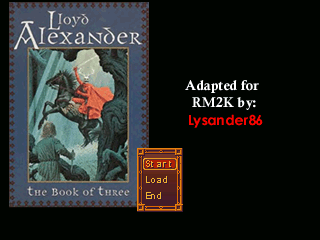
Retro Replay Review
Gameplay
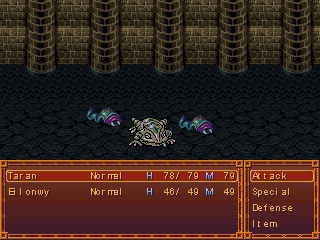
The Book of Three delivers a classic Japanese-style RPG experience built on the RPG Maker 2000 engine. You take direct control of Taran and, over time, recruit up to three additional party members—each with their own unique skill set. Battles unfold in a traditional turn-based format, with characters lining up along the bottom of the screen and enemies arrayed above. Simple yet satisfying tactics come into play as you decide when to attack, use magic, or deploy special abilities.
(HEY YOU!! We hope you enjoy! We try not to run ads. So basically, this is a very expensive hobby running this site. Please consider joining us for updates, forums, and more. Network w/ us to make some cash or friends while retro gaming, and you can win some free retro games for posting. Okay, carry on 👍)
Exploration is handled via an overhead world map of Prydain’s diverse regions. From the rolling hills of Caer Dallben to the dark reaches of Spiral Castle, every locale is peppered with NPCs, hidden treasures, and occasional environmental puzzles. These light puzzles—such as moving boulders or deciphering rune-etched gates—add welcome variety outside the grind of random encounters. A handful of side-quests offer small detours, challenging you to rescue villagers or search for lost artifacts for modest rewards.
Difficulty is moderately balanced: early battles serve as tutorials, while midgame boss fights can spike in challenge if you neglect to raise party levels or stock up on healing items. Save points are strategically placed in inns and sanctuaries, making resource management important. Overall, the pace keeps you engaged—random encounters never outstay their welcome, and each new party addition shakes up combat dynamics in fun ways.
Graphics
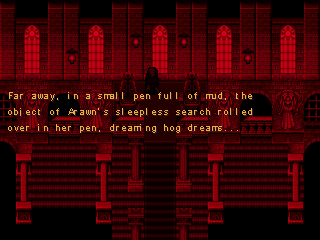
Visually, The Book of Three embraces the nostalgic charm of RPG Maker 2000’s default tile sets and character sprites. Overworld maps feature bright, hand-tiled forests, villages, and dungeons that evoke the Celtic-inspired world of Lloyd Alexander. While the graphics don’t push technical boundaries, they remain clean, colorful, and faithful to the source material’s mood.
Character portraits and in-battle animations are simple but effective. Taran’s sword swings, Eilonwy’s magical glows, and Fflewddur’s harp-strumming all come to life through modest frame-based animations. Though you may notice reused tiles or occasional palette clashes, these moments are few—and the overall art direction leans into a cohesive, storybook aesthetic that suits Prydain’s mythic setting.
Menus and UI elements stay true to the RPG Maker formula: straightforward inventories, equipment screens, and skill lists with clear icons and text descriptions. There’s no flashy particle work, but the crisp readability ensures you’re never left guessing which potion to equip or which spell to learn. Fans of retro RPGs will appreciate the functional, sincere presentation.
Story
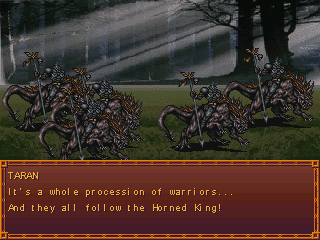
Adapted from Lloyd Alexander’s beloved novel, The Book of Three follows Taran’s journey from humble Assistant Pig-Keeper to reluctant hero. The narrative kicks off when his charge, the oracular pig Hen Wen, escapes into the woods—launching a quest that introduces Prince Gwydion, the Horned King’s looming threat, and a cast of memorable companions. The game captures the novel’s spirit, balancing lighthearted banter with moments of genuine peril.
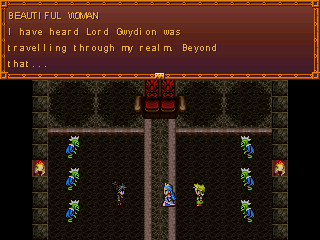
Dialogue is mostly delivered through text boxes, and while voice acting is absent, character personalities shine through well-written lines and evocative portrait artwork. Eilonwy’s spirited retorts, Fflewddur’s comedic exaggerations, and Gurgi’s half-animal whimsy all feel true to Alexander’s originals. Side conversations sprinkled throughout towns and campsites flesh out the supporting cast, making Prydain feel lived-in rather than merely a backdrop for combat.
Pacing mirrors the book’s rise-and-fall tension. After an introductory segment in Caer Dallben, the story accelerates as you uncover Arawn’s dark machinations and infiltrate enemy territories. Key set pieces—such as the rescue of Hen Wen or the confrontation at Spiral Castle—land with satisfying weight. Although some transitions between chapters feel abrupt (a limitation of the RPG Maker framework), the core narrative remains engaging and heartfelt.
Overall Experience
The Book of Three shines as a heartfelt homage to a classic fantasy tale, wrapped in accessible RPG mechanics. Fans of the Chronicles of Prydain will delight in revisiting familiar characters and locations, while newcomers can enjoy a self-contained adventure that stands on its own merits. The blend of exploration, turn-based combat, and light puzzle-solving ensures varied gameplay without overwhelming newcomers to the genre.
Technical limitations of the RPG Maker 2000 engine are occasionally apparent—reused tiles, basic animations, and a somewhat utilitarian interface—but these rarely detract from the emotional core of Taran’s quest. With roughly 15–20 hours of main-story content and a handful of optional side-activities, the game offers solid value for fans of retro RPGs and literary adaptations alike.
If you’re seeking an RPG that balances nostalgia, story fidelity, and straightforward mechanics, The Book of Three is a satisfying journey through Prydain. Its strengths lie in its faithful storytelling, endearing characters, and accessible combat system. Whether you’re rekindling childhood memories of Lloyd Alexander’s work or discovering Taran’s world for the first time, this RPG Maker–powered title is well worth exploring.



Reviews
There are no reviews yet.