 Retro Replay Retro Replay gaming reviews, news, emulation, geek stuff and more!


Retro Replay Review
Gameplay
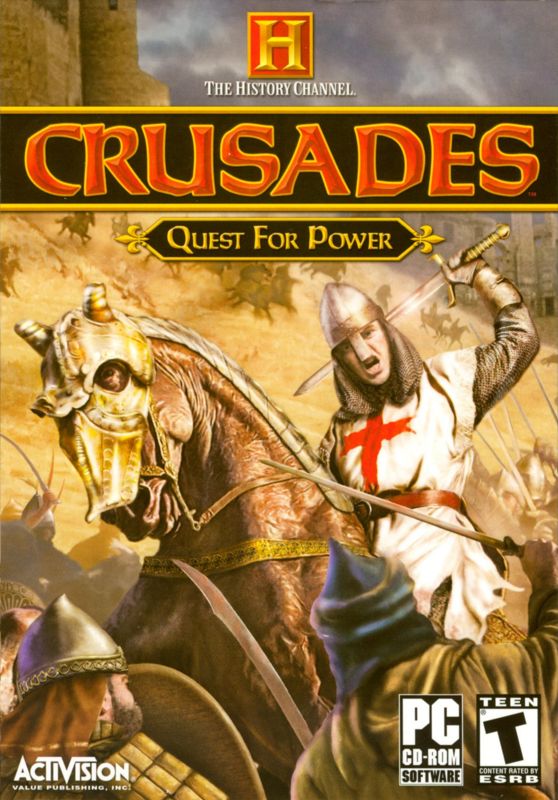
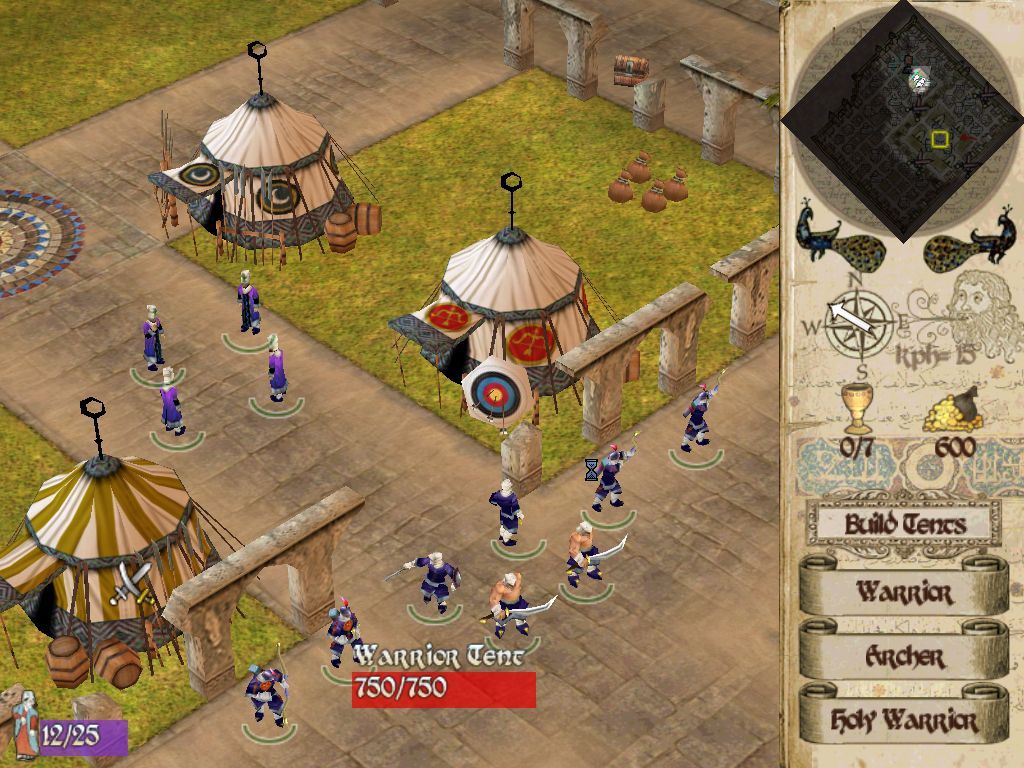
The History Channel: Crusades – Quest for Power delivers a classic real-time strategy experience by pitting the Western Crusaders against the Eastern Infidels in two parallel campaigns, each consisting of eight missions. Players must manage resources, construct tents to train units, and deploy armies strategically to achieve objectives. Gold is harvested from fallen enemies or discovered in scattered treasure chests, adding an exploration layer to the typical RTS formula. This straightforward resource economy keeps the focus on tactical decision-making rather than micromanaging a complex supply chain.
(HEY YOU!! We hope you enjoy! We try not to run ads. So basically, this is a very expensive hobby running this site. Please consider joining us for updates, forums, and more. Network w/ us to make some cash or friends while retro gaming, and you can win some free retro games for posting. Okay, carry on 👍)
Unit variety is limited but meaningful: Infantry (or Warriors), Crusaders (or Holy Warriors), Archers, and Priests (or Holy Men). Each type serves a clear role on the battlefield. Infantry and Warriors act as speedy front-liners, while Crusaders and Holy Warriors form durable anchor units. Archers provide ranged support, and Priests or Holy Men bring vital healing abilities that can turn the tide of protracted engagements. As units gain experience through combat, they unlock special abilities—such as flaming arrows—giving veteran troops a palpable sense of progression.
Unit persistence between missions adds a layer of continuity uncommon in many RTS titles. Survivors carry their experience ranks forward, encouraging players to safeguard their most seasoned soldiers and carefully consider when to risk or withdraw them. Meanwhile, collectible relics hidden throughout mission maps enhance healing units’ powers, rewarding thorough exploration and strategic detours. This blend of campaign continuity and side objectives keeps each mission feeling fresh and consequential.
Beyond the story-driven campaigns, the random skirmish mode offers quick, head-to-head battles that let players pit their custom-trained armies against AI or human opponents. Skirmishes lack the narrative stakes of the main campaigns but offer a useful proving ground to test new unit compositions or refine tactics. For fans of pure RTS combat, this mode provides replayability once the story missions have been completed.
Graphics
Visually, Crusades – Quest for Power opts for functional clarity over flashy effects. Unit models are distinguishable at a glance, with medieval armor, swords, and banners rendered in earthy tones that suit the historical setting. While textures can feel dated by modern standards, the clean silhouette of each unit type makes quick identification on the battlefield intuitive—essential in a game where split-second decisions matter.
The environments range from sunlit plains and rolling hills to desert outposts and fortified keeps. Each map employs a muted palette of browns, tans, and greens, evoking the arid landscapes of the Levant. Some mission locales introduce subtle visual storytelling, such as ruined monasteries or half-buried relic chambers, reinforcing the historical narrative and giving battles a sense of epic scale.
Animations are serviceable: infantry advance with shield-raising steps, archers draw their bows, and priests perform healing gestures. Combat effects—flashes of steel, bursts of flame arrows, and modest healing auras—are minimalist but effective. While the game does not push the boundaries of graphical fidelity, it succeeds in providing clear, readable visuals that support strategic gameplay without overwhelming the player.
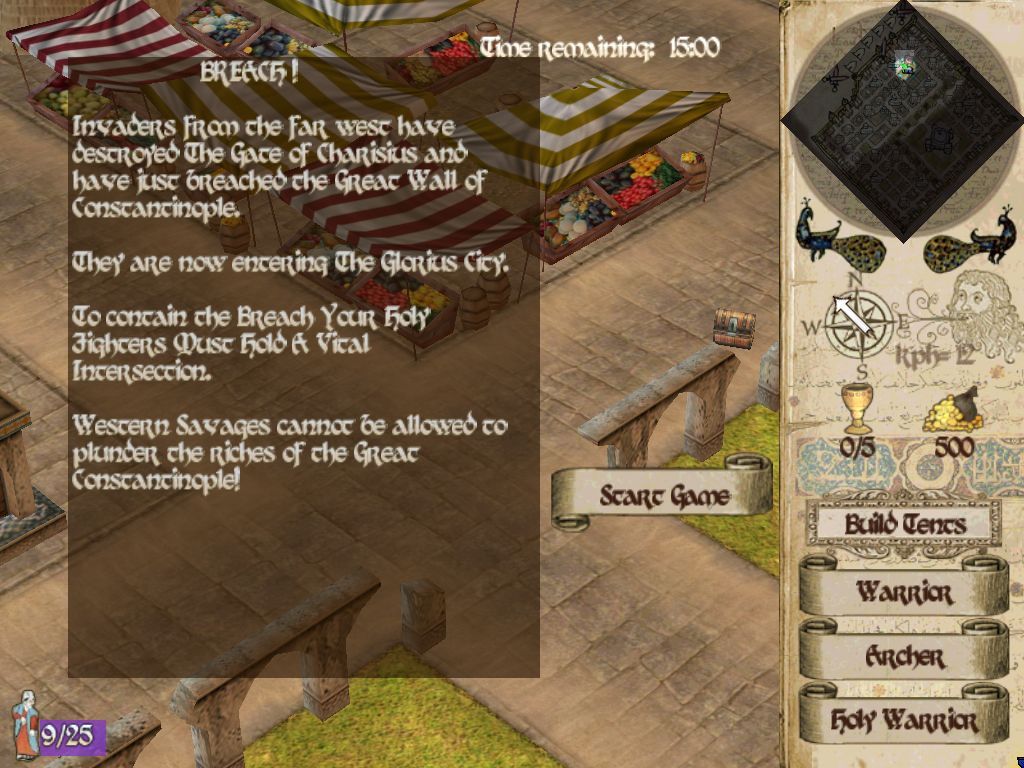
On the UI front, resource counters, unit portraits, and minimap are all laid out with a straightforward approach. The HUD never obscures the action, and issuing commands—build tent, recruit unit, cast heal—is smooth and responsive. For those seeking a crisp, no-nonsense interface, Crusades – Quest for Power meets expectations admirably.
Story
The narrative framework of Crusades – Quest for Power is grounded in the religious conflicts of the 11th to 13th centuries, dramatizing the clash between Christian Crusaders and Muslim defenders of the Holy Land. Each campaign offers a distinct viewpoint: Western players experience the fervor of crusading knights, while Eastern players defend their homeland against invaders. This dual-narrative approach gives both sides a measure of empathy and agency.
Mission briefings are delivered via text and simple cutscenes, outlining strategic objectives—seize a fortress, escort pilgrims, recover sacred relics. Although the storytelling does not delve deeply into individual characters, it establishes enough context to make each battle feel narratively purposeful. The discovery of ancient relics serves both gameplay and story, tying unit upgrades to the quest for spiritual artifacts.
While the plot stays fairly linear, it captures the essence of medieval warfare and religious zeal. There is little in the way of moral ambiguity—Crusaders are valorous, and Infidels are resolute—but the game’s intention is to dramatize a well-known historical period rather than reexamine its complexities. For history enthusiasts, these missions evoke familiar events and motivate replaying each side to experience mirrored conflicts from opposing perspectives.
Voiceovers are minimal, with most storytelling carried by on-screen text. Though this light approach may feel austere compared to story-rich RPGs, it keeps the focus on tactical decision-making. Gamers who appreciate historical vignettes woven into their strategy sessions will find the narrative framework sufficient to sustain immersion across both campaigns.
Overall Experience
The History Channel: Crusades – Quest for Power is a solid, old-school RTS that emphasizes clear unit roles, campaign continuity, and historical ambiance. Its core loop of gathering gold, training units, and conquering enemy positions remains engaging throughout the 16 mission campaigns. The persistent veteran units and relic-based upgrades lend long-term stakes to individual skirmishes and keep players invested in battlefield outcomes.
Although the graphics and storytelling are modest by today’s standards, they effectively support the gameplay without unnecessary complexity. The randomized skirmish mode extends replayability, while the dual-campaign structure doubles the game’s lifespan for completionists and multiplayer enthusiasts alike. The relatively gentle learning curve makes it accessible to strategy newcomers, yet the veteran unit mechanics and relic hunts provide depth for seasoned players.
Some may criticize the limited unit roster and the lack of more advanced base-building options, but these design choices streamline the experience and maintain pacing across missions. Resource management remains straightforward, allowing players to focus on tactical maneuvers rather than economic minutiae. If you seek a historically themed RTS that balances accessibility with enough strategic nuance to reward thoughtful play, Crusades – Quest for Power is worth exploring.
In the end, this title stands as a commendable homage to classic strategy games, wrapped in a Crusades-era theme endorsed by The History Channel. Whether you align with the Crusaders or the Infidels, you’ll find challenging scenarios, clear strategic objectives, and a campaign structure that values both progression and historical flavor. For fans of concise, engaging RTS battles set against a medieval backdrop, this game delivers a satisfying quest for power.



Reviews
There are no reviews yet.