 Retro Replay Retro Replay gaming reviews, news, emulation, geek stuff and more!
Retro Replay Review
Gameplay
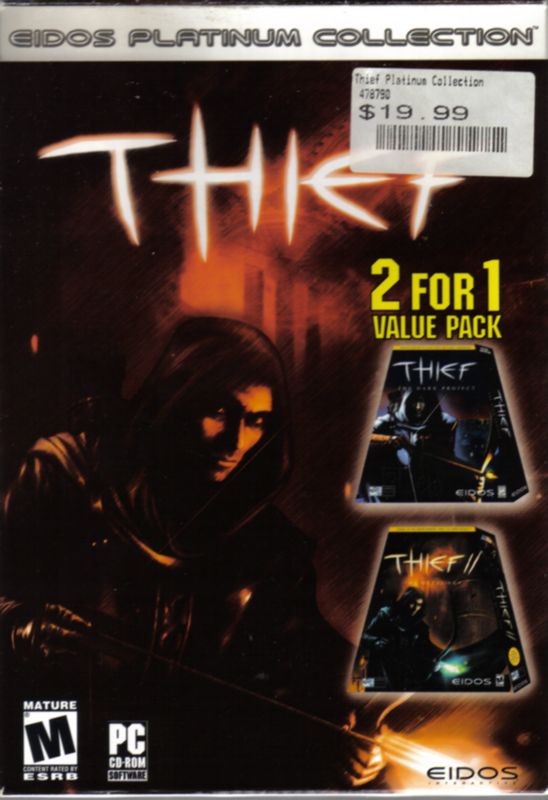
The gameplay in Thief: Eidos Platinum Collection hinges on stealth rather than direct confrontation, delivering two classic experiences: Thief: The Dark Project and Thief II: The Metal Age. Both titles immerse players in the role of Garrett, a master thief who must navigate richly detailed levels using light and shadow to remain unseen. The iconic light meter and sound indicators create a tense, cat-and-mouse dynamic: every step you take, every surface you touch, can alert patrolling guards to your presence.
(HEY YOU!! We hope you enjoy! We try not to run ads. So basically, this is a very expensive hobby running this site. Please consider joining us for updates, forums, and more. Network w/ us to make some cash or friends while retro gaming, and you can win some free retro games for posting. Okay, carry on 👍)
Level design is a standout feature, offering multiple paths, hidden alcoves, and secret caches of loot. Whether you choose to ghost past guards or engage in occasional, calculated combat, the games reward experimentation. Lockpicking, gadget use (such as water arrows to douse torches), and environmental manipulation (dropping chandeliers, cutting ropes) provide a toolkit that feels both organic and creative. The learning curve is gentle, with optional objectives encouraging deeper exploration and replayability.
Between the two titles, you’ll notice an evolution of mechanics. The Dark Project introduces the foundational stealth systems and modular mission structure, while The Metal Age refines AI behavior, expands your arsenal with gas arrows and sticky mines, and tightens the pacing of objectives. Both games emphasize non-lethal play but accommodate diverse approaches—speedrunners can zip through rooftops, completionists can scour for every secret, and tactical thinkers can plan heists down to the last detail.
Graphics
While the graphics in the Eidos Platinum Collection bear the hallmarks of their late-1990s and early-2000s origins, the art direction remains evocative and atmospheric. Dark, torch-lit corridors and rain-soaked cobblestone streets are rendered with moody color palettes that enhance the sense of lurking danger. Texture resolution and character models may feel dated by modern standards, but the careful use of light and shadow often compensates for any technical limitations.
Environmental details—gargoyles perched atop cathedral spires, rusted steam vents in industrial districts, and opulent merchant estates—imbue each map with a distinct personality. Though polygon counts are low compared to contemporary titles, the level of detail in set dressing helps sustain immersion. There are occasional pop-ins and draw-distance quirks, especially in outdoor areas, but these rarely detract from the core stealth experience.
The collection itself doesn’t include a fully remastered graphical overhaul, but it does provide updated compatibility for modern operating systems and higher resolutions. For players willing to delve into community mods, there are improved texture packs and lighting shaders that can breathe new life into these classics. Whether experienced in their original form or enhanced with fan-made tweaks, the visuals serve the games’ dark, brooding atmospheres exceptionally well.
Story
Thief: The Dark Project introduces a richly woven narrative set in a dark, quasi-Victorian world dominated by the tyrannical Baron and his religious order, the Keepers. As Garrett, you’re a cynical outsider drawn into conspiracies involving the supernatural entity known as “The Trickster.” The plot unfolds through briefings, in-mission eavesdropping, and cryptic boss encounters, creating an undercurrent of mythic intrigue that propels each heist.
In Thief II: The Metal Age, the focus shifts to industrial exploitation and corrupt power structures. A new antagonist, the enigmatic Mechanist, has risen, threatening the city’s balance with steam-driven factories and mechanized guards. Garrett’s mission evolves from simple theft to uncovering this insidious cult’s plans. Dialogue remains sparse but purposeful—NPCs gossip about dark rituals, guards mutter about mechanist propaganda, and mission briefings hint at escalating conspiracies.
Both stories excel at environmental storytelling: you piece together lore from scattered manuscripts, overheard conversations, and visual cues. The pacing allows for reflection between missions, and Garrett’s wry inner monologue adds character without overwhelming the player. While neither game pursues a blockbuster narrative scale, the tight focus on stealth, supernatural menace, and social commentary delivers a memorable, coherent arc across both titles.
Overall Experience
As a package, Thief: Eidos Platinum Collection offers tremendous value by bundling two seminal stealth adventures at one price. The longevity of each game is remarkable—players frequently return to their favorite missions to uncover new routes, tackle higher difficulties, or simply revel in the tension of pure stealth gameplay. The collection serves as both a nostalgic trip for series veterans and an essential starting point for newcomers to classic stealth design.
Potential buyers should be aware of a few caveats: the controls can feel stiff by modern standards, and the difficulty spikes may frustrate those unaccustomed to older, more deliberate playstyles. However, the sense of accomplishment gained from outsmarting well-armed adversaries in near-total darkness remains uniquely satisfying. The sound design—clanking armor, distant footsteps, dripping water—further amplifies tension and rewards careful listening.
Ultimately, Thief: Eidos Platinum Collection stands as a testament to stealth game design at its finest. It invites players into a richly conceived world of shadows, mystery, and high-stakes thievery. For anyone seeking a slow-burn, immersive experience where patience and planning reign supreme, this collection is an indispensable addition to the game library.


Reviews
There are no reviews yet.