 Retro Replay Retro Replay gaming reviews, news, emulation, geek stuff and more!



Retro Replay Review
Gameplay
Thief II: The Metal Age remains a masterclass in stealth-driven gameplay, building on the solid foundation laid by its predecessor. Players once again step into the soft leather boots of Garrett, the world’s most infamous master thief, and rely on careful planning and precise movement to pull off audacious heists. The game’s level design encourages multiple approaches: you can creep through shadowy corridors, pick locks in silence, or create distractions with strategically placed noise.
(HEY YOU!! We hope you enjoy! We try not to run ads. So basically, this is a very expensive hobby running this site. Please consider joining us for updates, forums, and more. Network w/ us to make some cash or friends while retro gaming, and you can win some free retro games for posting. Okay, carry on 👍)
One of the standout additions in Thief II is the introduction of scouting orbs and flash mines. Scouting orbs can be tossed around corners and into unreachable areas, giving you a bird’s-eye view of guard patrol patterns without risking detection. Flash mines, on the other hand, provide an excellent emergency tool: detonate one when guards are closing in and watch them flatten themselves against walls, stunned long enough for you to slip by or finish them off with ease. These gadgets diversify Garrett’s toolkit and reward creative problem-solving.
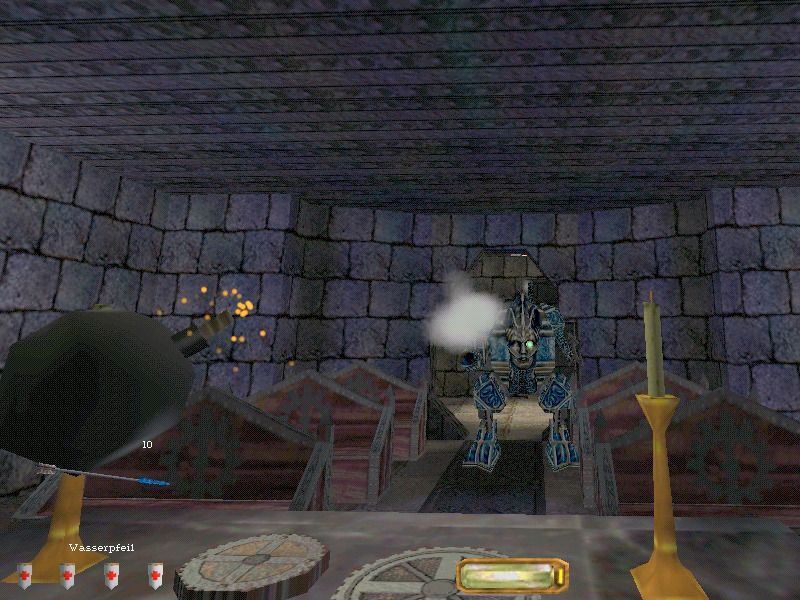
Garrett’s core arsenal—comprised of the blackjack, broadhead arrows, moss arrows, rope arrows, and water arrows—remains as satisfying as ever. The blackjack is perfect for non-lethal takedowns in tight spaces, while the various arrow types let you manipulate light, sound, and pathing to your advantage. Each mission typically features multiple objectives along with optional loot, encouraging thorough exploration. Players who enjoy combing over every nook and cranny will find plenty of hidden treasures to make the extra effort worthwhile.
Further enhancing the stealth experience, the AI in Thief II exhibits heightened awareness and reaction to stimuli. Guards will investigate sounds, call for backup, and even wipe off blood stains in well-trafficked areas. This forces you to consider every footstep and every arrow shot—stealth is not just a suggestion, it’s a necessity. Coupled with dynamic lighting and shadow mechanics, the game rewards patience and precision rather than run-and-gun tactics.
Graphics
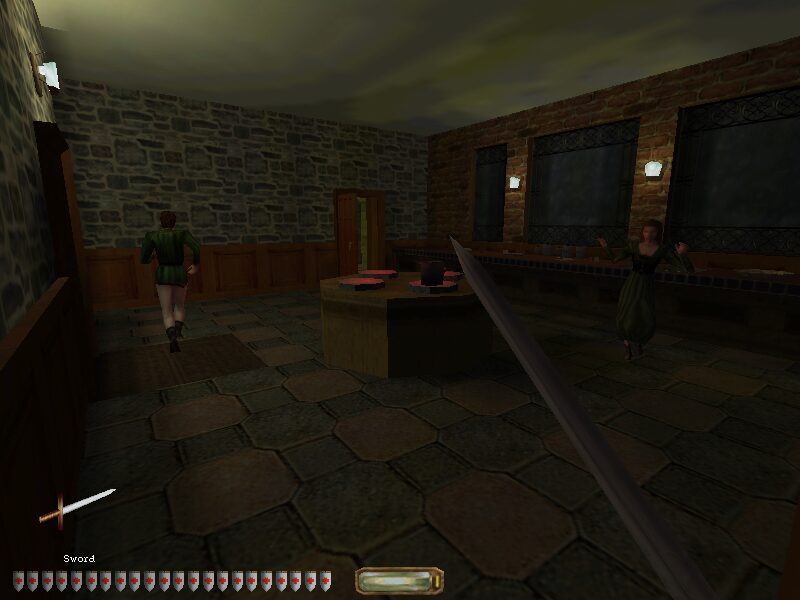
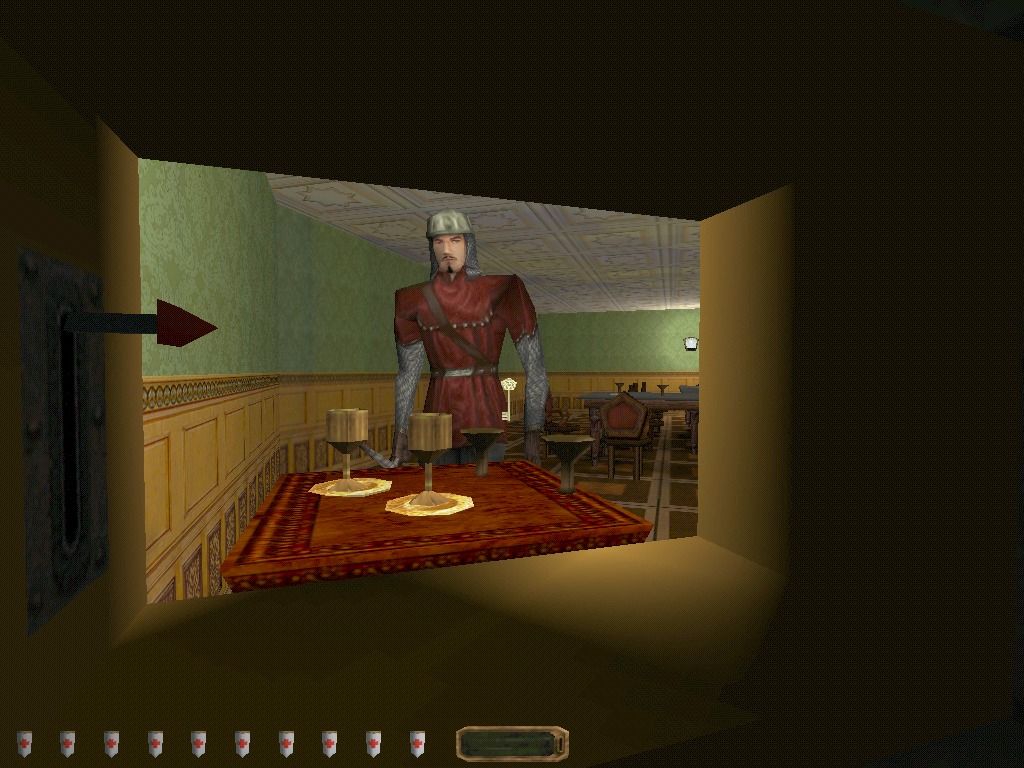
Though released in 2000, Thief II’s Dark Engine delivers a visually striking world steeped in gothic-industrial atmosphere. The interplay of light and shadow is the game’s greatest asset—dimly lit hallways, flickering candles, and ominous moonlight all contribute to an immersive stealth environment. Despite aging textures and character models, the atmosphere remains potent, often spawning genuine tension as you stalk your prey.
Environmental details such as peeling wallpaper, rusting machinery, and cluttered workbenches add depth to each level. The new levels introduced in The Metal Age feature sprawling rooftops, subterranean vaults, and ruined churches, each with distinct architectural styles and visual storytelling. The contrast between the hammerite’s medieval-inspired design and the Mechanists’ cold, metallic constructs is particularly striking, underscoring the game’s central conflict.
Lighting effects are dynamic and responsive: candle flames dance, torchlight flickers, and the ambient glow adapts as you move through different rooms. Shadows realistically stretch and contract based on light sources, making it imperative for players to stay in the darkness. While modern players may notice blocky character faces or lower-resolution textures, the overall mood remains intact, and the game’s artistic direction continues to captivate.
Complementing the graphics, the interface is clean and unobtrusive. The minimal HUD allows you to focus on exploration and planning rather than constant status checks. Inventory and map screens are straightforward, ensuring you can quickly equip gear or consult objectives without breaking immersion. Overall, the visuals serve the stealth gameplay brilliantly, reinforcing the tense, immersive experience at every turn.
Story
Thief II: The Metal Age plunges players into the political fallout of Garrett’s past exploits. The once-dominant Hammerite faith has crumbled under scandal and infighting, leaving room for the enigmatic Order of Mechanists to seize the reins. Driven by a charismatic leader named Karras, the Mechanists promise progress through arcane technology, but their methods and motivations remain shrouded in secrecy.
Amid this upheaval, a stern new Sheriff arrives in the city, determined to rid the streets of crime. His heavy-handed tactics pose a direct threat to Garrett’s livelihood as law enforcement intensifies patrols and issues draconian decrees. As Garrett, you find yourself in a precarious position: the risk is greater than ever, but so too is the reward. The allure of high-value targets hidden in Mechanist strongholds and wealthy merchant estates drives you to take on ever more daring assignments.
The narrative unfolds through in-game dialogue, mission briefings, and the occasional scroll or letter you can pilfer from locked chests. These snippets of lore enrich the world, revealing the complex motivations of both religious zealots and industrial power brokers. While the central plot remains focused on Garrett’s personal stake in the conflict, the game also hints at broader social and moral questions: What price should society pay for technological advancement? And who truly benefits when faith gives way to machinery?
Thief II doesn’t rely on cinematic cutscenes to tell its tale; instead, it entrusts you to piece together the story through exploration and interaction. This approach may feel understated compared to modern titles, but it imbues every mission with purpose—each artifact you snag or ledger you swipe brings you one step closer to unraveling the Mechanists’ grand design.
Overall Experience
Playing Thief II: The Metal Age in today’s gaming landscape offers a welcome change of pace: a slow-burning, methodical experience that eschews direct combat in favor of cunning and subtlety. For fans of the genre—or anyone seeking a challenging single-player adventure—this title remains a high watermark. Every level is expertly crafted to support multiple playstyles, from pacifist stealth runs to more aggressive, arrow-fueled strategies.
Replayability is strong thanks to non-linear objectives, hidden side quests, and varied loot placements. Speedrunners and completionists alike will relish the opportunity to find alternate routes and perfect their runs. The game’s unpredictable AI and dynamic environments ensure no two playthroughs feel exactly the same.
Sound design and voice acting further elevate the experience. Ambient noise—dripping water, distant machinery, and guard chatter—adds layers of immersion, while Garrett’s sarcastic quips lend personality to the proceedings. Music cues are sparse but effectively underscore tense moments, reinforcing the feeling that one misstep could spell disaster.
Although its age shows in some technical aspects, Thief II: The Metal Age stands the test of time through its masterful stealth mechanics, atmospheric world-building, and engrossing storytelling. For those who appreciate slow-paced, thoughtful gameplay and the satisfaction of a flawlessly executed heist, Garrett’s second outing is essential playing. Immerse yourself in the shadows, outwit your foes, and discover why this series still commands reverence among stealth aficionados.


Reviews
There are no reviews yet.