 Retro Replay Retro Replay gaming reviews, news, emulation, geek stuff and more!
Retro Replay Review
Gameplay
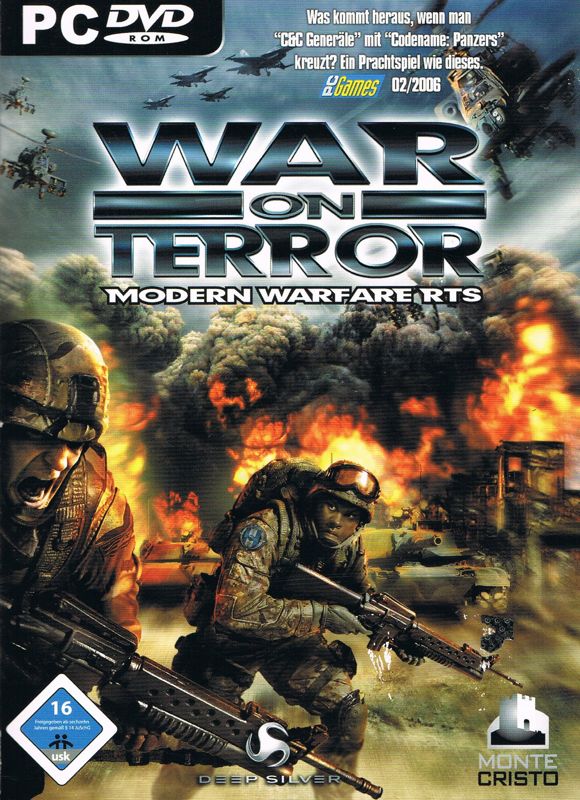
War on Terror delivers a tense and tactical experience that sets it apart from many modern real-time strategy titles. At the start of each mission, players are invited to custom-compose their forces from a pool of infantry, armored vehicles, and air units. With no traditional base-building or resource gathering, every point you earn through combat actions and side objectives becomes vital – spend them wisely on reinforcements or risk facing overwhelming enemy numbers.
(HEY YOU!! We hope you enjoy! We try not to run ads. So basically, this is a very expensive hobby running this site. Please consider joining us for updates, forums, and more. Network w/ us to make some cash or friends while retro gaming, and you can win some free retro games for posting. Okay, carry on 👍)
The game’s permadeath mechanic heightens the stakes of every skirmish. When a soldier or tank crew is downed, a nearby medic can revive them within seconds. Wait too long, however, and that veteran unit – along with its hard-earned experience – is gone forever. This feature not only encourages careful positioning and protective play, but also turns every encounter into a nail-biting decision: do you push forward aggressively or fall back to preserve your battle-hardened troops?
Reconnaissance is equally critical in War on Terror. A dense fog of war shrouds the battlefield, forcing players to deploy fast ground vehicles or helicopters to scout enemy positions. Success often hinges on whom you spot first. Use your intel to orchestrate ambushes, flank armored columns, or neutralize high-value targets before they can restructure your battle plan. The result is a dynamic battlefield where information is as lethal as firepower.
Graphics
Visually, War on Terror leans toward a functional realism. Terrain types—urban regions, desert plains, and dense forests—are rendered clearly, aiding strategic decision-making by letting you easily distinguish choke points, cover zones, and lines of sight. While the textures aren’t cutting-edge, they strike a solid balance between performance and believability, even on mid-range hardware.
Unit models are detailed enough to differentiate faction styles: the guerilla fighters of The Order move in ragtag formations; the World Forces boast sleek NATO tanks and advanced rotary aircraft; Chinese units display unique aesthetic touches, such as red star insignias and specialized infantry gear. Explosions, muzzle flashes, and smoke effects add a satisfying punch to firefights, even if they occasionally flicker at extreme zoom levels.
The UI is compact and intuitive, with a clean minimap, quick-select unit groups, and context-sensitive command icons. Tooltips provide useful information—unit health, armor, and special abilities—without overwhelming newcomers. While there’s room for more elaborate environmental interaction (scorch marks, collapsing structures), what’s present contributes directly to the tactical clarity that this game demands.
Story
War on Terror drops players into a contemporary global conflict involving three distinct powers. The Order, a shadowy insurgent movement, aims to topple existing governments and usher in a radical utopia through guerrilla tactics. Opposing them, the World Forces unite Western democracies and Russia under a single banner, seeking to maintain international stability. Meanwhile, a resurgent China fields specialized units to secure its own regional ambitions.
Each faction’s missions tie neatly into its overarching goals. Playing as The Order involves hit-and-run sabotage, asymmetrical engagements, and subterfuge in densely populated zones. World Forces campaigns emphasize coordinated strikes, combined arms assaults, and high-precision objectives. China’s missions blend rapid mechanized thrusts with strategic nuclear or chemical deterrence options, offering a unique “shock and awe” playstyle.
Although the narrative doesn’t rely on lengthy cutscenes or extensive character arcs, it delivers enough context to motivate each battle. Briefing screens outline geopolitical stakes and mission-specific goals, while in-mission radio chatter adds flavor. The story’s modular design makes it easy to jump between factions without losing track of the central conflict, though hardcore RTS fans may wish for deeper plot threads or more memorable personalities.
Overall Experience
War on Terror shines as a streamlined, strategy-first RTS that strips away resource micromanagement in favor of pure tactical decision-making. The emphasis on unit preservation, real-time reinforcement calls, and reconnaissance creates a fast-paced yet thoughtful gameplay loop. Each skirmish feels consequential, fostering an addictive urge to refine your tactics and outmaneuver the opposing faction.
Replayability is high, thanks to the three divergent factions and customizable unit rosters at mission start. Hardcore players can challenge themselves with Ironman-style permadeath runs, while those seeking a more forgiving experience can focus on experimentation and varied combat scenarios. Multiplayer support (if available in your region) further extends the title’s longevity by pitting human commanders against one another in blitz matches.
While the graphics and story might not break new ground, they serve the core strategy mechanics with clarity and purpose. If you’re looking for a modern, no-nonsense RTS that rewards careful planning, adaptive tactics, and risk-reward thinking, War on Terror is a compelling choice. Its blend of faction variety, high-stakes combat, and reconnaissance-driven gameplay ensures that no two battles ever feel the same.

Reviews
There are no reviews yet.