 Retro Replay Retro Replay gaming reviews, news, emulation, geek stuff and more!

Retro Replay Review
Gameplay
Warpath 97 combines the broad strategic scope of a 4X game—explore, expand, exploit and exterminate—with fast‐paced real-time strategy and action elements. From the moment you launch into your first skirmish, you’ll find yourself juggling planetary surveys, resource extraction, base construction and fleet maneuvers simultaneously. The learning curve is approachable thanks to its shareware origins, yet veteran commanders will appreciate the depth hidden beneath the seemingly simple interface.
(HEY YOU!! We hope you enjoy! We try not to run ads. So basically, this is a very expensive hobby running this site. Please consider joining us for updates, forums, and more. Network w/ us to make some cash or friends while retro gaming, and you can win some free retro games for posting. Okay, carry on 👍)
One of Warpath 97’s greatest strengths is its multiplayer focus. Whether you’re dialling in over a modem, linking up via IPX LAN or connecting through the old-school MPlayer network, the tension ramps up dramatically when facing human adversaries. AI opponents fill the gap when friends aren’t available, but they tend to follow predictable routines compared to the creative gambits your fellow commanders will deploy.
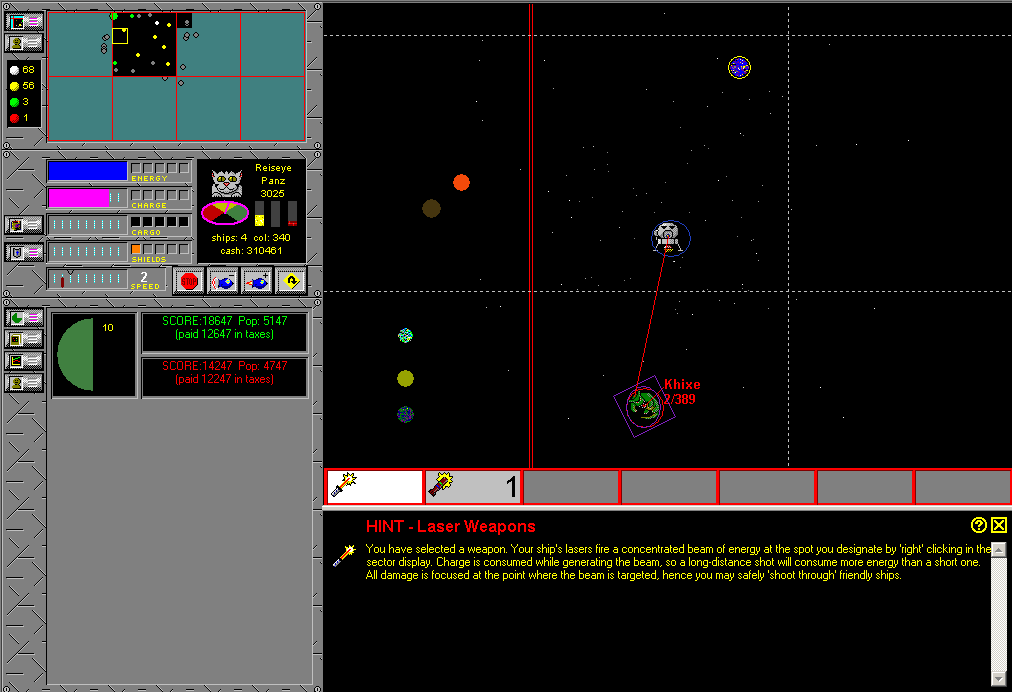
The core loop of exploring star systems, dispatching survey probes, setting up mining operations and then racing to colonize strategic worlds feels wonderfully dynamic. Combat sequences are equally engaging: squadrons dart in and out of asteroid belts, capital ships unleash broadsides, and you can micro-manage individual vessels in real time or let your battle groups follow preset formations. This blend of empire-building with hands-on skirmishing gives Warpath 97 a unique gameplay identity.
For those who relish a sandbox environment, the open-ended nature of matches is a major draw. You choose your own victory path—economic dominance, territorial control or outright military conquest. The shareware distribution means you get a taste of this variety before you commit, making Warpath 97 a low-risk investment for players curious about a hybrid RTS/4X experience.
Graphics
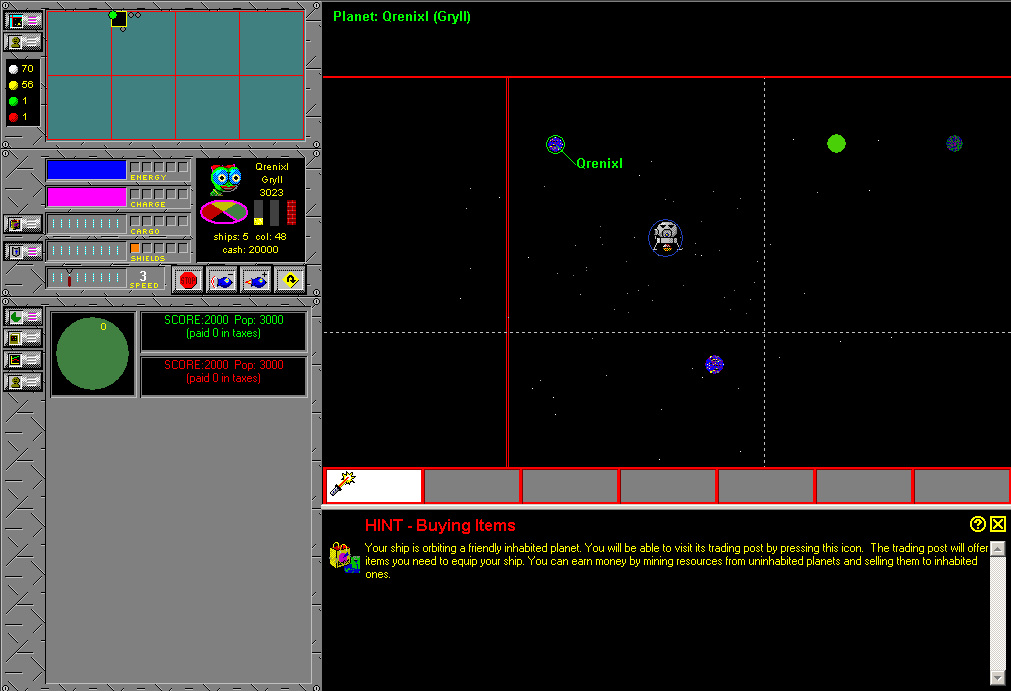
Visually, Warpath 97 embraces a functional 2D aesthetic typical of mid-90s PC titles. The galaxy map is rendered with clean lines and color-coded icons, making it easy to distinguish between your territories, neutral zones and enemy holdings. While it doesn’t push the boundaries of pixel art, the clarity of its visuals ensures you never lose track of vital information during heated moments.
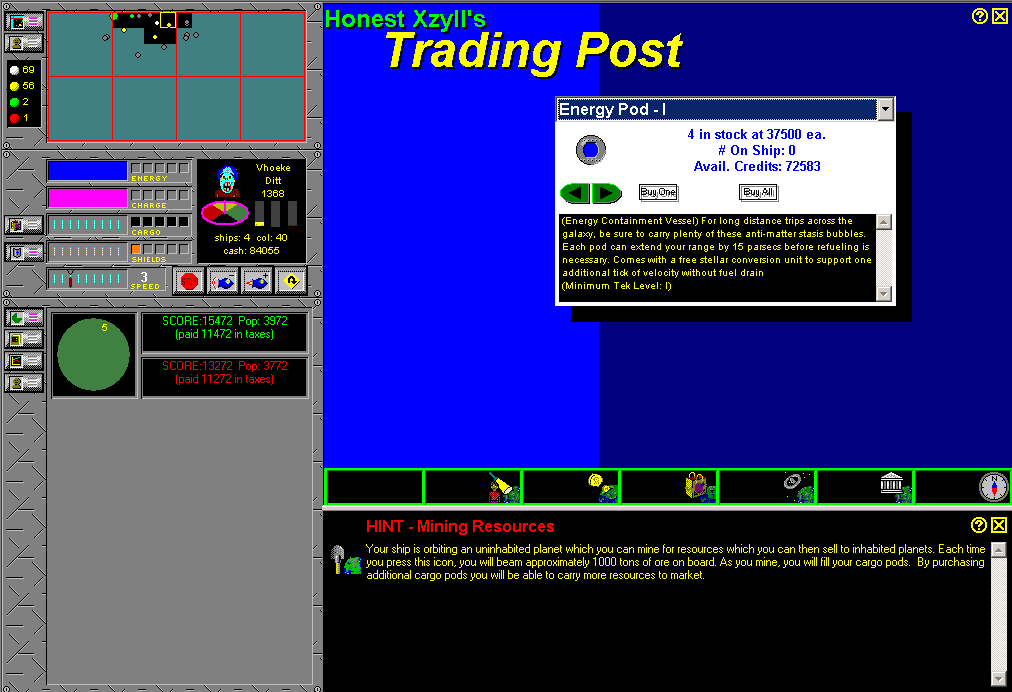
Ship sprites and station graphics are modest in detail but animated smoothly, giving battles a palpable sense of motion. Explosions light up nicely against the dark backdrop of space, and resource nodes on planetary surfaces glow in distinctive hues that help you prioritize mining targets. The user interface is straightforward, with neatly arranged toolbars and context-sensitive menus that minimize the need to hunt for commands.
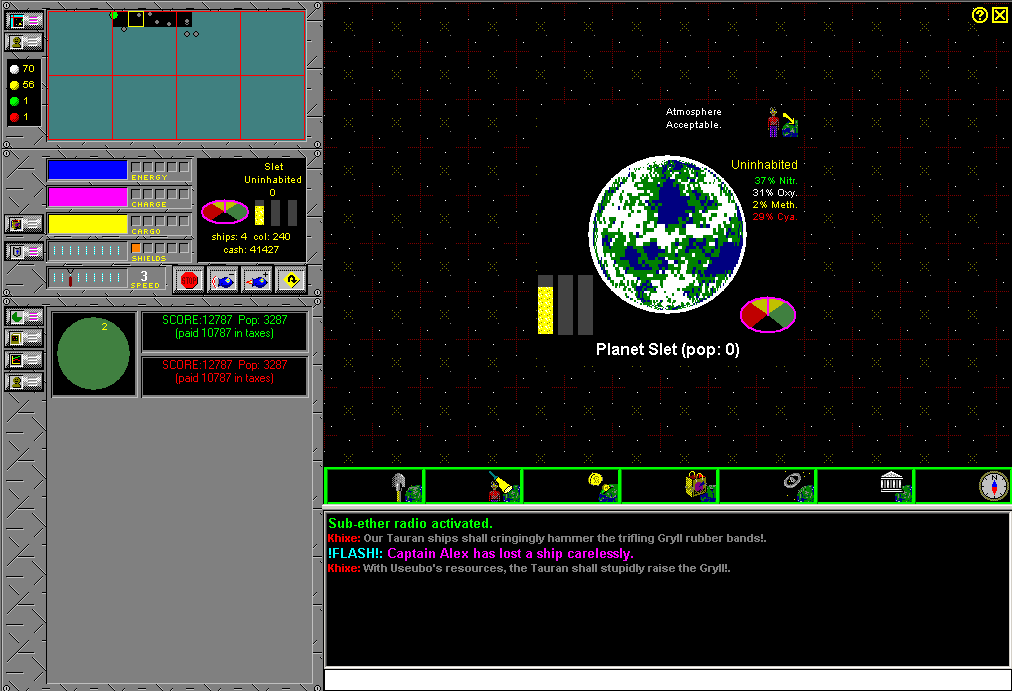
Color palettes lean toward darker shades punctuated by vivid highlights—ideal for a space opera setting. Planetary profiles show basic terrain and resource icons but leave the heavy lifting of economic management to spreadsheets and lists rather than elaborate terrain modeling. In an era before 3D acceleration was ubiquitous, Warpath 97’s visuals strike a solid balance between performance and readability.
Multiplayer matches run smoothly even over modest hardware, thanks to efficient network code and minimal graphical overhead. Whether you’re connected by LAN or a creaky dial-up link, the frame rate remains steady, and strategic decisions always take precedence over flashy effects. This pragmatic approach to graphics keeps the focus squarely on gameplay depth.
Story
As the sequel to the 1994 Warpath, Warpath 97 expands its overarching lore of interstellar expansion and factional rivalry. The narrative backdrop is simple but serviceable: competing human and alien empires scramble to stake their claim on newly discovered star systems rich in mineral wealth. There’s no elaborate cut-scene drama—most of the story unfolds organically through mission briefings and in-game events.
Players assume the role of a fleet commander tasked with establishing outposts, forging alliances (or breaking them) and ultimately securing supremacy in your sector of space. Each multiplayer or single-player match evokes a sense of emergent story-telling, as alliances shift, betrayals occur and desperate last stands become the stuff of legends. It’s a sandbox narrative rather than a linear campaign, giving you freedom to write your own saga.
Mission objectives vary based on map and opponent setup. Sometimes you’ll face aggressive AI warlords hell-bent on eradicating your colonies, while other scenarios reward diplomatic pacts or rapid economic build-outs. Though lacking the voice-acted cutscenes of later titles, the briefings and status reports are well-written, painting a concise portrait of each faction’s motivations and the broader stakes at hand.
For lore enthusiasts, the manual and in-game help files offer additional context—detailing ship classes, resource types and historical conflicts that shaped the current geopolitical landscape. This supplemental material, while optional, enriches the backdrop and encourages you to view each skirmish as part of a larger saga.
Overall Experience
Warpath 97 strikes a commendable balance between the long-term planning of 4X titles and the immediacy of real-time strategy. Matches are seldom predictable: a routine resource rush can turn into a desperate fight for survival in seconds, especially when human opponents exploit every vulnerability. This unpredictability keeps you invested game after game.
The shareware model is particularly inviting for curious strategists—you can sample core features without committing to a full purchase, then upgrade if you find the blend of empire-building and action compelling. The multiplayer infrastructure, though dated by today’s standards, still functions admirably for enthusiasts willing to set up IPX tunnels or dial into legacy MPlayer servers.
Single-player skirmishes against AI opponents provide a solid training ground, but the real magic happens when you go head-to-head against friends or rivals online. The game’s smooth performance and intuitive controls mean the focus stays on tactics and strategy rather than technical hiccups or steep learning barriers.
All told, Warpath 97 remains a noteworthy footnote in mid-90s PC gaming—a shareware gem that dared to blend 4X with real-time action. Its accessible visuals, modular narrative and engaging multiplayer framework make it a memorable experience for strategy fans curious about the roots of modern space conquest titles.


Reviews
There are no reviews yet.