 Retro Replay Retro Replay gaming reviews, news, emulation, geek stuff and more!
Retro Replay Review
Gameplay
X: Beyond the Frontier places you firmly in the captain’s seat of the X-Shuttle, inviting you to experience a deep and multifaceted simulation that balances trading, combat, and exploration. The heart of the gameplay revolves around buying low and selling high across fifty-four star systems, each with unique supply and demand curves. As you accumulate credits, you can upgrade your shuttle with better weapons, stronger shields, and expanded cargo holds, shaping your playstyle toward either profitable merchant or feared pirate.
(HEY YOU!! We hope you enjoy! We try not to run ads. So basically, this is a very expensive hobby running this site. Please consider joining us for updates, forums, and more. Network w/ us to make some cash or friends while retro gaming, and you can win some free retro games for posting. Okay, carry on 👍)
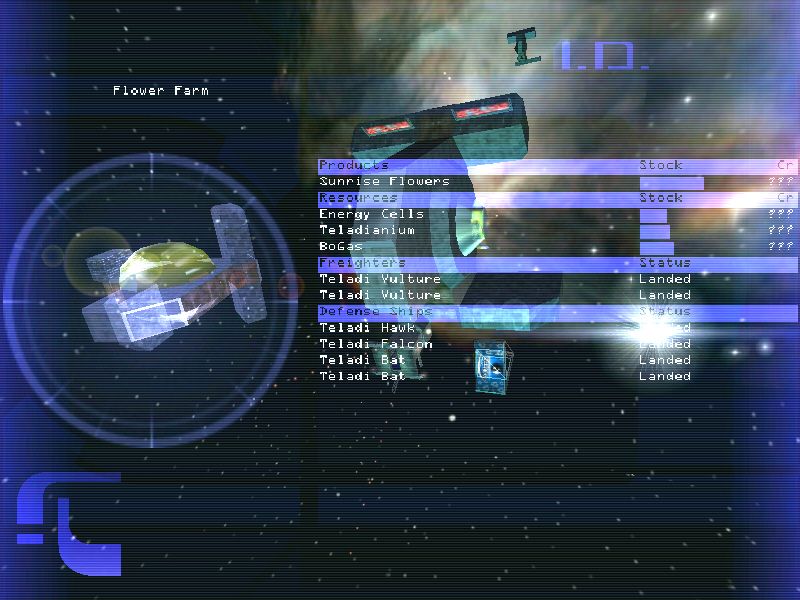
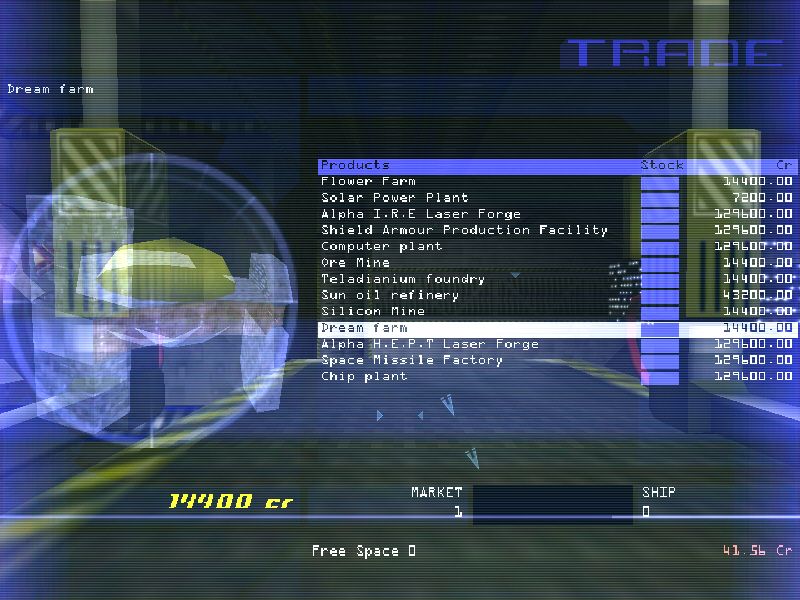
The dynamic economy is further enriched by the ability to invest in factories and production facilities. Once acquired, these installations generate passive income, rewarding strategic placement in resource-rich systems. Deciding when to reinvest profits into infrastructure versus saving for essential upgrades creates a constant tension that keeps trading routes fresh and challenging. Additionally, fluctuating market prices, driven by in-game events and player actions, prevent the trading loop from ever feeling stale.
Beyond trade, X: Beyond the Frontier delivers satisfying action through space combat encounters. Hostile ships—ranging from small fighters to larger corvettes—pop up unpredictably, forcing you to master evasive maneuvers, target prioritization, and weapon management. The inclusion of ship ramming as a last-resort tactic adds visceral thrills and underscores the high stakes of solitary space travel. Combat sequences are neither overwhelming nor trivial; they strike a balance that rewards practice and skill refinement.
Exploration is another cornerstone of the experience, as wormholes can strand you in unfamiliar regions or grant shortcuts to lucrative sectors. Navigating this cosmic web demands careful planning and occasionally improvisation when unexpected jumps send you far from known routes. This sense of discovery—paired with the ever-present risk of debt to the Teladi—gives each voyage a genuine sense of peril and possibility.
Graphics
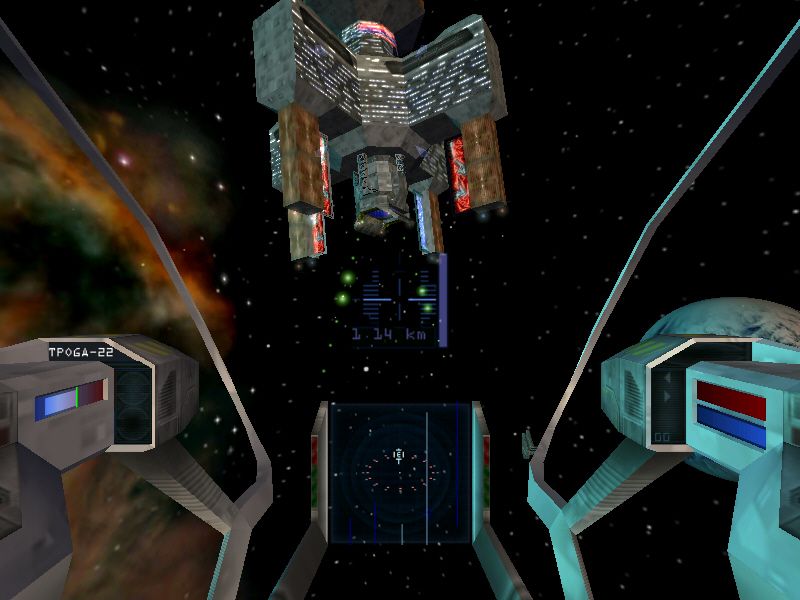
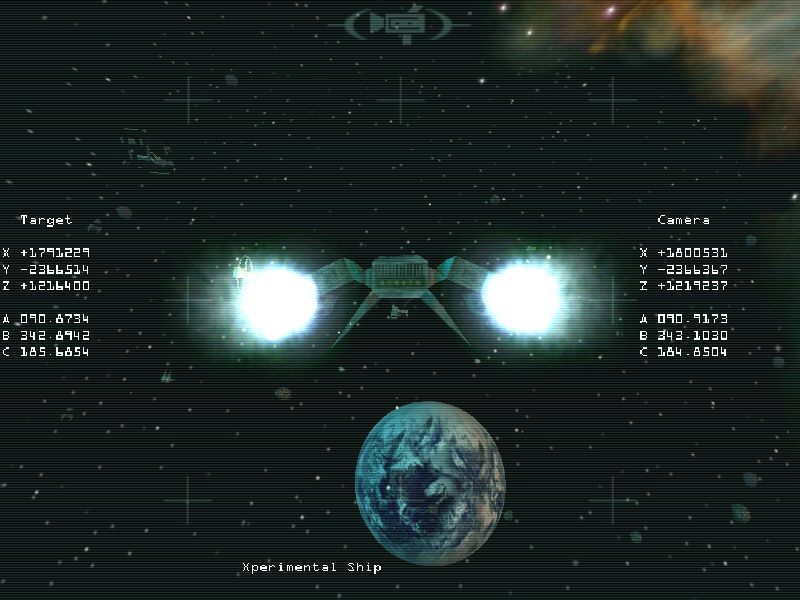
For a game released in 1994, X: Beyond the Frontier’s visuals remain impressive in their ambition. The vastness of space is convincingly rendered with starfields that stretch to infinity, punctuated by planetary bodies and rotating space stations. Though polygon counts are modest by modern standards, careful use of textures and lighting effects brings each installation to life, whether you’re docking at a bustling commercial hub or gliding past a lone solar power plant.
Ship models exhibit distinctive silhouettes and designs that help you quickly identify friend from foe. The Teladi vessels, with their bulbous forms, contrast sharply with the human-like lines of Argon ships, subtly reinforcing the game’s lore through visual language. Animations for docking procedures, hyperspace jumps, and explosions carry a satisfying weight, immersing you further into the X universe.
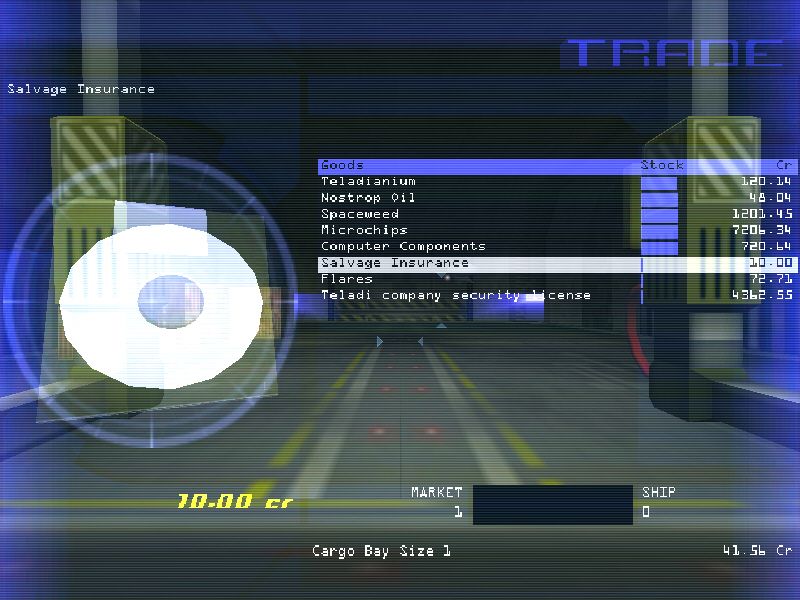
Station interiors are minimalistic but functional, featuring clear HUD overlays for trade menus, inventory management, and map navigation. While the interface can feel dated to newcomers, its clarity ensures you spend less time deciphering screens and more time immersed in piloting. Occasional screen transitions and cutscenes celebrate milestones like shuttle upgrades and mission completions, offering small but rewarding visual treats.
Story
The narrative of X: Beyond the Frontier begins in 2912 with Kyle Brennan’s ill-fated test jump aboard the new X-Shuttle. This opening sets a compelling stage: you are marooned in an unknown region of space, devoid of allies or clear paths home. Early encounters with the Teladi—an enigmatic merchant race—flesh out the stakes when they repair your ship but demand repayment, leaving you indebted and scrambling for credits.
As you navigate the intricate web of star systems, rumors surface about the Argon, humanoid-like traders who face an existential threat from the mechanical Terraformers. Although the game does not follow a strictly linear storyline, emergent narrative threads arise naturally as you decide where to funnel your resources—whether supporting beleaguered Argon colonies or pursuing profit at any cost. The absence of a rigid plot can be liberating, allowing personal stories of triumph or tragedy to unfold based on your actions.
Dialogues and in-game bulletins provide occasional lore dumps and mission hints, painting a broader picture of the X universe’s political, economic, and military tensions. While character development is subtle, the sheer scale of faction interactions and trade wars creates a living backdrop that evolves with each visit to a system. The sense of being a small actor in a vast, unfolding drama is palpable at every turn.
Overall Experience
X: Beyond the Frontier remains a landmark title for fans of space trading and combat simulations. Its blend of open-ended economic strategy, tactical dogfights, and exploratory freedom creates a sandbox of near-endless possibilities. Although steep learning curves in navigation and interface may intimidate newcomers, the payoff is a richly layered experience that rewards patience and experimentation.
The sense of progression—from a debt-ridden pilot to a well-equipped entrepreneur or daring mercenary—is both satisfying and personal. Every credit earned, every upgrade installed, and each new system surveyed feels like a tangible accomplishment. For players who relish long-term goals over instant gratification, the game’s pacing and depth offer hours upon hours of engagement.
While modern gamers might find the graphics and UI primitive, they serve as a testament to the game’s era and its pioneering spirit. X: Beyond the Frontier laid a foundation for subsequent entries in the X series, and its core design principles—dynamic economy, emergent storytelling, and open-world exploration—still resonate today. For those seeking a classic space sim that values player agency and strategic depth, Kyle Brennan’s odyssey is well worth embarking upon.


Reviews
There are no reviews yet.