 Retro Replay Retro Replay gaming reviews, news, emulation, geek stuff and more!
Retro Replay Review
Gameplay
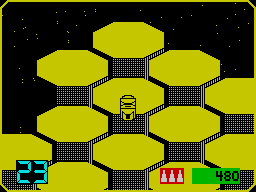
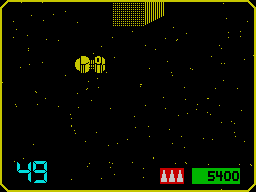
Collision Course drops you into the cockpit of a sleek starship designed to traverse a newly discovered network of stargates. Rather than a throttle, your vessel moves at a constant forward speed—your only means of control being left and right to rotate and up and down to adjust altitude. This minimalist control scheme feels instantly accessible, yet demands precision when navigating tight corridors of floating debris and active minefields.
(HEY YOU!! We hope you enjoy! We try not to run ads. So basically, this is a very expensive hobby running this site. Please consider joining us for updates, forums, and more. Network w/ us to make some cash or friends while retro gaming, and you can win some free retro games for posting. Okay, carry on 👍)
Energy management is at the core of the gameplay loop. As your ship cruises through each sector, its power reserves steadily deplete. Small glowing pods scattered throughout the level replenish these reserves, forcing you to make split-second decisions between detouring for a refill or pushing onward in the hope of finding the next stargate. This risk-and-reward tension keeps every run feeling urgent and alive.
Obstacles such as drifting meteors and magnetic mines are not just static hazards—they’re part of a living environment that reacts dynamically to your presence. Mines can be set off by proximity, clearing a path but also creating shockwaves that push your ship off-course. Meteors shift flight paths at random intervals, ensuring that no two runs play out identically. Each section culminates in locating and flying into the next stargate, resetting the arena and upping the ante.
Graphics
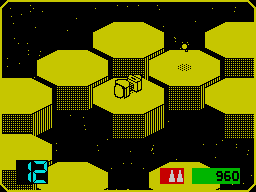
The visual presentation of Collision Course leans into a neon-washed sci-fi aesthetic. Deep purples and electric blues form the backdrop of each sector, punctuated by glowing pods, thrumming stargate rings, and the fiery trails of incoming meteors. This vibrant color palette makes it easy to distinguish critical objects at a glance, even when the action peaks.
Particle effects add a tangible weight to your surroundings—exploding mines send shrapnel arching across the screen, while energy-pickup pods shimmer with fractal bursts as you collect them. Subtle bloom around the stargate portals heightens their allure and clearly telegraphs your goal. The result is a cohesive visual language that never overwhelms your senses, even in the most hectic sequences.
Performance remains rock-solid, with steady frame rates across low and high-end hardware. Load times between sectors are virtually nonexistent, maintaining a seamless flow from one challenge to the next. Camera shaking and motion blur are used sparingly, striking a balance between cinematic flair and ensuring you always maintain spatial awareness of incoming threats.
Story
At its heart, Collision Course is driven by a simple but compelling premise: humanity has uncovered a network of stargates that could redefine travel, exploration, and conflict. You’re tasked with taking the prototype starship through uncharted sectors, mapping the route and looting whatever resources you can find before the competition catches wind of this cosmic highway.
Rather than relying on cutscenes or verbose exposition, the narrative unfolds organically through environmental cues and mission briefs. Holographic logs found near derelict mining rigs or crashed vessels shed light on rival factions racing to exploit the stargate network. Each new discovery deepens the sense that you’re at the center of an interstellar gold rush.
The game’s lore is optional but rich, offering tidbits about alien artifacts, hidden wormhole anomalies, and the potential dangers of unchecked gate activation. You can choose to focus purely on mastering flight mechanics or dive into the scattered datapads that hint at a larger story—one where the stakes could reshape the fate of the galaxy.
Overall Experience
Collision Course delivers an addictive blend of high-speed navigation, strategic resource management, and emergent storytelling. Every run feels fresh thanks to randomized obstacle placements and the ever-present drive to reach the next stargate before your energy runs out. The loop of drain, dodge, collect, and progress keeps your adrenaline pumping from start to finish.
Though the core concept is elegantly straightforward, a steep difficulty curve greets new pilots. Early sectors serve as tutorial grounds, but by the time you hit mid-game, precise control and quick reflexes become paramount. This makes for a rewarding experience if you’re willing to master the craft, though it may frustrate more casual players seeking a relaxed space trek.
In sum, Collision Course stands out as a fast-paced, visually striking entry in the space exploration genre. Its minimalist controls belie a deep, tension-filled challenge, while optional lore elements reward those curious about the wider mystery of the stargate network. If you’re in the market for an arcade-style journey through vibrant cosmic landscapes, this is one collision you won’t want to avoid.


Reviews
There are no reviews yet.