 Retro Replay Retro Replay gaming reviews, news, emulation, geek stuff and more!




Retro Replay Review
Gameplay
Kai Temple delivers a straightforward yet surprisingly addictive platforming experience. You guide your character through winding corridors and precarious ledges, relying on a responsive jump mechanic to navigate crumbling platforms and hidden traps. The tight controls ensure that every leap and landing feels deliberate—vital when you only have four lives to make your escape.
(HEY YOU!! We hope you enjoy! We try not to run ads. So basically, this is a very expensive hobby running this site. Please consider joining us for updates, forums, and more. Network w/ us to make some cash or friends while retro gaming, and you can win some free retro games for posting. Okay, carry on 👍)
Combat is refreshingly simple but demands strategy. Your dagger slices through Divas with ease, encouraging you to keep a safe distance and pick off ranged threats. Ninjas, on the other hand, force you into close-quarters brawling, where a well-timed kick can be the difference between life and death. This dual-weapon approach keeps encounters varied: you’ll often find yourself darting forward for a quick kick, then retreating to jab with your dagger.
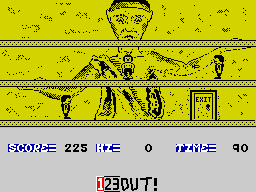
A truly unique twist is the random screen-flip mechanic. At unpredictable moments, the entire view inverts, disorienting both you and your sense of direction. It’s easy to misjudge jumps or lose track of a pursuing Ninja when left is suddenly right. This feature adds a dash of chaos precisely when you’re on the brink of ringing one of the temple’s bells, injecting tension into every playthrough.
Graphics
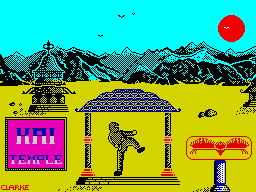
Visually, Kai Temple opts for a classic pixel-art style that evokes 16-bit era platformers. The muted stone grays of the temple walls contrast nicely with the vibrant red of your character’s tunic, making it easy to track your hero even during frenetic battles. Background details—cracked pillars, flickering torches, and carved runes—set a foreboding atmosphere without cluttering the screen.
Character sprites are crisp and well-animated. Divas flap about with exaggerated, theatrical motions, while Ninjas move with swift, fluid grace. Even the simple act of drawing your dagger or winding up a kick is captured in a few key frames that feel satisfying to trigger. When the screen flips, the transition is smooth, and the inversion animation adds an unsettling sense of vertigo—an unexpected treat for a retro-style title.
The audio-visual package is rounded out by subtle particle effects: sparks fly when your dagger clashes with enemy armor, and dust clouds billow beneath your feet as you land from great heights. Though there’s no high-definition textures or dynamic lighting, the minimalist approach serves the game’s tight gameplay loops perfectly, keeping the focus on platforming and combat.
Story
At its core, Kai Temple’s narrative is deceptively simple: you’re trapped inside an ancient stronghold and must ring four bells to break the curse that binds you. Each bell serves as both a checkpoint and a milestone, rewarding you with a brief respite before the next gauntlet of guards and traps. Though there’s no sprawling dialogue or voiced cutscenes, the game’s lore seeps through environmental storytelling—runes etched into pillars hint at past prisoners, and crumbling statues suggest a forgotten civilization.
By pitting you against two distinct enemy types—graceful Divas and deadly Ninjas—the game crafts an implicit hierarchy of threats. Divas seem to represent corrupted temple priests, their theatrical flourishes betraying a sense of sorrowful pride. Ninjas, silent and lethal, embody the temple’s darker, more ancient magic. This dichotomy provides a rough narrative framework that complements the trial-and-error nature of each run.
While short on explicit plot twists, Kai Temple’s story is woven into every gameplay moment. The screen-flip mechanic might initially feel like a gimmick, but as you uncover new alcoves and hidden corridors, you realize it speaks to the temple’s unstable enchantment. Rather than overwhelm you with exposition, the game lets you piece together its history through exploration—rewarding players who pause to admire the carvings and listen to the echoing drips of underground water.
Overall Experience
Kai Temple strikes a delicate balance between challenge and accessibility. With only four lives, each mistake stings, but the checkpoint at every bell ensures you’re never punished too harshly. That tension—knowing a single misstep could force you to replay a tricky section—keeps your heart racing long after you put down the controller.
The game’s bite-sized levels make for perfect pick-up-and-play sessions. Whether you have five minutes or an hour, it’s easy to jump in and feel a sense of progress. Yet the unpredictable screen flips and mixed-combat encounters inject enough variety to stave off repetition, encouraging you to master each corridor and memorize guard patterns.
In the crowded field of indie platformers, Kai Temple stands out thanks to its lean design and surprising depth. It doesn’t dazzle with hyper-realistic graphics or sprawling narratives, but its handcrafted levels, clever mechanics, and atmospheric presentation form a cohesive whole. If you’re seeking a retro-inspired challenge that rewards both skill and persistence, Kai Temple is well worth your adventure.



Reviews
There are no reviews yet.