 Retro Replay Retro Replay gaming reviews, news, emulation, geek stuff and more!
Retro Replay Review
Gameplay
Tremor’s core gameplay loop revolves around navigating a sprawling 400-room maze as a Miracloid droid, collecting jewel-shaped “qigit” objects and delivering them to their matching docks. At any given time, you can carry up to three qigits, which forces you to plan efficient retrieval routes and occasionally backtrack to swap or deposit cargo. This limited inventory system adds a strategic layer to exploration, ensuring every trip through the corridors is mindful rather than rote.
(HEY YOU!! We hope you enjoy! We try not to run ads. So basically, this is a very expensive hobby running this site. Please consider joining us for updates, forums, and more. Network w/ us to make some cash or friends while retro gaming, and you can win some free retro games for posting. Okay, carry on 👍)
Enemies abound: twenty distinct types of baddies roam the maze, each with its own movement patterns and attack behaviors. Some patrol predictable routes, while others teleport or home in on your position, meaning quick reflexes are often necessary when you least expect an ambush. The thrust-and-jump controls let you dodge or outmaneuver foes, but poor timing can still leave you vulnerable. Coupled with the classic left/right/thrust/jump/fire scheme, the challenge feels reminiscent of 8-bit era action titles like JetPac, yet Tremor carves out its own identity through labyrinthine level design.
Exploration is the heart of Tremor. Every chamber may hide a crucial power-up—shields, temporary invincibility, or speed boosts—that can mean the difference between success and a replayed section. Some rooms even feature one-bit sampled speech in the intro sequence, adding an unexpected dash of personality. While the tone remains purely arcade-focused, these audio cues heighten anticipation before you tackle particularly hazardous zones.
Power-up management becomes as vital as navigation. Deciding when to use a boost or conserve a shield involves risk-versus-reward judgments, especially when you’re carrying the final qigit needed to complete a cluster of rooms. This interplay of resource juggling, quick thinking, and spatial memory ensures Tremor remains engaging long after the initial rooms feel familiar.
Graphics
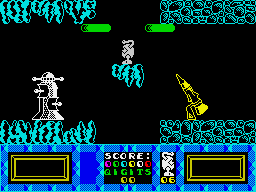
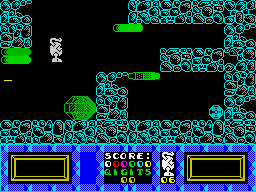
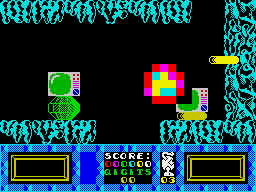
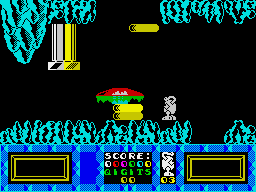
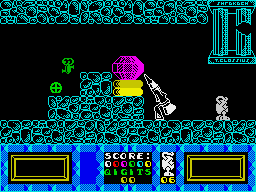
Visually, Tremor embraces a classic, pixel-art aesthetic that evokes the golden age of arcade gaming. The color palette is limited but purposeful, with rooms differentiated by unique hues and decorative tile patterns that help you memorize key locations. Walls may shift from icy blues to molten reds as you cross different sectors of the 400-room map, providing immediate visual feedback on your position.
Enemy sprites are small but distinct, each of the twenty varieties sporting its own silhouette and color accent. This makes it easy to learn which foes can be shot, which must be avoided, and which require special tactics. The Miracloid droid character is charmingly animated, with a subtle thrust flare and recoil frames when firing, giving each movement tactile satisfaction.
While not pushing the boundaries of modern hardware, Tremor’s graphical style is clean and purposeful. Particle effects accompany power-up activations, and brief explosion animations punctuate the corridor battles. Subtle screen shakes when delivering a qigit to its dock lend a gratifying punch, reinforcing the arcade roots of the game’s design.
The user interface is minimalistic: a small status bar displays carried qigits, remaining lives, and current power-ups. This uncluttered approach lets the action take center stage, ensuring you remain immersed in the maze’s twists and turns rather than distracted by overly elaborate menus or HUD elements.
Story
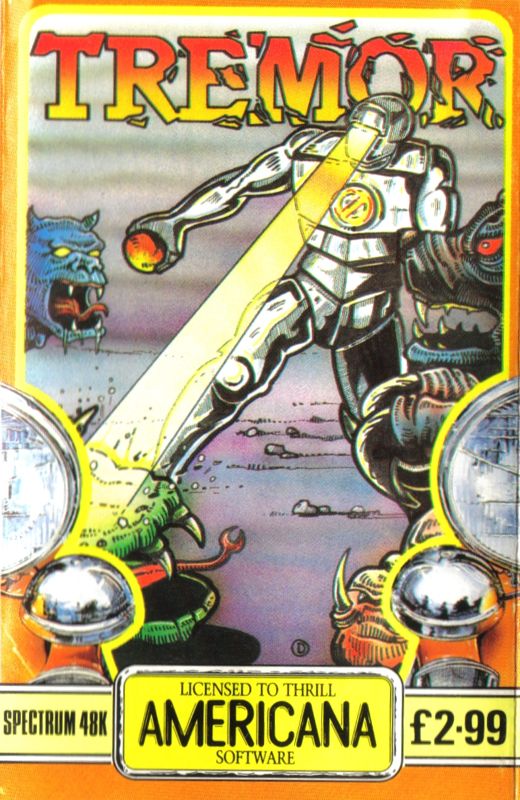
Tremor’s narrative is minimal by design, channeling the pure arcade ethos of “go forth and conquer.” You play as a Miracloid explorer on a mission to reclaim scattered qigit treasures across an abandoned, subterranean complex. Any lore hints are conveyed through brief loading-screen blurbs and the occasional sampled voice snippet during the introduction, giving the premise a light sci-fi framing without bogging down the experience.
Though the overarching storyline remains intentionally sparse, environmental details imply a once-thriving research facility now overrun by malfunctioning defense droids and energy anomalies. Decorative set pieces—rusted conduits, inactive machinery, and flickering control panels—hint at a backstory waiting to be discovered by players with a keen eye. This gives Tremor a backdrop that feels richer than its straightforward objectives might suggest.
Character development is nonexistent in the traditional sense, but the relationship between player and droid evolves over time. As you master the map’s layout and outsmart relentless foes, you become an extension of the Miracloid’s capabilities. That emergent bond, rooted in trial, error, and eventual mastery, delivers a narrative of personal triumph more resonant than any cutscene could provide.
Ultimately, Tremor’s story is a canvas for your own explorations. With no expansive dialogue trees or scripted cinematics, each jewel recovered and each dock filled becomes its own milestone. If you relish environmental storytelling and piecing together hints of what came before, Tremor’s subdued narrative approach will suit you perfectly.
Overall Experience
Tremor offers a compelling blend of strategic exploration and twitch-based action within a meticulously crafted maze of 400 rooms. The satisfaction of picking up a qigit, evading a sudden enemy ambush, and delivering it to the correct dock is surprisingly addictive. Whether you’re threading through corridors with only one boost left or juggling three qigits while surrounded, every victory feels earned.
The balance between challenge and accessibility is well-judged. Newcomers will appreciate the intuitive controls and clear visual design, while arcade veterans will relish the room-by-room mastery required to achieve completion without losing lives. The variety of enemy types and power-ups ensures no two play sessions feel identical, encouraging repeated runs to improve routing and reaction times.
Tremor’s retro visuals and minimalist story may not appeal to those seeking high-fidelity graphics or narrative depth, but for fans of arcade maze-action titles, it delivers exactly what you want: a straightforward, high-octane challenge. The sampled speech in the intro adds a charming touch, and the polished sprite work confirms the developers’ attention to detail.
In sum, Tremor stands as a robust, replayable arcade adventure that blends exploration, strategy, and quick reflexes. It’s a title best enjoyed in focused sessions where every corridor and qigit counts. If you’re in the market for a maze-based action game that rewards planning as much as speed, Tremor should be on your shortlist.


Reviews
There are no reviews yet.