 Retro Replay Retro Replay gaming reviews, news, emulation, geek stuff and more!
Retro Replay Review
Gameplay
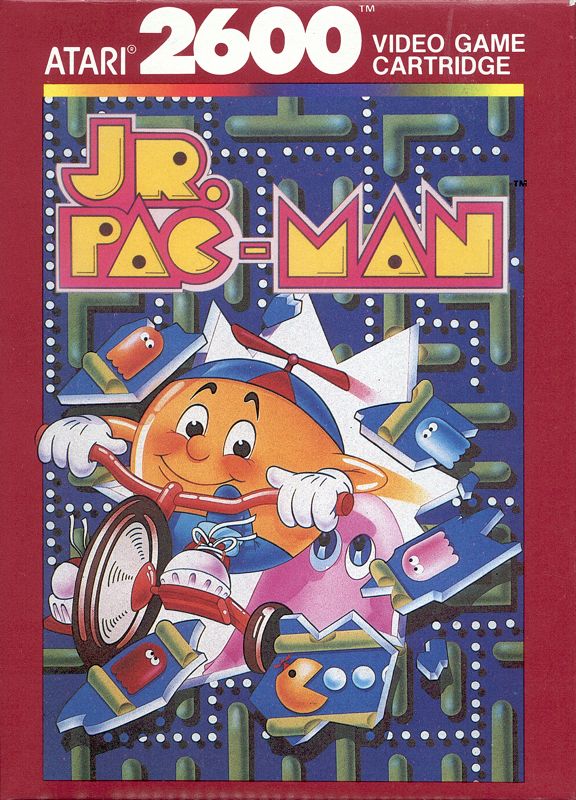
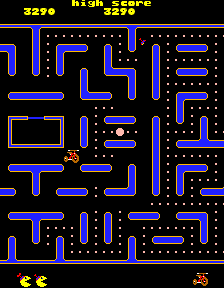
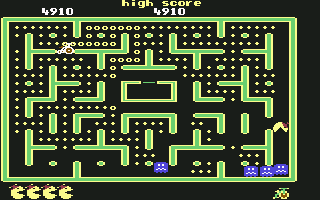
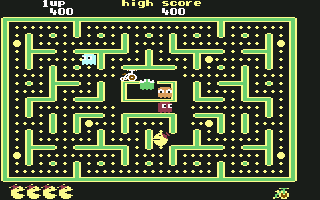
Jr. Pac-Man builds on the core maze-chase mechanics that made the original Pac-Man a timeless classic. Players guide Jr. through a sprawling labyrinth, gobbling up standard dots while evading the ever-persistent quartet of ghosts. Unlike its predecessor’s single-screen layouts, this sequel introduces a scrolling maze that constantly pans to follow your movements, adding both a sense of scale and an extra layer of tension as you lose sight of threats creeping in from the edges.
(HEY YOU!! We hope you enjoy! We try not to run ads. So basically, this is a very expensive hobby running this site. Please consider joining us for updates, forums, and more. Network w/ us to make some cash or friends while retro gaming, and you can win some free retro games for posting. Okay, carry on 👍)
One of the standout innovations in Jr. Pac-Man is the introduction of bouncing bonus items—tricycles, kites, drums, balloons, trains, root beers, and more. These treats not only award higher points when collected, but they also supercharge nearby dots, transforming them into “super dots” worth 50 points each instead of the usual 10. However, this lucrative payoff comes with a twist: consuming a super dot temporarily slows Jr. down, making it more challenging to stay ahead of the ghosts and demanding careful risk–reward judgment.
Power pellets remain a key strategic element, turning the ghosts blue and vulnerable for a short window. Mastering the timing of pellet pickups, paired with the maze’s larger scope, creates frantic moments of cat-and-mouse gameplay. As levels progress, the ghosts’ speed and coordination ramp up, while the bonuses bounce faster and more erratically—ensuring that even seasoned Pac-Man veterans must stay on their toes to achieve high scores.
Graphics
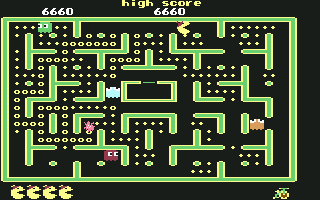
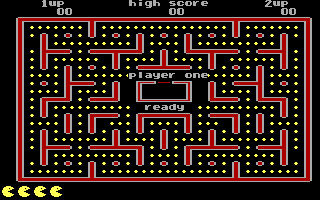
Visually, Jr. Pac-Man retains the bright, cartoonish charm of the original arcade cabinet, leveraging bold primary colors to delineate mazes and characters. The enlarged screen area, facilitated by smooth scrolling, allows for broader environments without sacrificing sprite clarity. Jr. is instantly recognizable with his iconic yellow form, and the ghosts—Inky, Blinky, Pinky, and Clyde—are rendered with crisp outlines and vibrant hues that pop against the dark maze background.
Though hardware limitations of the era impose relatively simple animations, the game makes clever use of motion. The bouncing bonuses exhibit a satisfying elasticity, while transitions between screen segments feel fluid rather than jarring. The color-coded power‐up dots and dynamic visual feedback when ghosts flash blue help players quickly assess danger and opportunity—even amid the frenetic pace of later levels.
On modern displays or faithfully emulated cabinets, Jr. Pac-Man’s pixel art holds up surprisingly well. Its retro aesthetic evokes nostalgia for arcade aficionados, yet remains accessible to newcomers who appreciate timeless design over photorealism. The consistent frame rate ensures that scrolling never stutters, preserving the responsiveness that’s critical for precise maze navigation.
Story
Like many arcade classics, Jr. Pac-Man doesn’t rely on an elaborate narrative, but it weaves a simple premise into its gameplay hook: you are Jr., the offspring of Pac-Man, out to prove yourself in a series of ever‐more challenging mazes. Your quest for high scores and bonus items doubles as a rite of passage, carrying forward the family legacy of dot‐munching prowess.
Each level serves as a self-contained test of skill rather than a chapter in a sprawling saga. There’s no cutscene exposition or character dialogue, but the escalating difficulty curve provides its own sense of progression. As Jr. advances through the bouncing-bonus gauntlet, players instinctively feel the narrative drive to conquer harder stages and outpace the ghosts that have become more cunning with each passing maze.
For those seeking a deeper storyline, Jr. Pac-Man’s appeal lies more in its mythos—expanding the broader Pac‐Man universe—than in in‐game plot developments. The game invites players to project their own ambitions onto Jr.’s journey, whether that’s racking up personal bests, unlocking secret mazes (in certain ports), or simply mastering the unique mechanics that distinguish this sequel from its forebearer.
Overall Experience
Jr. Pac-Man represents a fine evolution of the maze-chase genre, striking a balance between familiarity and fresh challenges. The scrolling maze feels spacious without becoming unwieldy, and the bouncing bonuses inject moments of glorious chaos. For fans of the original Pac-Man, it delivers enough twists—like super dots that slow your mover—to keep the experience from feeling derivative.
The game’s learning curve is approachable: newcomers can enjoy munching dots and dodging ghosts in early levels, while high-score chasers will appreciate the nuanced timing required to optimize bonus collection and evade accelerating adversaries. The lack of an intricate plot is hardly a drawback; the pure gameplay loop remains as addictive today as it was at arcades in the mid-1980s.
Whether you’re a retro arcade enthusiast or simply curious about classic titles that shaped gaming history, Jr. Pac-Man offers an engaging blend of strategy, timing, and reflex. It stands as a worthy entry in the Pac-Man lineage, proving that even slight innovations—when executed well—can revitalize a beloved formula and keep players coming back for just one more run.


Reviews
There are no reviews yet.