 Retro Replay Retro Replay gaming reviews, news, emulation, geek stuff and more!

Retro Replay Review
Gameplay
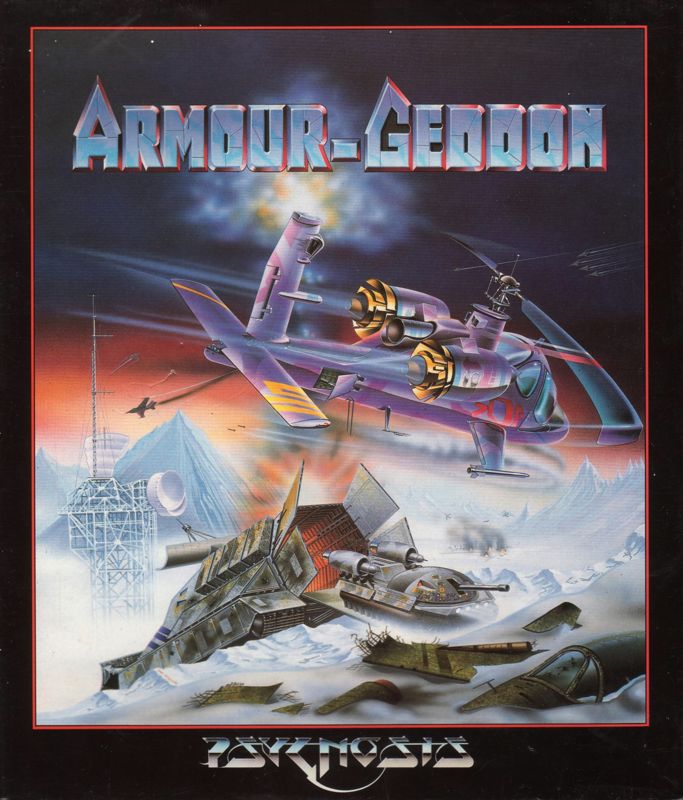
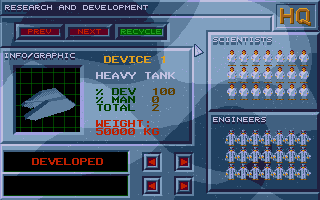
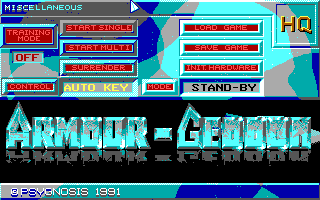
Armour-Geddon positions you at the heart of a desperate campaign to thwart a cataclysmic energy beam that threatens all unprotected life on Earth. From the moment you step into the command seat, you’re faced with strategic decisions and pulse-pounding combat scenarios. You can select up to six different vehicles—ranging from nimble hovercraft to heavily armored tanks—each with unique strengths, weaknesses, and weapon load-outs. This variety forces you to constantly adapt your tactics as new threats emerge.
(HEY YOU!! We hope you enjoy! We try not to run ads. So basically, this is a very expensive hobby running this site. Please consider joining us for updates, forums, and more. Network w/ us to make some cash or friends while retro gaming, and you can win some free retro games for posting. Okay, carry on 👍)
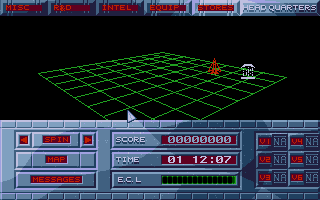
The blend of simulation and strategy is one of Armour-Geddon’s defining features. On the macro level, you plot your assault on enemy power lines, allocating resources and planning your route through defended installations. On the micro level, you personally pilot your chosen vehicle, handling throttle, weapons targeting, and evasive maneuvers in real time. This dual-layered design gives you a satisfying sense of control, whether you’re crafting the perfect ambush or dogfighting enemy scout drones.
Enemy AI is solid, with patrol patterns and defensive formations that keep you on your toes. Power lines are rarely left undefended—automated turrets, minefields, and fast response units ensure every mission feels like a true test of skill. When you finally breach the outer defenses, the game ramps up the tension with heavily fortified installations and mini-boss encounters. The result is a campaign that never feels repetitive, even as you revisit desert outposts or urban ruins on multiple occasions.
Graphics
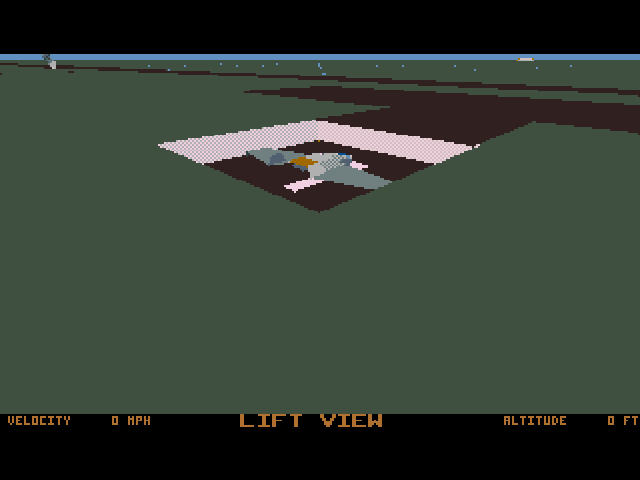
Visually, Armour-Geddon presents a gritty, post-apocalyptic Earth rendered in detailed 3D environments. Sand-blasted deserts, crumbling cityscapes, and scorched industrial zones form the backdrop for your fight against the power-hungry adversary. Textures are sharp for its era, and environmental effects—like drifting sandstorms or billowing smoke—add an immersive layer to each battlefield.
The vehicle models themselves are impressively realized, with credible armor plating, visible weapon mounts, and dynamic damage states that show dented hulls and flickering sparks as you take fire. Explosions pack a punch, with debris and shrapnel that respond to physics, creating satisfying chaos when you finally demolish a critical power line tower.
Performance remains stable even when dozens of active objects are on screen. Frame rates stay consistent during large-scale engagements, thanks to well-optimized draw distances and level streaming. Pop-in is minimal, and draw calls for distant terrain are intelligently managed so that the action remains crisp and responsive, whether you’re zoomed in on your vehicle’s cockpit or surveying the map from above.
Story
At its core, Armour-Geddon spins a straightforward but compelling narrative: a power-crazed entity is on the brink of activating an all-devastating energy beam, and you race against time to stop it. The sense of urgency is palpable from the opening briefing, where your commanding officers paint a dire picture of widespread destruction and dwindling hope. It sets a classic “save-the-world” tone that many strategy-sim hybrids strive for but few achieve with such clarity.
Mission objectives dovetail neatly with the plot’s progression. Early missions focus on reconnaissance and sabotage, giving you a chance to familiarize yourself with vehicle controls and enemy patterns. As the story ramps up, you encounter fortified energy pylons and sprawling generator complexes that serve as natural climax points. While dialogue is occasionally serviceable rather than stellar, the overarching arc never loses momentum.
Cutscenes, though modest in production value, effectively illustrate the stakes at each stage of the campaign. Briefings come with animated schematics of the beam generator, and in-game radio chatter keeps you informed of evolving threats. The narrative payoff—destroying the final beam generator—feels earned after hours of tactical planning and close-call firefights, leaving you with a genuine sense of accomplishment.
Overall Experience
Armour-Geddon succeeds in marrying strategic planning with hands-on vehicular combat, resulting in an experience that rewards both careful thinking and quick reflexes. The variety of vehicles at your disposal and the wealth of mission scenarios ensure that no two battles feel exactly alike. Whether you prefer skirting the edges of a desert canyon to strike from behind or leading a full-frontal assault through a Kremlin-style fortress, the game offers considerable tactical freedom.
The campaign’s pacing is well-balanced, mixing stealthy sabotage runs with full-blown armored clashes. Replay value is bolstered by optional secondary objectives—rescue civilian outposts, disable extra power conduits, or collect enemy intel crates—that encourage exploration beyond the main path. Veteran players will find additional challenge in pursuing perfect mission scores and experimenting with unconventional vehicle combinations.
Minor shortcomings, like occasional repetitive radio chatter or a slightly linear tech progression, do little to overshadow the game’s core strengths. Armour-Geddon remains an engaging purchase for fans of strategy-simulation hybrids who crave both battlefield tactics and cockpit thrills. If you’re ready to save humanity one armored vehicle at a time, this title delivers a robust, satisfying journey from the first mission briefing to the last explosive finale.


Reviews
There are no reviews yet.