 Retro Replay Retro Replay gaming reviews, news, emulation, geek stuff and more!
Retro Replay Review
Gameplay
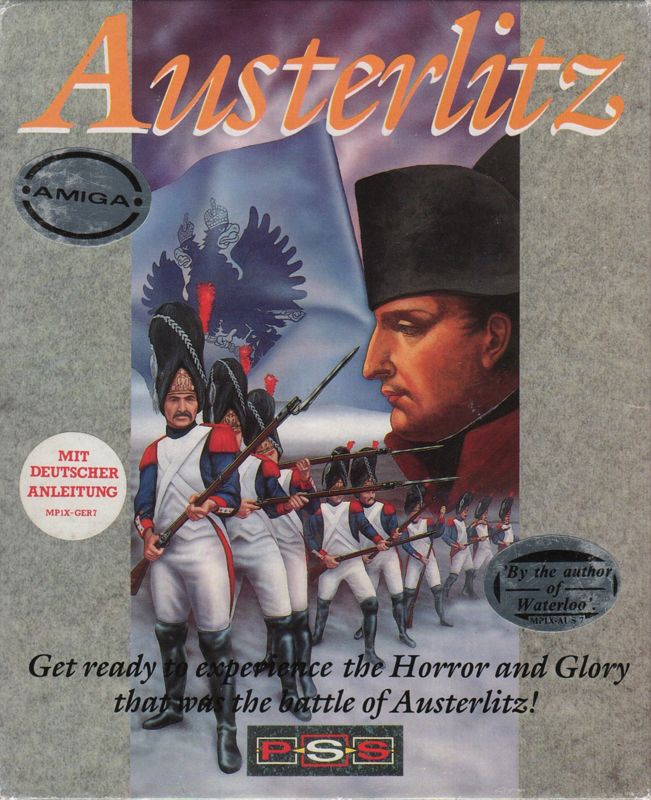
Austerlitz places players at the heart of one of Napoleon’s most celebrated triumphs, offering a robust and intricate command system rooted in text-based orders. Each turn, you’ll issue directives by typing pre-defined commands alongside the names of your corps, brigades, or key commanders. This method may feel archaic compared to modern point-and-click interfaces, but it rewards those who appreciate precision and authenticity in battlefield communication.
(HEY YOU!! We hope you enjoy! We try not to run ads. So basically, this is a very expensive hobby running this site. Please consider joining us for updates, forums, and more. Network w/ us to make some cash or friends while retro gaming, and you can win some free retro games for posting. Okay, carry on 👍)
The tactical depth is considerable. You must account for terrain features like the Pratzen Heights, manage troop morale under fluctuating morale checks, and anticipate enemy maneuvers. Reinforcements arrive according to historical timetables, and misreading the chartreuse of action can quickly turn a promising advance into a rout. Multiplayer skirmishes—either hotseat or networked—add a competitive edge, pitting general against general in a duel of wits.
This third installment borrows heavily from its predecessors’ rule sets, yet it refines AI decision-making. Computer-controlled adversaries react dynamically to flank attacks and take advantage of gaps in your line. Meanwhile, ‘observer mode’ allows you to watch the CPU direct both sides, making for a fascinating study of strategic principles in motion without the stress of issuing orders yourself.
Whether commanding as Napoleon himself or stepping into the boots of Czar Alexander, the learning curve is steep but ultimately rewarding. Tutorials guide you through basic maneuvers—column attacks, artillery barrages, and cavalry charges—before unleashing you on the full scenario. Victory demands not only historical knowledge but also the flexibility to adapt as the tides of battle shift.
Graphics
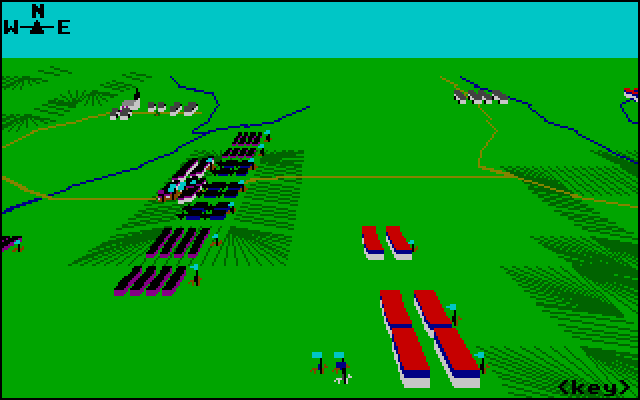
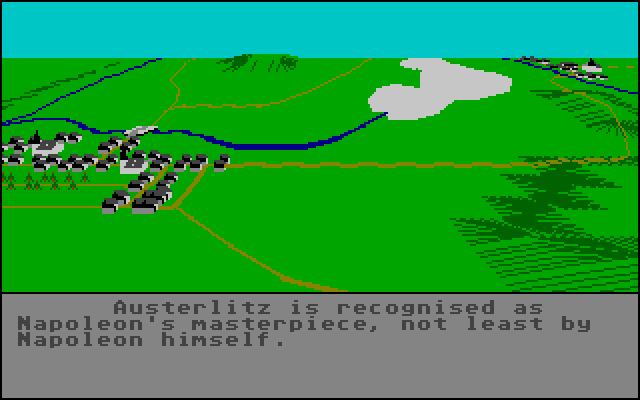
Visually, Austerlitz adheres to the series’ signature 3-D isometric battlefield. Terrain contours are rendered with simple shading, giving hills and forests enough relief to influence tactics without overwhelming the screen. Unit counters—representing line infantry, cavalry squadrons, and artillery batteries—are small but distinct, each sprite clearly indicating type and strength.
Animations are minimal, reflecting the game’s roots in hex-based wargaming rather than real-time visualization. When units advance or fire, you’ll see modest motion and muzzle flashes, but don’t expect cinematic flourishes. Instead, the presentation keeps focus on the strategic layer, ensuring that performance remains smooth even when hundreds of units clash simultaneously.
The user interface hasn’t changed much from Waterloo and Borodino: command input is text-driven, and the map overlays display essential data—unit cohesion, morale, and supply status. While veterans will appreciate the consistency, newcomers might find the learning curve steeper without tooltips or context-sensitive menus. Still, once you’re familiar with the keystrokes, issuing rapid orders feels surprisingly efficient.
Color palettes are functional rather than flashy. French units are marked in blue, allies in various pastel shades, and the Russian-Austrian coalition in red. Terrain features like marshes and woods use muted greens and browns, ensuring that you can quickly scan for choke points and high ground. The overall aesthetic is utilitarian, but it underscores the game’s commitment to clarity and historical accuracy.
Story
Austerlitz isn’t a narrative-driven title in the conventional sense, but it immerses you in the historical drama of December 2, 1805. Briefing screens recount the strategic situation: the Grande Armée’s daring maneuvers around the Allies, the feint at the Pratzen Heights, and Napoleon’s masterstroke that split the coalition forces. These expository texts set the stage for what becomes a tense, drama-filled replay.
Each playthrough can unfold differently depending on your choices. If you opt for a conservative advance, the Russian center might hold–and a frontal assault could turn costly. Alternatively, a bold cavalry thrust at dawn may shatter enemy lines before they can coordinate. These narrative forks arise organically through gameplay, making each campaign a unique retelling of history.
Characterization comes from your interactions with subordinate commanders, whose status reports vary based on battlefield performance. A Parisian provincial colonel might grumble about fatigue, while an elite cuirassier brigade enthusiastically reports high morale after a successful charge. These small flourishes help humanize the sprawling battlefield and remind you that each unit represents lives and legacies.
The absence of cutscenes or voice acting might disappoint fans seeking a story mode, but it also reinforces the simulation’s focus. Instead of hand-holding narratives, Austerlitz trusts you to shape the unfolding drama. For history buffs, this approach deepens immersion, as you directly experience the tension and uncertainty that defined one of history’s greatest victories.
Overall Experience
As the third installment following Waterloo and Borodino, Austerlitz both refines and preserves the core wargaming ethos of its predecessors. If you’ve enjoyed the earlier titles, you’ll find this entry a welcome expansion of strategic options and historical scope. For newcomers, it offers a challenging yet rewarding introduction to Napoleonic warfare.
The game’s strengths lie in its fidelity to period tactics and flexible scenarios. Solo players will appreciate the detailed AI and the ability to observe CPU-v-CPU matches, while competitive gamers can engage in hotseat or networked battles. The interface may feel dated, but veteran wargamers will relish the depth and precision it affords.
Certain limitations persist: the lack of graphical polish, the reliance on typed commands, and the steep initial learning curve can be barriers to entry. However, these trade-offs are intrinsic to the series’ design philosophy. If your priority is an authentic simulation over flashy visuals, Austerlitz delivers a compelling experience.
Ultimately, Austerlitz stands as a worthy successor in this Napoleonic trilogy. It captures the scope and intensity of December 1805’s climactic clash, challenging you to replicate—or rewrite—history. Whether you lead the French juggernaut or hold fast as the Allies, the game promises hours of thoughtful strategy and a deep sense of historical immersion.


Reviews
There are no reviews yet.