 Retro Replay Retro Replay gaming reviews, news, emulation, geek stuff and more!



Retro Replay Review
Gameplay
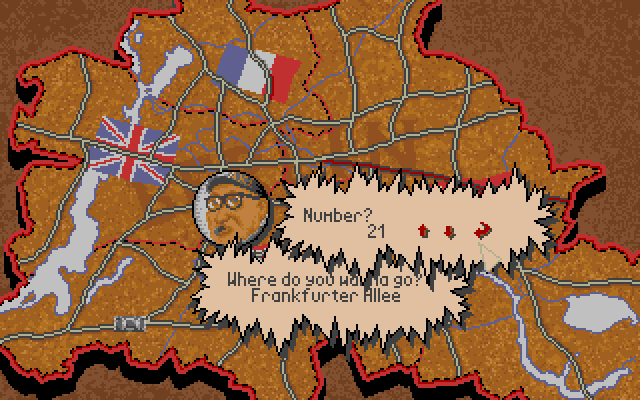
Berlin 1948 unfolds through a third-person point & click interface that pays homage to the genre’s pioneers while introducing its own quirks. As an American spy tasked with safeguarding a smuggled atomic bomb, you navigate bombed-out streets, abandoned buildings, and Soviet checkpoints. The controls are slightly more intricate than the classic SCUMM system, demanding patience and experimentation as you combine inventory items, interrogate NPCs, and disarm traps.
(HEY YOU!! We hope you enjoy! We try not to run ads. So basically, this is a very expensive hobby running this site. Please consider joining us for updates, forums, and more. Network w/ us to make some cash or friends while retro gaming, and you can win some free retro games for posting. Okay, carry on 👍)
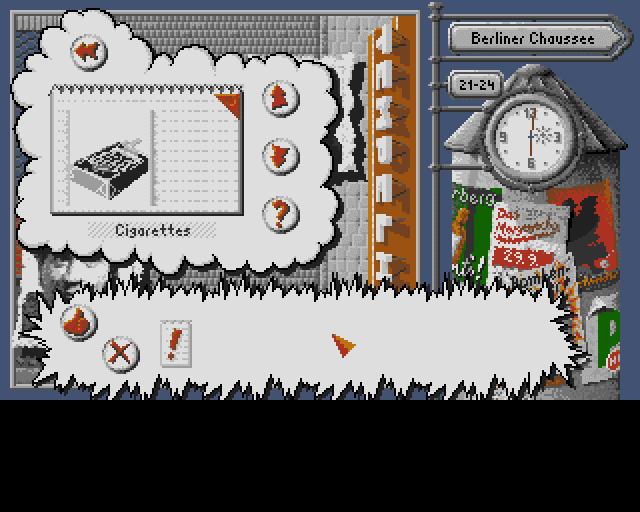
Puzzles blend logical deduction with environmental storytelling—search a rubble-filled courtyard for hidden documents or piece together a coded message found in a dead drop. The inventory screen requires you to meticulously examine each item; a single overlooked clue can halt progress for hours. Though this complexity may frustrate newcomers, it deepens the sense of espionage and danger that defines the experience.
Interaction with characters is one of Berlin 1948’s strongest suits. You can tail suspects, eavesdrop on conversations, or bribe informants with scarce resources. Each decision ripples through the game: betray a low-level courier and you risk tipping off Stalin’s agents; instead, use him for disinformation and open new routes through Soviet-controlled sectors. The stakes feel high because the interface places you squarely in the role of a meticulous intelligence officer.
Movement and camera angles reinforce the tension. The early 3D perspective allows you to circle the American spy, revealing hidden paths or secret entrances. Occasional camera shifts accentuate moments of discovery or crisis. While the load times and occasional pixel-hunt moments show the game’s vintage roots, they also lend an authentic, immersive charm that modern point & clicks rarely capture.
Graphics
Berlin 1948 employs detailed pixel art backgrounds that evoke the grim atmosphere of postwar Germany. Crumbling façades, burnt-out vehicles, and flickering streetlamps paint a bleak yet compelling portrait of a city in limbo. The color palette is dominated by muted grays and sepia tones, punctuated by the glow of searchlights and the occasional splashes of red from Communist banners.
Character sprites are small but expressive. The American spy’s trenchcoat and fedora are instantly recognizable, and the Soviets’ uniforms carry an oppressive rigidity. Subtle animations—like a guard shifting nervously or fluttering papers in the wind—bring life to static scenes, inviting you to pause and absorb the environmental details. Occasionally, the frame rate dips when multiple NPCs appear, but never enough to derail the immersive world.
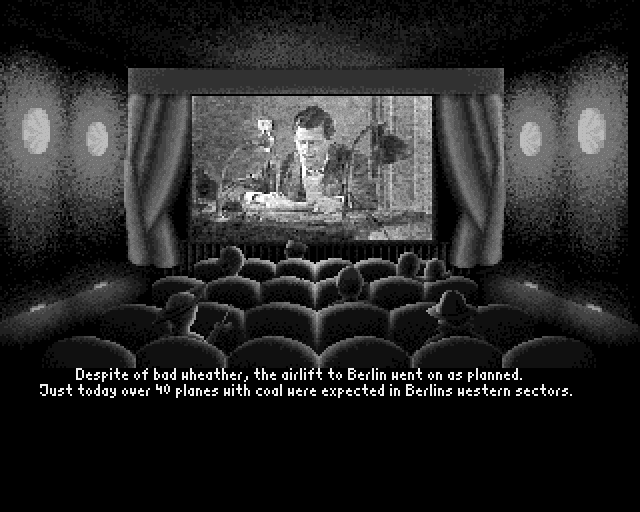
Cutscenes are simple but effective, often using storyboard-style panels with voiceover snippets or text overlays. These sequences bookend major plot developments—such as the clandestine handover of microfilm or a tense standoff at a subway station—and reinforce the Cold War stakes. Though the visuals lack modern polish, they underscore the game’s historical setting and make every triumph over adversity all the more satisfying.
Overall, the graphics in Berlin 1948 strike a balance between period authenticity and functional design. You’re not dazzled by high-definition textures, but you are drawn into a meticulously crafted world where every shadowed alley and barbed-wire fence tells a story of postwar paranoia.
Story
Set in the immediate aftermath of World War II, Berlin 1948 weaves a tale of espionage, betrayal, and geopolitical brinkmanship. You assume the role of Jack Donovan, an American intelligence officer entrusted with an atomic bomb smuggled into the Soviet-sector city. Your mission is clear: prevent Stalin’s operatives from seizing the device at any cost.
The narrative unfolds slowly, relying on atmospheric encounters and carefully placed documents to build tension. A late-night meeting in an abandoned train yard escalates into a chase through bombed-out tunnels; a covert negotiation with a double agent reveals hidden Soviet supply routes. The game rewards exploration, as each new piece of information deepens the sense that one misstep could trigger global catastrophe.
Dialogue is smartly written, balancing terse spy clichés with moments of genuine gravitas. Russian officers speak in clipped tones, betraying their suspicions through subtle gestures, while British and American informants offer wry commentary on the tenuous peace. Though non-linear at times, the plot never loses its focus: an atomic bomb looms as both a MacGuffin and a symbol of humanity’s destructive potential.
Branching paths arise from your choices—will you trust a former German resistance fighter or suspect him of Soviet collaboration? Each alliance alters subsequent missions and even the city’s physical layout as new checkpoints spring up in response to your activities. These narrative twists give Berlin 1948 replay value and a palpable sense of consequence.
Overall Experience
Berlin 1948 offers a deep, methodical adventure that rewards patience and attention to detail. Its deliberate pacing and complex interface may deter casual players, but those who embrace its challenges will find a richly immersive spy thriller. Every puzzle solved, every secret uncovered, feels like a triumph of intelligence over bureaucratic chaos.
The game’s strengths lie in its atmosphere and narrative cohesion. From the hushed corridors of Soviet headquarters to the rain-slicked streets of the British sector, each location feels lived-in and steeped in history. The sense of being a lone operative against a sprawling intelligence network keeps you engaged from start to finish.
While some modern conveniences—context-sensitive cursors or hint systems—are absent, the trade-off is an authentic retro experience that captures the spirit of late-80s adventure design. Fans of classic point & click titles will appreciate the advanced puzzles and freedom of exploration, even if they must contend with pixel hunts and occasional dead ends.
In conclusion, Berlin 1948 stands as a compelling artifact of Cold War gaming, offering a cerebral and atmospheric journey through a divided Berlin. If you’re intrigued by historical espionage, intricate puzzles, and a palpable sense of risk, this game is well worth diving into—just be prepared to immerse yourself fully in the gritty world of postwar intrigue.


Reviews
There are no reviews yet.