 Retro Replay Retro Replay gaming reviews, news, emulation, geek stuff and more!
Retro Replay Review
Gameplay
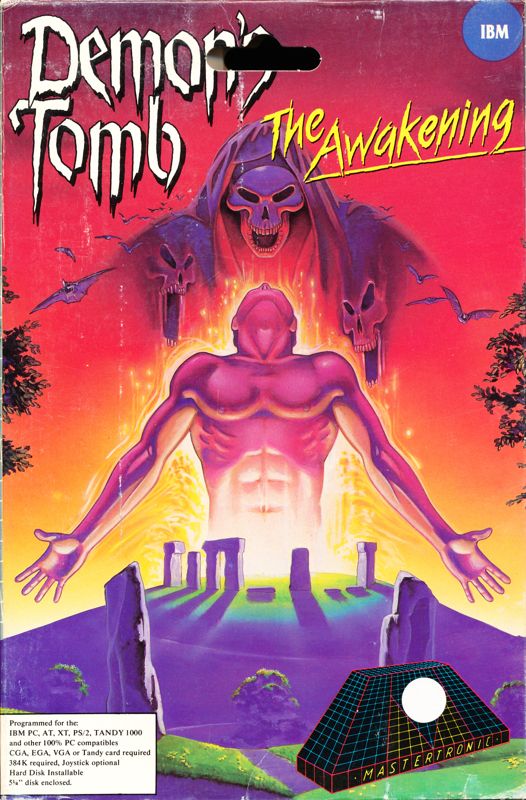
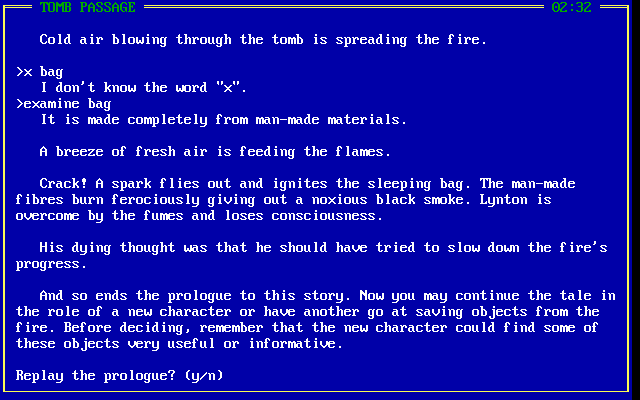
Demon’s Tomb: The Awakening delivers a rich text-adventure experience that marries classic parser-based interaction with modern conveniences. At its core, the game uses a parser on par with Infocom’s legendary engine, interpreting chain commands and adverbs to allow deep, nuanced input. Whether you type “open wooden door quietly” or “take all then examine room,” the system handles it fluidly. This complexity invites experienced adventurers to experiment with language, while newcomers can rely on the mouse-driven verb menu to construct sentences without memorizing every verb and preposition.
(HEY YOU!! We hope you enjoy! We try not to run ads. So basically, this is a very expensive hobby running this site. Please consider joining us for updates, forums, and more. Network w/ us to make some cash or friends while retro gaming, and you can win some free retro games for posting. Okay, carry on 👍)
The inclusion of mouse input and interface customization takes the genre into the 21st century. Right-clicking opens a settings menu where you can adjust text display modes, change font sizes, and switch between a traditional Zorkish full-screen layout or a windowed scrolling view. This flexibility ensures that you can tailor the look and feel to your personal taste, whether you prefer a nostalgic, text-only presentation or a more modern feel that keeps the narrative in a smaller pane while leaving space for notes or maps.
Puzzles in Demon’s Tomb are thoughtfully designed, weaving together exploration of Britain’s moors, cryptic inscriptions left by Edward Lynton, and the looming threat of Darsuggotha. The online hint-system shines when you’re stuck: simply THINK ABOUT a location or object, and you’ll receive contextual clues that nudge you forward without spoiling every solution. Combined with user-defined macros (e.g., DEFINE IN=INVENTORY) and robust save options (disk or RAM save/load), the game strikes an ideal balance between challenge and accessibility.
Graphics
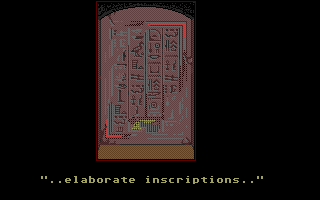
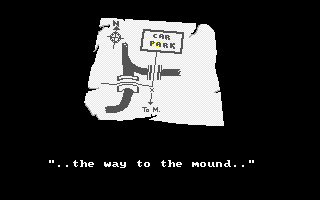
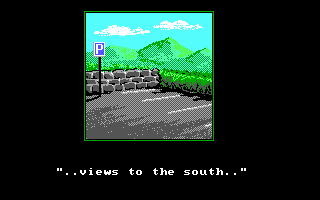
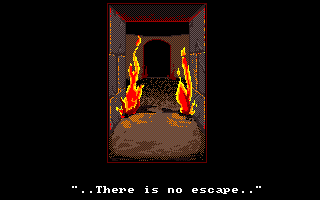
Though primarily a text adventure, Demon’s Tomb supplements its prose with atmospheric illustrations in certain key locations. These line-art images, triggered by a single keystroke, bring to life ancient ruins, gothic crypts, and swirling mists on the moors. While they don’t compete with high-end 3D graphics, the art style perfectly complements the narrative, providing just enough visual flair to spark your imagination and anchor you in the world.
The game’s interface customization plays a crucial role in the graphical experience. You can choose a stark black-and-white display that evokes early interactive fiction, or switch to a more colorful, windowed mode where text and images coexist side by side. The optional verb menu also comes with iconography that represents basic actions—look, take, use—so even if you rarely glance at the pictures, the interface itself feels alive and intuitive.
In scenes of high tension—such as a moonlit stand-off with Darsuggotha’s cultists or the final confrontation in Tzen’s desecrated chapel—the combination of text effects (bold, italics), moody line-art, and subtle screen shakes (simulated via text shifting) heightens the drama. While these aren’t blockbuster visuals, they are more than sufficient for a text-driven title and serve the story’s atmosphere superbly.
Story
The narrative premise of Demon’s Tomb is rooted in classic adventure tropes: a missing father, a dark deity plotting his ascension, and a teenage hero who must rise to the challenge. The prologue casts you as Edward Lynton, a famed archaeologist fighting for his life against cultists in an ancient tomb. This gripping opening sets the stakes high and immediately immerses you in the world’s peril.
Sixteen years later, you step into the shoes of Richard Lynton, Edward’s brave and resourceful son. As you traverse Britain’s eerie moors in search of clues, the writing excels at evoking a sense of solitude and creeping dread. Journals, letter fragments, and whispered rumors build the lore of Darsuggotha, an evil god yearning to incarnate through the heathen priest Tzen. Each entry you discover deepens your connection to the father you never met and raises the emotional stakes.
Dialogue with non-player characters is sparse but impactful, relying on your willingness to probe conversations with multiple questions. The text takes advantage of adverb recognition in the parser, allowing you to press Richard’s allies “politely,” “accusingly,” or even “sarcastically.” These subtleties enrich character interactions and give weight to your choices, making Richard’s journey feel personal and dynamic as you race against time to thwart the demon’s return.
Overall Experience
Demon’s Tomb: The Awakening feels like a love letter to fans of interactive fiction, updating the genre with intuitive mouse controls and flexible display options while preserving the depth of a classic text parser. The interface customization and optional verb menu lower the barrier to entry, inviting new players to dip their toes into parser-based gameplay without fear of frustration.
The game’s pacing is expertly managed: the brisk prologue hooks you in, the middle chapters on the moors keep a measured tension, and the final acts deliver a sense of escalation and urgency. The online hint-system ensures you’re never hopelessly stuck, and the ability to save in multiple formats encourages daring exploration without penalty.
Ultimately, Demon’s Tomb: The Awakening offers a hauntingly atmospheric tale of family, faith, and cosmic evil. Its integration of strong narrative writing, flexible interface options, and classic puzzle-solving mechanics makes it a standout choice for anyone seeking a text adventure with modern sensibilities. Whether you’re a veteran of Infocom classics or a newcomer curious about interactive fiction’s potential, Richard Lynton’s quest against an ancient god is a journey well worth taking.

Reviews
There are no reviews yet.