 Retro Replay Retro Replay gaming reviews, news, emulation, geek stuff and more!

Retro Replay Review
Gameplay
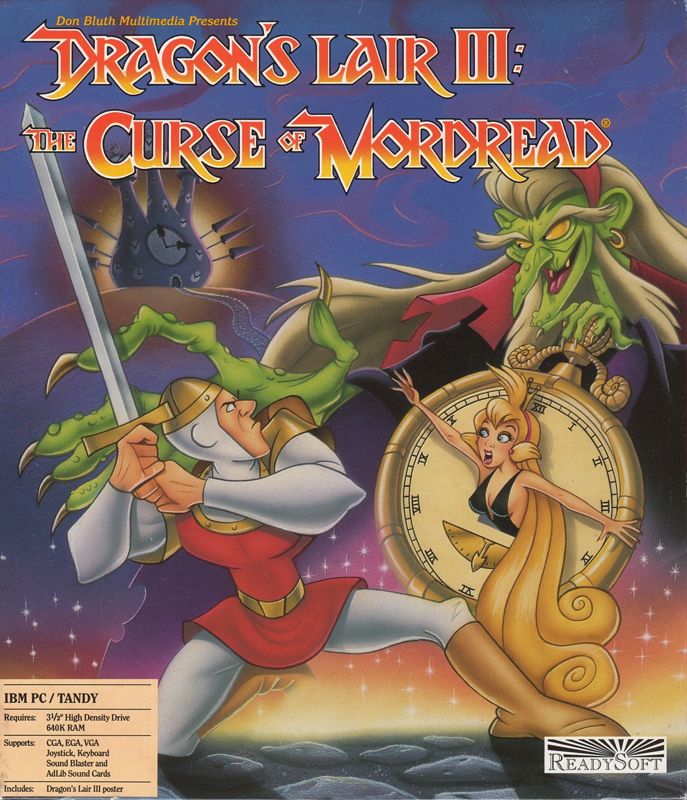
Dragon’s Lair III: The Curse of Mordread picks up the signature quick‐time event (QTE) gameplay that defined the original arcade classics, channeling every slice, jump and dodge into a thrilling, high‐stakes spectacle. Players guide Dirk the Daring through a series of previously unreleased Time Warp levels, reacting to on‐screen prompts with split‐second precision. The result is an adrenaline‐fueled test of reflexes that remains accessible yet challenging, demanding memorization as much as lightning‐fast reactions.
(HEY YOU!! We hope you enjoy! We try not to run ads. So basically, this is a very expensive hobby running this site. Please consider joining us for updates, forums, and more. Network w/ us to make some cash or friends while retro gaming, and you can win some free retro games for posting. Okay, carry on 👍)
Each level introduces its own unique hazards and timing puzzles, from the dizzying loop of Wonderland’s shifting floors to the swinging rigging aboard a cursed pirate ship. Misjudge your timing by a fraction of a second, and you’ll be treated to one of many gorgeously animated death sequences—each a spectacle in its own right. Though the core mechanics are simple, the tight window for success and the variety of scenarios keep the gameplay loop consistently engaging.
Beyond raw reaction tests, Dragon’s Lair III rewards persistence. Many sequences offer hidden cues or subtle visual hints that veterans can exploit, encouraging repeated playthroughs to perfect each segment. Whether you’re tackling the Beethoven’s Keyboard sequence—where Dirk must leap across enormous white and black keys to the maestro’s melody—or plunging into other bizarre dimensions, the gameplay remains a satisfying mix of pattern‐recognition and hand‐eye coordination.
Graphics
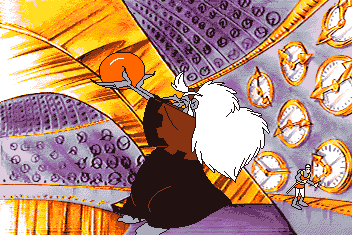
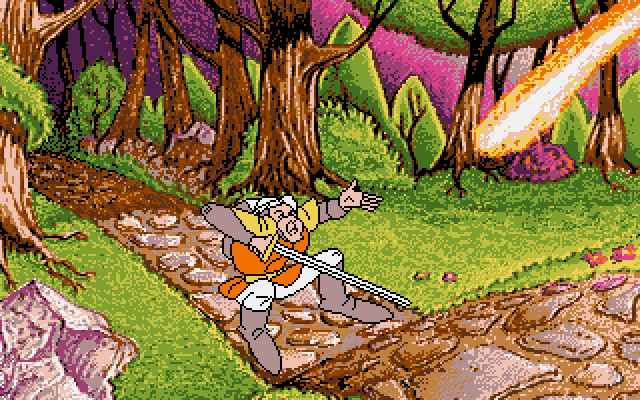
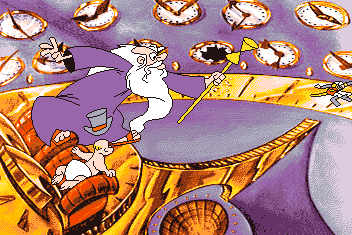
Visually, Dragon’s Lair III is a feast for the eyes. By incorporating laserdisc‐quality footage from the unutilized segments of the arcade version of Dragon’s Lair II: Time Warp, the game offers some of the series’ most lavish hand‐drawn animations. Every environment, from the candy‐coated mushrooms of Wonderland to the barnacled deck of a haunted galleon, is rendered in vibrant detail and rich color, capturing the surreal charm director Don Bluth infused into the original titles.
Even on home hardware, these animations maintain their fluidity and crispness, with smooth frame rates and minimal compression artifacts. Character movements feel natural and weighty—Dirk’s heroic jumps, sword slashes, and comedic flails look just as grand as they did under the arcade’s laserdisc systems. Transitions between QTE prompts and animated outcomes occur without noticeable lag, preserving the cinematic flow that fans adore.
Special attention has been paid to the unique locales, such as Ludwig von Beethoven’s gigantic keyboard. Here, shadows stretch realistically across ivory keys, and the environment reacts dynamically to Dirk’s footfalls—notes visually reverberate beneath his boots. Subtle effects like flickering torchlight in castle corridors and the bobbing of ship planks in stormy seas further deepen immersion, making each attempt a visually satisfying spectacle.
Story
While Dragon’s Lair games are never narrative heavyweights, Dragon’s Lair III offers a playful, tongue‐in‐cheek continuation of Dirk the Daring’s quest to thwart the evil sorceress Mordread. After rescuing Princess Daphne and dismantling Mordroc’s schemes in earlier installments, Dirk once again finds himself hurled across time and space—this time facing fresh challenges in oddball realms scrawled by Mordread’s malevolence.
The framing is delightfully straightforward: Mordread has scattered Dirk through a series of warped dimensions, each designed to break his spirit or send him back to the dungeons forever. Through brief story interludes—presented with whimsical hand‐painted backdrops and snappy lines of narration—you get just enough context to care about each level without breaking the frenetic pace. It all builds toward a final showdown that, while not epic in scope, feels satisfyingly earned after mastering the preceding trials.
Fans of the franchise will appreciate the nods to classic characters and jokes peppered throughout the animations. The script leans into Dirk’s archetypal heroism, while also poking fun at QTE failures—complete with comedic grimaces and over‐the‐top reactions. Even newcomers will find the story lighthearted and easy to follow, though its true charm shines brightest for long‐time devotees who know the lore and relish every bit of series continuity.
Overall Experience
Dragon’s Lair III: The Curse of Mordread delivers a tight, nostalgia‐driven package that balances challenge with spectacle. Each level feels like a mini‐showtime event—half puzzle, half animated short film—that compels repeated play as you fine‐tune your timing and commit every prompt to muscle memory. This addictive loop is the beating heart of the experience.
The production values remain impressive even decades after its arcade debut, with high‐fidelity animations and lovingly preserved art direction. Quick loading times and responsive controls ensure you spend more time swinging swords or leaping across giant piano keys than waiting on menus or cutscenes. Replay options let you revisit favorite or frustratingly difficult sequences, perfect for players who crave perfection in every frame.
For potential buyers—especially retro gamers and fans of Don Bluth’s animation style—Dragon’s Lair III is a standout title that revives rare, previously inaccessible arcade content. Its blend of tight QTE gameplay, sumptuous visuals, and cheerful storybook humor creates an experience that’s both nostalgic and fresh. If you’ve ever wanted to see Dirk tackle Wonderland’s topsy‐turvy challenges or defy the perils of Beethoven’s Keyboard, this is your ticket to one of the most charmingly audacious chapters in the Dragon’s Lair saga.



Reviews
There are no reviews yet.