 Retro Replay Retro Replay gaming reviews, news, emulation, geek stuff and more!
Retro Replay Review
Gameplay
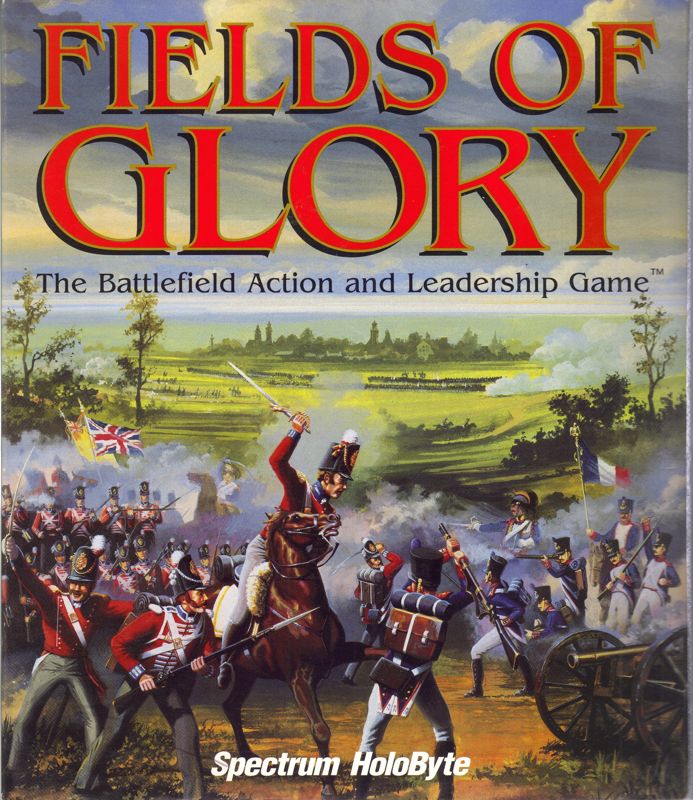
Fields of Glory offers a robust turn-based strategy system that places you in command of Napoleonic forces during the climactic Hundred Days campaign of 1815. From arranging infantry squares to coordinating cavalry charges, the game challenges you to think several moves ahead. Every decision—from unit placement to supply line management—can tip the balance between triumph and defeat on the rolling plains of Waterloo.
(HEY YOU!! We hope you enjoy! We try not to run ads. So basically, this is a very expensive hobby running this site. Please consider joining us for updates, forums, and more. Network w/ us to make some cash or friends while retro gaming, and you can win some free retro games for posting. Okay, carry on 👍)
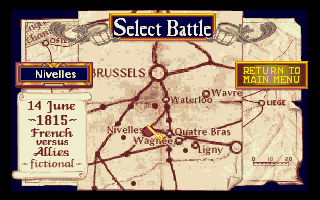
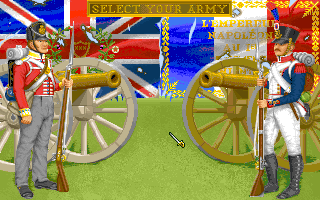
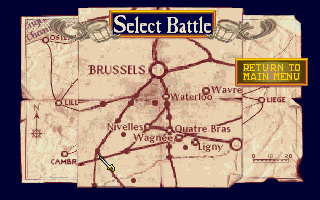
The scenario selection spans historical battles and “what-if” engagements, giving you the freedom to either relive established clashes or explore alternate outcomes. Units behave according to period doctrine: grenadiers pack a powerful punch at close quarters, while light cavalry excels at flanking and harassing enemy lines. The balance between unit types encourages thoughtful combined-arms tactics rather than head-on assaults.
While the AI opponents offer a reasonable strategic challenge, there is a noticeable learning curve as you acclimate to simultaneous movement phases and morale mechanics. Early setbacks are common, but once you master the timing of artillery barrages and the exploitation of terrain features like ridgelines and farmhouses, victories become immensely satisfying. The game’s pacing allows for deliberate planning without feeling sluggish.
Control schemes are straightforward, employing menu-driven commands to move, attack, or fortify units. Though keyboard shortcuts speed up repetitive tasks, the absence of mouse-driven pathfinding may feel archaic to modern standards. Still, for strategy purists, this precision-focused interface rewards careful deliberation and replicates the deliberate tempo of 19th-century warfare.
Graphics
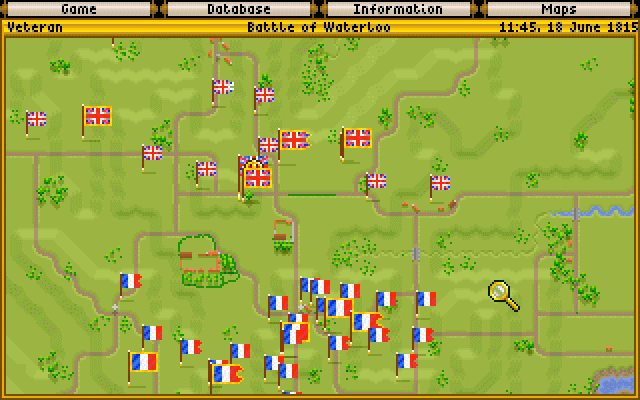
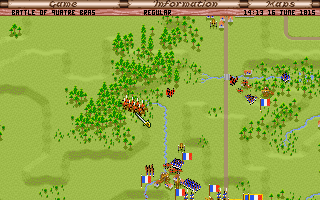
Graphically, Fields of Glory reflects its 1993 heritage with a top-down, VGA-quality presentation. Battle maps are rendered in muted earth tones, effectively conveying the mud and meadows of the European theater. While the pixel art lacks modern polish, it succeeds in offering clear terrain distinctions—open fields, woods, and water features are instantly recognizable.
Unit sprites are small but distinct, with flag pennants and unit counters indicating troop types and morale states. Animations are minimal: musket volleys smoke briefly, cavalry troopers wheel, and infantry figures pivot to face their targets. These modest touches punctuate the action without overwhelming system resources of the era.
The user interface employs icon-driven menus along the screen edges, providing quick access to formation adjustments, inspection windows, and victory condition displays. Though there’s no dynamic zoom, the map’s fixed resolution ensures a consistent tactical overview—ideal for maintaining situational awareness during complex maneuvers.
Sound effects are sparse—occasional cannon booms and marching drums add atmosphere, while period-appropriate martial music loops in the background. Though minimalist by today’s standards, the audio complements the visual restraint, keeping focus squarely on strategic decision-making rather than flashy presentation.
Story
Fields of Glory embraces historical authenticity above cinematic spectacle, framing each scenario with concise battle briefs. You receive context on troop dispositions, commander biographies, and strategic objectives, all drawn from documented accounts of Napoleon’s return from Elba. These text-based introductions set the stage without burdening you with lengthy cutscenes.
The narrative unfolds through your command decisions: a bold flanking maneuver at Quatre Bras may write its own legend, while a failed defense at Ligny illustrates the high stakes of coalition warfare. This emergent storytelling relies on the battlefield’s shifting tides, rewarding players who adapt to evolving threats and exploit fleeting weaknesses in enemy lines.
Although there’s no overarching character-driven plot, the game’s commitment to period detail imparts a palpable sense of place and urgency. Weather effects—such as the muddy ground that historically delayed Napoleon’s advance—are simulated, underscoring how environmental factors shaped real-world outcomes. These touches reinforce the educational value of the experience.
For history enthusiasts, Fields of Glory doubles as an interactive chronicle of the Napoleonic Wars’ final act. Even without dramatized dialogue or cutscene cinematics, the strategic interplay of units and terrain tells a compelling story of ambition, valor, and the fragile nature of coalitions against the French emperor’s legacy.
Overall Experience
Fields of Glory stands out as a faithful historical simulation, marrying strategic depth with educational insight. Its emphasis on authentic unit behavior and period tactics makes it a standout title for those seeking more than mere arcade thrills. Victories feel earned, and every defeat offers lessons in the delicate art of Napoleonic warfare.
Despite its dated visuals and user interface quirks, the game’s core systems remain engaging. The blend of campaign scenarios and standalone battles ensures high replay value, whether you’re refining tactics at Waterloo or testing new strategies at Ligny. Multiplayer hotseat mode adds a competitive edge for head-to-head showdowns with friends.
Fields of Glory shines when approached by players with an appreciation for history and a taste for methodical strategy. Casual gamers may find the learning curve steep, but for dedicated wargamers and educators, the title offers a richly detailed sandbox in which to explore Europe’s turbulent summer of 1815. Its fidelity to historical facts makes it a valuable teaching tool as well as an engrossing pastime.
Overall, Fields of Glory remains a testament to the era when designers prioritized authenticity and tactical nuance over graphical spectacle. If you’re in search of a deeply strategic, historically grounded experience—and you don’t mind a classic interface—you’ll find this game both informative and immensely rewarding.


Reviews
There are no reviews yet.