 Retro Replay Retro Replay gaming reviews, news, emulation, geek stuff and more!
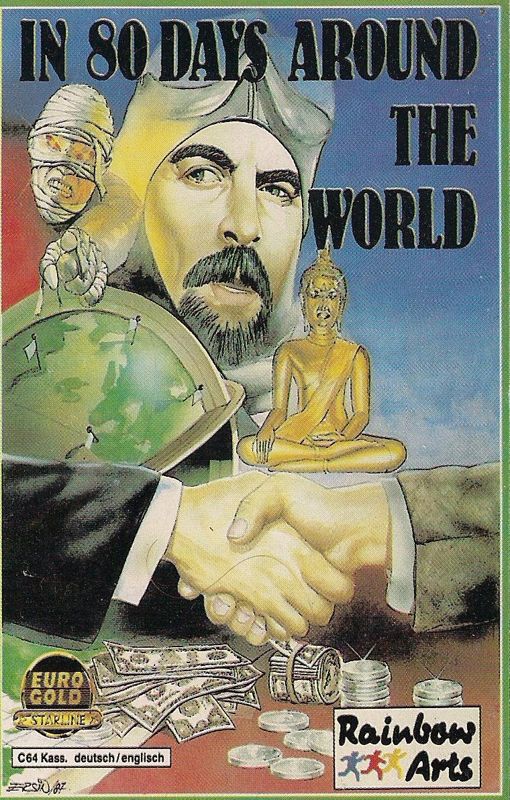

Retro Replay Review
Gameplay
In 80 Days Around the World places you firmly in the shoes of Phileas Fogg and his loyal butler Passepartout, splitting play time evenly between strategic planning and fast-paced action. On the world map screen you manage Fogg’s finances, monitor your remaining days and adjust travel speed with the steam engine indicator. Decisions to bribe train conductors or wager in high-stakes card games add layers of resource management, forcing you to balance speed and solvency as you race against the legendary 80-day deadline.
(HEY YOU!! We hope you enjoy! We try not to run ads. So basically, this is a very expensive hobby running this site. Please consider joining us for updates, forums, and more. Network w/ us to make some cash or friends while retro gaming, and you can win some free retro games for posting. Okay, carry on 👍)
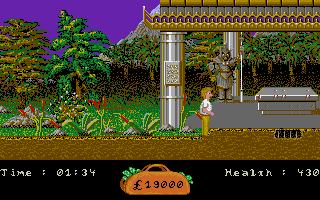
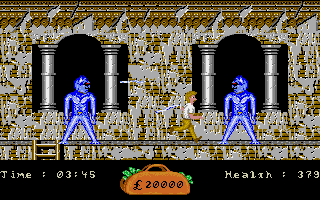
When the adventure shifts to Paspartout’s perspective, the game transitions to side-scrolling platform segments rich in environmental hazards and timed objectives. You’ll dash through dense Indian jungles, dodge falling fruit and spears, and navigate treacherous temple corridors in search of crucial artifacts. Each level demands careful timing and precision, since one misstep can strand you and end your globe-trotting gamble prematurely.
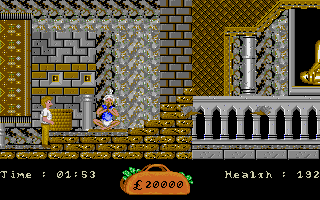
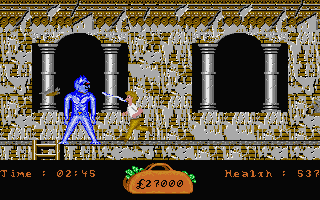
The Japanese stage introduces playful acrobatics as you leap to catch nimble performers, while the American frontier tests your reflexes with charging wolves and deadly traps. Back in England, the Dungeons of London cap the experience with claustrophobic corridors and lurking enemies. These arcade-styled interludes provide a welcome change of pace from the map-based decision making, offering a satisfying blend of strategy and action.
Time management remains the beating heart of the gameplay loop. Every split second spent mastering card odds or perfecting a platform jump brings you closer to—or further from—your Reform Club return. The balance between high-stakes betting, route planning and dexterous platforming creates a dynamic rhythm, ensuring that no two attempts to circumnavigate the globe feel exactly alike.
Graphics
Visually, In 80 Days Around the World embraces a vibrant 2D aesthetic that pays homage to classic adventure games while delivering modern polish. Each locale is rendered with bright, contrasting colors: lush greens and sunlit stone in Indian temples, cherry-blossom hues over Japanese rooftops, and muted browns and grays in London’s dank dungeons. The result is an immediate sense of place that draws you deeper into Fogg’s journey.
Character sprites for Phileas Fogg and Passepartout feature charming animation loops—Fogg adjusts his top hat with aplomb, while Passepartout dashes through obstacles with dynamic flair. Environmental details like swaying vines, drifting smoke from the train chimney, and fluttering flags imbue each scene with life. Even the card-playing screens and bribe notifications are presented with crisp icons and intuitive layouts.
Transitions between map, menu and action segments are smooth, with no noticeable loading delays. Occasional slowdown can occur if too many projectiles fly across the screen in the jungle or if multiple enemies converge in the dungeons, but these moments are rare and seldom detract from the overall visual experience.
The user interface strikes a fine balance between aesthetic charm and clarity. Status indicators for time, money and train speed remain unobtrusive in the corners of the screen, ensuring that the action always stays front and center. Whether you’re scanning the world map for your next stop or leaping over pitfalls in America, the game’s graphical presentation consistently supports and enhances the adventure.
Story
Drawing inspiration from Jules Verne’s timeless novel, In 80 Days Around the World delivers a faithful retelling of Phileas Fogg’s audacious wager at London’s Reform Club. You begin amid aristocratic banter, with Fogg confidently staking £20,000 on his ability to circle the globe in exactly 80 days. This narrative hook provides a solid foundation, rooting every subsequent challenge in the urgency of your self-imposed deadline.
The interplay between Fogg and his devoted butler Passepartout adds emotional texture, with Fogg’s cool pragmatism offset by Passepartout’s boundless energy and occasional slip-ups. Dialogue snippets and event cards peppered throughout your travels flesh out both characters, offering moments of humor, tension and genuine camaraderie. These narrative beats help transform the game from a simple arcade romp into a quest with real stakes and personality.
Although the storyline follows the broad strokes of Verne’s original, developers take creative liberties in each region, introducing unique obstacles and mini-plots that keep the journey feeling fresh. Whether you’re negotiating with local merchants in India, impressing an acrobat troupe in Japan or decoding tribal dances in North America, each chapter unfolds with its own narrative twist that advances both the lore and your progress.
By the time you return to England and descend into London’s dungeons, the accumulated sense of adventure and the ticking clock converge in a thrilling climax. The story never loses sight of its literary roots, yet it remains accessible to newcomers, offering plenty of context for each exotic setting. This blend of classic storytelling and interactive exploration makes for a satisfying tale that honors its source material while standing on its own merits.
Overall Experience
In 80 Days Around the World delivers a compelling mix of strategy, action and narrative charm, anchored by its time-sensitive premise. The dual gameplay modes—map-based resource management as Fogg and arcade platforming as Passepartout—create a varied pacing that seldom feels repetitive. Each decision to speed up the train, place a high-stakes bet or leap across a collapsing bridge carries weight, keeping you invested from London to Tokyo and beyond.
The game’s strengths lie in its engaging mechanics and faithful adaptation of Verne’s story, though a few difficulty spikes in later platform stages may frustrate less-experienced players. Resource juggling can also become precarious if you lose large sums in card games or neglect to bribe conductors when necessary. However, these challenges only amplify the thrill of beating the clock and reaching the Reform Club on day 80.
Replay value is strong, thanks to multiple route choices, varied mini-games and the inherent desire to shave hours off your previous records. Speedrunners and completionists will appreciate exploring every detour, mastering each action segment and discovering the best balance between frugality and daring. Casual players, in turn, can enjoy the game at a more leisurely pace, soaking in the story and environments without obsessing over perfect runs.
Overall, In 80 Days Around the World offers a delightful journey that captures the spirit of old-school adventure gaming while feeling fresh and engaging. Whether you’re a fan of Jules Verne, a lover of platform-puzzlers or simply someone seeking a unique narrative-driven challenge, this title provides ample excitement, charm and replayability as you attempt the most famous race against time in literary history.



Reviews
There are no reviews yet.