 Retro Replay Retro Replay gaming reviews, news, emulation, geek stuff and more!


Retro Replay Review
Gameplay
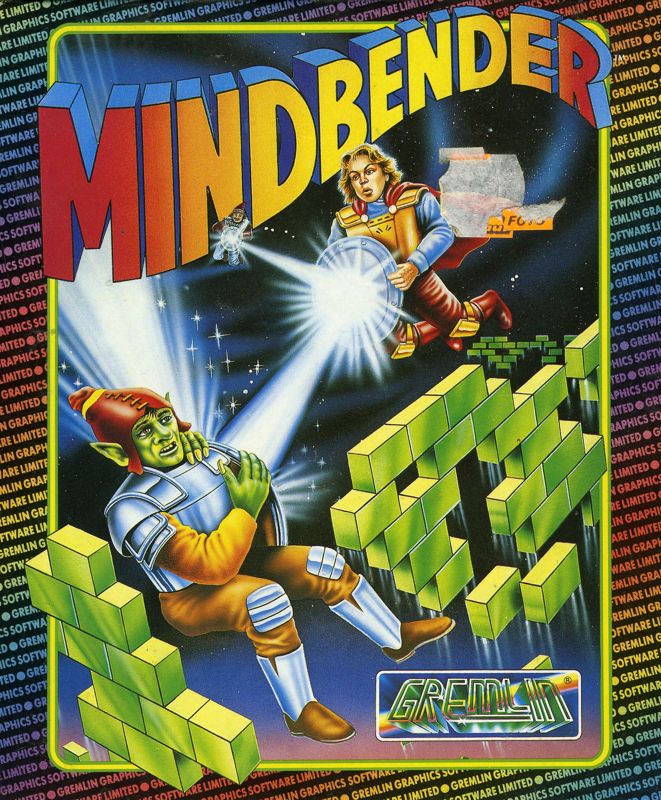
Mindbender builds its core mechanics around indirect control of a beam of light, drawing clear inspiration from classic puzzle titles like Deflektor. Instead of directly moving a character or an object, you rotate mirrors and other devices to guide your energy beam through each level’s obstacles. This system rewards players who enjoy methodical problem solving and spatial reasoning, as every level becomes a small self-contained puzzle to master.
(HEY YOU!! We hope you enjoy! We try not to run ads. So basically, this is a very expensive hobby running this site. Please consider joining us for updates, forums, and more. Network w/ us to make some cash or friends while retro gaming, and you can win some free retro games for posting. Okay, carry on 👍)
The game spans 50 distinct levels, each presenting a unique arrangement of mirrors, rotating barriers, light bulb switches, locked sections, and—later on—magic balloons that add a whimsical twist. As you progress, the puzzles become increasingly complex, often requiring multiple attempts to find the ideal combination of mirror angles. Precision is key: misalign even one reflector and you’ll watch your beam miss its target, forcing you back to the drawing board.
Adding a palpable sense of urgency is the ever-present time limit, which tightens the challenge and keeps players on their toes. The time constraint turns what could be a leisurely trial-and-error experience into a tense race against the clock. Additionally, you must avoid overloading the beam by reflecting it back into itself in true Tron-style fashion, as this causes catastrophic failures that send you back to your last checkpoint.
Graphics
Visually, Mindbender adopts a sleek, neon-infused aesthetic that recalls the cybernetic worlds of classic arcade titles. The color palette is dominated by sharp blues, electric greens, and fiery oranges, which light up the darker backgrounds and emphasize your beam’s path. This contrast not only looks striking but also makes it easy to track fast-moving reflections and bouncing rays.
Level designs vary from minimalist grids to more ornate structures featuring rotating gears and animated lock mechanisms. Each mirror and barrier is rendered clearly, with crisp edges and smooth rotations that communicate their movements instantaneously. The visual feedback—such as glowing trails along the beam’s path and flickering switches—helps you quickly grasp cause and effect as you tweak your strategy.
Performance is generally solid, with stable frame rates even when multiple reflections occur simultaneously. Subtle particle effects around magic balloons and the occasional spark when the beam hits a barrier further enrich the presentation without overwhelming the screen. Overall, Mindbender’s graphics strike a harmonious balance between style and functional clarity.
Story
While Mindbender is primarily a puzzle game, it weaves a light narrative thread that frames each level as a challenge set by an ancient technological entity. You assume the role of an apprentice technician attempting to master the art of light manipulation. This simple premise gives purpose to the puzzles, suggesting that every solved level brings you closer to unlocking a deeper secret within the machine’s core.
The story unfolds through brief text snippets and graphical icons between stages, hinting at a hidden civilization that once harnessed the power of pure energy. Though the narrative does not delve into extensive character development or cinematic cutscenes, it provides enough context to keep you invested in your journey from novice to master. Each new puzzle feels like a step forward in your training.
In this way, Mindbender’s narrative is serviceable and unobtrusive—it never interrupts your puzzle-solving flow, but it remains present enough to motivate your progression. For players seeking a rich, character-driven saga, the story may feel sparse. However, those who value unobstructed gameplay with just a touch of lore will find the balance quite satisfying.
Overall Experience
Mindbender offers a compelling blend of thoughtful puzzle mechanics and stylish visuals that will appeal to fans of cerebral challenges. The 50 levels provide a steady ramp-up in difficulty, ensuring that even experienced puzzle aficionados will encounter fresh hurdles throughout the game. The trial-and-error nature is balanced by responsive controls and clear visual feedback, making setbacks more educational than frustrating.
Replayability is strong: many levels can be revisited to shave off precious seconds or to discover alternative solutions. Leaderboards and time-based achievements (if supported) further incentivize mastery, encouraging you to refine your mirror rotations until they’re pixel-perfect. Casual players may find some of the later stages demanding, but perseverance is rewarded with that satisfying “click” moment when everything falls into place.
In summary, Mindbender is a polished homage to classic beam-reflection puzzlers with enough modern flair to stand on its own. Its combination of indirect control, time pressure, and varied mechanics keeps the gameplay loop fresh across dozens of levels. For anyone seeking a smart, engaging puzzle experience wrapped in a sleek visual package, Mindbender is well worth exploring.


Reviews
There are no reviews yet.