 Retro Replay Retro Replay gaming reviews, news, emulation, geek stuff and more!
Retro Replay Review
Gameplay
SimLife puts you in the driver’s seat of evolution, giving you unprecedented control over every facet of your own digital biosphere. From the moment you launch a new world, you’ll be crafting terrains, sculpting climates, and introducing flora and fauna in whatever combinations you choose. Whether you design a lush rainforest teeming with insect-eating kangaroos or a barren desert inhabited by giant, tree-devouring snails, the sandbox nature of the game invites endless experimentation.
(HEY YOU!! We hope you enjoy! We try not to run ads. So basically, this is a very expensive hobby running this site. Please consider joining us for updates, forums, and more. Network w/ us to make some cash or friends while retro gaming, and you can win some free retro games for posting. Okay, carry on 👍)
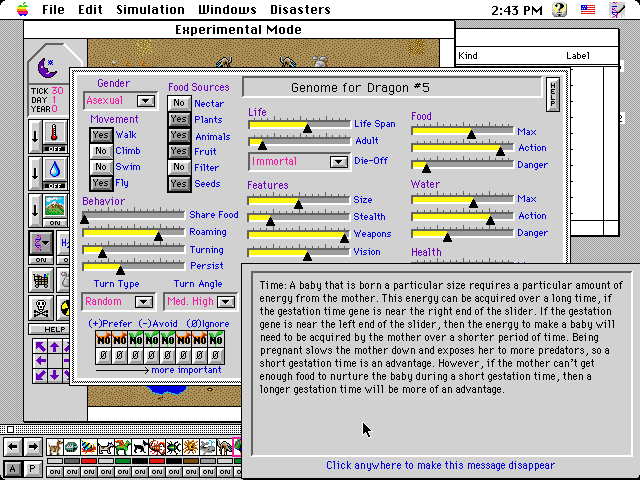
The heart of SimLife lies in its genetic editor, which allows you to tweak DNA sequences to your whim. Want a tiny kangaroo that lays eggs and subsists solely on beetles? It’s as simple as modifying a few alleles. Craving a colossal snail that chomps through several oak trees a day to sustain its massive frame? Drop in a couple of extra “growth” genes, crank up the appetite module, and watch biology go haywire. This level of customization is both powerful and intuitive, striking a balance between scientific authenticity and playful design.
Beyond creature creation, the real thrill of gameplay emerges as you observe your ecosystem in action. Prey and predators follow survival instincts, plants spread or wilt depending on soil and water conditions, and species may evolve unexpected traits or drive each other to extinction. The dynamic feedback loops—where a runaway snail population can lead to deforestation, or an overabundance of carnivores collapses the food chain—keep you engaged for hours as you tweak variables to maintain ecological balance.
Graphics
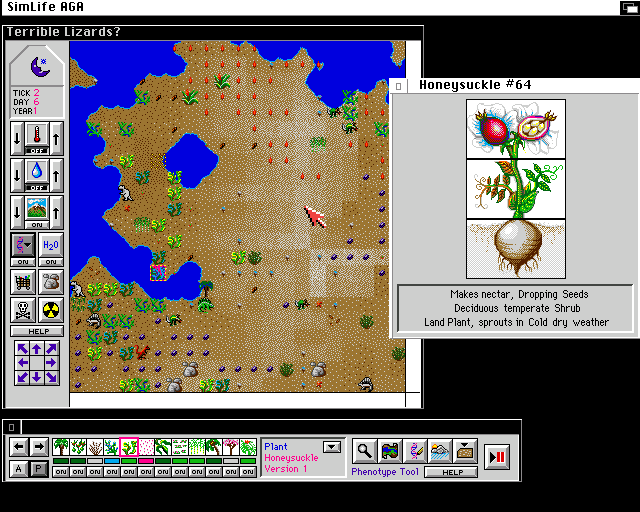
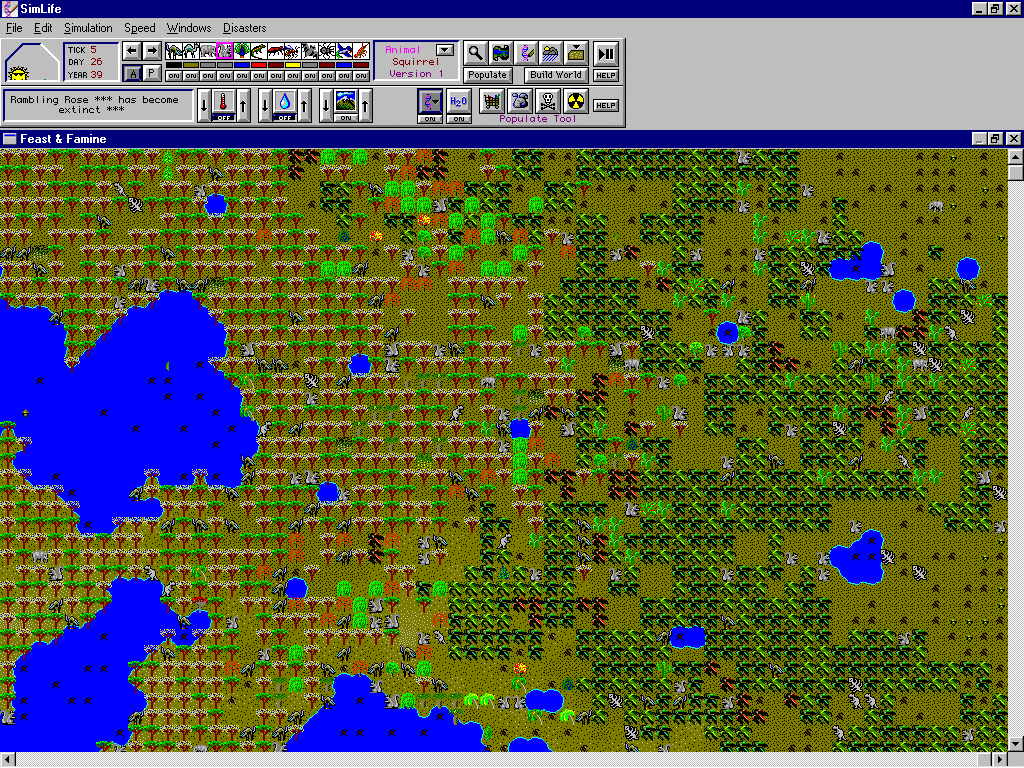
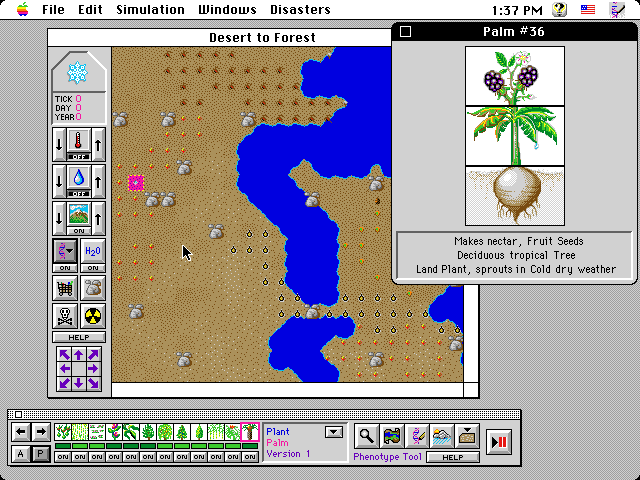
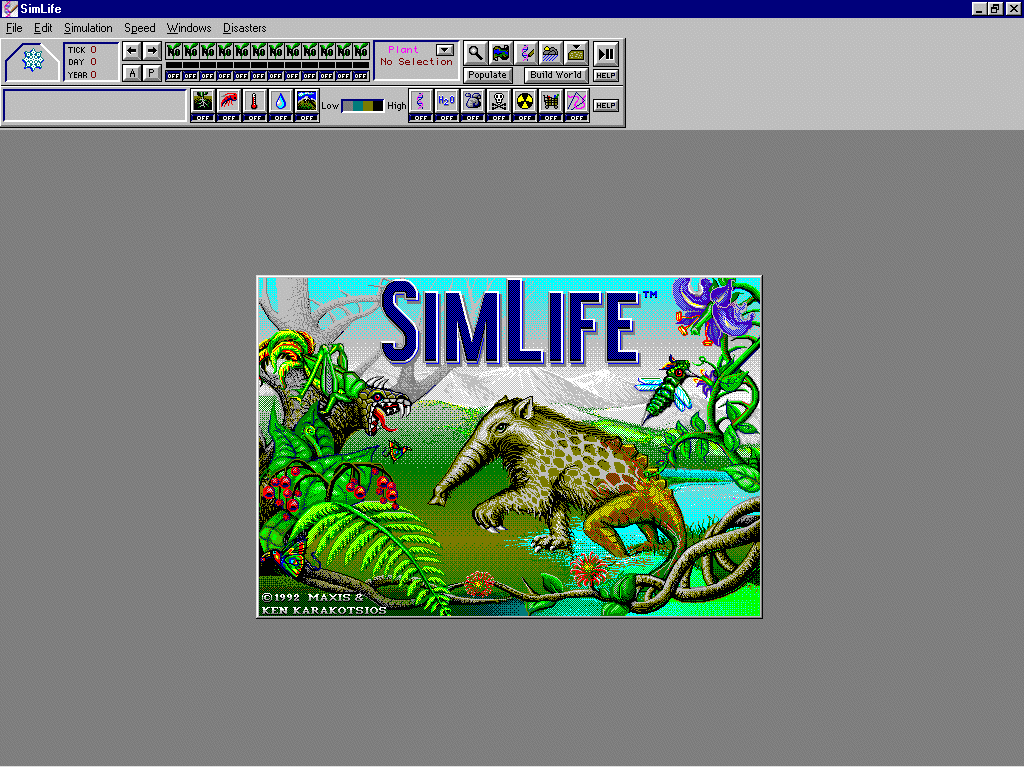
Although SimLife’s visuals reflect its 1990s heritage, the game’s clean, colorful sprites and well-defined icons remain charming and functional. Each animal and plant appears as a distinct, easily recognizable silhouette against the terrain, ensuring you can quickly scan the status of your biosphere at a glance. Backgrounds and menus may lack modern shading or high-resolution textures, but this simplicity aids clarity, especially when you’re managing dozens of species simultaneously.
The genetic editor screen is especially well-designed, presenting complex information in accessible charts and sliders. You can view traits such as metabolism rate, reproduction cycle, and sensory acuity without feeling overwhelmed. Particle effects—like pollen drifting from flowers or tiny insects buzzing around—add a touch of life to static environments, reminding you that every pixel plays a role in your unfolding natural drama.
Screen transitions and animations remain smooth, even when your world is under stress from rapid population booms or climatic shifts. The game’s modest system requirements mean you can run it on contemporary hardware without issue, and the retro aesthetic holds nostalgic appeal for players who remember the early days of simulation gaming. Ultimately, graphics serve the gameplay perfectly, offering a clear window into the delicate interactions of your virtual ecosystem.
Story
SimLife eschews a traditional narrative in favor of emergent storytelling driven by your own experiments. There’s no fixed plot or predefined cast of characters; instead, every session writes its own tale. Perhaps your initial plan for a desert oasis is derailed when a genetically enhanced snail chews through every tree, creating dust storms that drive smaller species to extinction. That unplanned ecological catastrophe becomes the “story,” and your attempts to rectify it—by introducing moisture-loving ferns or predatory insects—form the next chapter.
Players often report memorable anecdotes: a tiny marsupial-kangaroo hybrid that evolves bioluminescent fur to attract mates in dark forest understories, or a carnivorous vine species that develops rudimentary locomotion to hunt faster prey. These surprising twists are your narrative building blocks, and you’ll find yourself recounting them to friends as though they were epic plot points in a blockbuster game.
While some may miss character-driven dialogue or scripted missions, the freedom to generate your own saga more than compensates. You become both author and audience, watching with fascination as unintended genetic mutations spark new behaviors or entire populations collapse in a single, catastrophic chain reaction. It’s a storytelling canvas limited only by your imagination.
Overall Experience
SimLife stands as a unique blend of scientific rigor and playful creativity. It’s an educational tool disguised as entertainment—ideal for players curious about genetics, ecology, and the delicate interplay of life forms. The learning curve can be steep at first, particularly when you dive deep into the genetic code editor, but tutorials and trial‐and‐error interactions ensure steady, satisfying progress.
The sandbox nature of the game translates into nearly infinite replay value. Each new world you sculpt offers fresh challenges, whether you’re balancing oxygen levels in a closed terrarium or preventing a plague of oversized snails from turning a verdant forest into a barren wasteland. Even after dozens of hours, you’ll stumble upon novel genetic combos and unexpected ecosystem dynamics that rekindle your curiosity.
For potential buyers, SimLife represents both a challenge and a reward: it demands thoughtful planning, experimentation, and adaptability, but it also delivers unmatched satisfaction when you witness a stable, thriving biosphere of your own creation. If you’re looking for a simulation experience that combines creativity, science, and emergent storytelling in one compelling package, SimLife remains a timeless classic worth exploring.



Reviews
There are no reviews yet.