 Retro Replay Retro Replay gaming reviews, news, emulation, geek stuff and more!
Retro Replay Review
Gameplay
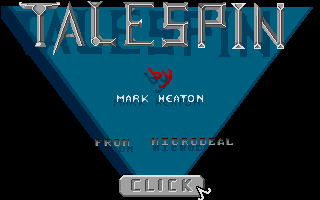
Talespin stands out as a versatile adventure game creation system, designed by Mark Heaton and his family. Rather than confining you to a single storyline, it hands you the reins to build interactive graphic- and text-oriented adventures, tutorials, demos, or even digital books. With over 100 development commands at your disposal, you can manipulate variables, conditions, and graphic elements to craft branching narratives that respond dynamically to player choices.
(HEY YOU!! We hope you enjoy! We try not to run ads. So basically, this is a very expensive hobby running this site. Please consider joining us for updates, forums, and more. Network w/ us to make some cash or friends while retro gaming, and you can win some free retro games for posting. Okay, carry on 👍)
The core design revolves around “pages” – self-contained units that blend drawings, text, and sound. Each page can host multiple conditions and variables, determining which graphics appear, which text is displayed, and which actions trigger next steps. By linking pages in sequence, or even chaining separate story disks together, you can create sprawling multi-disk sagas without worrying about copy protection or runtime restrictions.
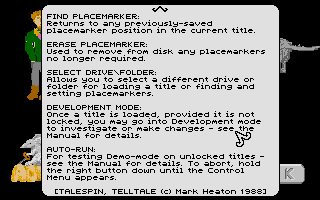
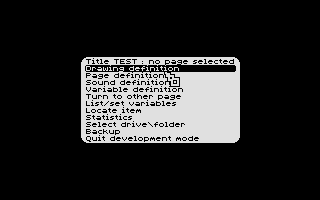
Interactivity is driven entirely by mouse control. Left-click selects menu options or story choices, while right-click summons the development menu for in-engine editing. Character interactions appear as clickable heads that spawn text bubbles filled with decision prompts, making navigation intuitive for both veteran designers and first-time storytellers. The inclusion of Telltale, a run-only module, ensures anyone can play your creation without owning the full Talespin suite.
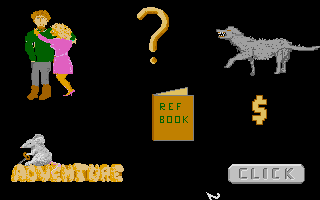
Beyond the basics, Talespin offers generous hard drive support and eliminates copy protection headaches, freeing you to focus on creativity rather than disk swapping. Two sample adventures—The Grail by 19-year-old Rudyard Heaton and The Wolf by another artist—provide solid templates to study, tweak, and expand. These demos showcase the system’s potential, guiding you through practical uses of variables, conditional text, and puzzle design.
Graphics
The built-in paint and drawing program in Talespin is surprisingly robust for its era. Tools such as Pencil, Spray, Mini-Spray, Block, Blob, Line, and Fill let you craft detailed illustrations directly within the development environment. A Lens option magnifies portions of the canvas, granting pixel-level precision, while an Undo function ensures that minor mistakes won’t force you to start over.
Although the engine theoretically supports up to 512 colors, Atari ST hardware limits the display to 16 colors at once. This constraint means every drawing on a page must share a single palette, but savvy artists can still achieve vibrant visuals by carefully selecting color sets. You can also import pictures from other stories or external sources and incorporate sound clips, enriching the sensory landscape of your creation.
The workflow is streamlined for rapid iteration: draw on the canvas, test within the live engine, adjust your variables and triggers, then refine the art as needed. This tight feedback loop is invaluable for indie developers or hobbyists who want to experiment without juggling multiple programs. Whether you’re designing a gothic castle for a haunted mystery or a sunlit meadow for a fantasy quest, the graphic tools in Talespin remain surprisingly capable.
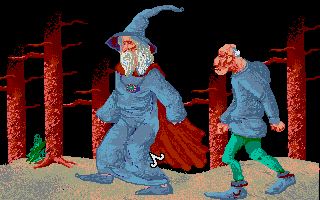
Sample scenes in The Grail and The Wolf demonstrate how evocative art, even within a 16-color constraint, can set tone and atmosphere. From moody shadows to bright, inviting vistas, the examples illustrate how creative palette choices and careful pixel work can convey narrative weight. For aspiring designers, unpacking these sample games offers a masterclass in maximizing limited resources.
Story
At its heart, Talespin is a storytelling powerhouse. Variables lie at the core of narrative branching: define a variable (for instance, CONVERSATION), assign it values, and set conditions to unlock different dialogue options, puzzle solutions, or page transitions. This system supports multiple outcomes for the same challenge, encouraging replayability and player agency.
The “Chain To Title At Page” feature is particularly noteworthy. It allows you to link one story to another, effectively creating episodic or serialized content across multiple disks. Imagine finishing a pirate adventure, only to have it seamlessly transition into a high-seas sequel—without forcing players to navigate complex disk-swapping routines or launch separate executables.
The included adventure samples highlight the narrative flexibility. The Grail immerses players in a medieval quest for a sacred relic, while The Wolf explores myth and transformation through moody visuals and carefully paced dialogue. Both games reveal how simple text bubbles, paired with conditional logic, can craft compelling, choice-driven tales that rival standalone commercial titles of the era.
Even if you’re not a seasoned writer, the system’s tutorial pages walk you through basic scripting, variable management, and page structure. By the time you’ve completed the tutorial, you’ll have a functional micro-adventure under your belt and the confidence to tackle more ambitious projects. The mix of text, graphics, and sound ensures that each story element complements the others, creating an immersive experience that feels greater than the sum of its parts.
Overall Experience
Talespin delivers a polished, user-friendly environment for crafting interactive adventures. Its no-copy-protection ethos and hard drive compatibility remove common development roadblocks, while the mouse-driven interface makes both design and playtest sessions feel fluid. The presence of Telltale ensures your audience can enjoy your creations without investing in the full suite.
From an educational standpoint, the system doubles as a learning tool for budding game designers. By demystifying concepts like variables, conditional logic, and event-driven programming, it provides a hands-on introduction to core development principles. The sample games, tutorials, and real-time editing tools foster an iterative mindset, guiding users from simple dialog choices to fully realized adventure worlds.
For hobbyists and indie creators in the late ’80s and early ’90s, Talespin was a revelation—an all-in-one toolkit that pooled art, text, and sound into a single integrated workspace. Many modern engines echo its design philosophy, but few delivered such an elegant balance between power and accessibility at the time. If you’ve ever dreamed of building your own quest, mystery, or interactive storybook, Talespin remains a landmark example of what enthusiastic developers can achieve with limited hardware.
Whether you’re exploring the included demos or launching into your first original project, the satisfaction of seeing your own adventure come to life is palpable. Talespin doesn’t just lower the barrier to entry—it invites you to dream bigger, iterate faster, and share your imagination with anyone who owns a floppy drive or a hard disk. For its era, and even by today’s standards of indie development, it stands as a testament to creativity unbound by technical constraints.


Reviews
There are no reviews yet.