 Retro Replay Retro Replay gaming reviews, news, emulation, geek stuff and more!




Retro Replay Review
Gameplay
Vengeance of Excalibur builds on the foundations laid by Spirit of Excalibur, offering a blend of role-playing and simplified strategy elements that feel both nostalgic and refreshing. The game unfolds over seven distinct acts, each featuring its own objectives, challenges, and locales. As you guide your knights across medieval Spain–inspired territories, you’ll toggle between an overhead strategic map and detailed, hand-painted scenes that set the stage for every quest and encounter.
(HEY YOU!! We hope you enjoy! We try not to run ads. So basically, this is a very expensive hobby running this site. Please consider joining us for updates, forums, and more. Network w/ us to make some cash or friends while retro gaming, and you can win some free retro games for posting. Okay, carry on 👍)
Combat in Vengeance of Excalibur is governed by an accessible, mouse-driven interface that nevertheless masks an unexpectedly deep tactical layer. Before each battle, you position your troops on a gridded field, taking into account terrain and unit strengths. Once combat begins, the game shifts to an automated resolution mode, allowing you to observe the clash of blades and spells without micromanaging every strike. Keyboard shortcuts are also available for those who prefer a hybrid control scheme.
Character progression follows a classic RPG trajectory: knights gain experience, learn new abilities, and equip a variety of weapons and armor. Managing your party is crucial, as you’ll need to determine which knight is best suited for frontline combat, who should wield magic, and who excels at support roles. In this way, the strategy and role-playing aspects intertwine seamlessly, encouraging experimentation with party composition and equipment loadouts.
The world map encourages exploration, with dozens of towns, castles, and hidden locales awaiting discovery. Traveling between locations carries its own sense of risk and reward, as random encounters can yield supplies or tip you off to secret quests. Although this system can sometimes feel repetitive, it nails that classic RPG pace where every journey across the map becomes an opportunity for adventure.
Graphics
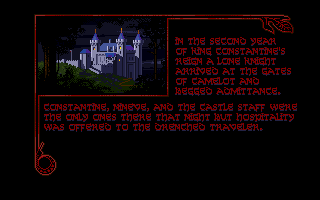
Vengeance of Excalibur’s visuals are anchored by richly detailed, hand-painted backdrops that evoke a fairy-tale version of medieval Spain. Each castle courtyard, forest glade, and dungeon corridor is rendered with vibrant colors and intricate designs. While the lack of animated sprites and dynamic lighting may feel dated by modern standards, there’s an undeniable charm in the carefully crafted static scenes.
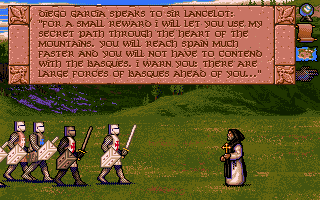
The character portraits and unit icons are drawn in a clean, iconic style that makes it easy to identify different knight classes and enemy types at a glance. During battles, animated pixel sprites represent your forces, moving fluidly across the grid when attacks are exchanged. Though these animations are relatively simple, they capture the spirit of sword-and-sorcery combat in a way that’s both functional and visually appealing.
The overhead map’s aesthetic strikes a balance between clarity and artistry. Towns and castles are represented by miniature illustrations that pop against the rolling green landscape. Occasional weather effects—such as drifting mist or sunlit glades—add a touch of atmosphere, reinforcing the game’s epic tone. The interface itself is unobtrusive, using clear icons and tooltips to guide players without cluttering the screen.
In terms of technical performance, the game runs smoothly on retro hardware and modern PCs alike. Load times are minimal, and resolutions up to SVGA are supported, ensuring that the beauty of the paintings is preserved. While hardcore fans of high-definition graphics might yearn for more detail, fans of classic RPGs will appreciate this title’s painterly aesthetic.
Story
Picking up directly after the closing chapter of Spirit of Excalibur, Vengeance of Excalibur thrusts players back into a land reclaimed from Morgan Le Fay. King Arthur’s rule seems secure, but a darker threat emerges: the Shadowmaster, a demonic incarnation of the fallen sorceress, abducts the court enchantress Nineve and ensnares the king in a malevolent spell. Your quest is simple in premise yet grand in scope: rally Britain’s knights, navigate shifting loyalties, and thwart the Shadowmaster’s scheme to plunge the realm into eternal darkness.
The narrative unfolds across a series of episodic acts, each punctuated by dialogue sequences, scripted events, and cinematic cut-ins rendered through static illustrations and text. While the storytelling occasionally relies on archetypal fantasy tropes—heroic knights, treacherous sorcerers, and magical relics—the writing is earnest and engaging, with memorable moments that capture the chivalric spirit of Arthurian legend.
Character interactions offer unexpected depth. Your knights each possess distinct personalities, and conversations can reveal hidden motivations or unlock side missions. Romance subplots, political intrigue, and moral dilemmas are woven throughout the campaign, offering players choices that impact party morale and resource availability. Although the branching paths aren’t extensive, they lend a sense of agency and replayability to the overall narrative.
Despite some pacing issues—particularly a slowdown in the midgame where travel and shopping sequences become routine—the story’s climax pays off in a satisfying showdown against the Shadowmaster. The final act ties back to beloved themes from Spirit of Excalibur while forging its own identity, making Vengeance of Excalibur a worthy successor in the Arthurian saga.
Overall Experience
Vengeance of Excalibur succeeds in capturing the nostalgic allure of early ’90s RPGs while incorporating streamlined strategy elements that keep gameplay engaging. The balance between exploration, combat, and character development ensures that no two play sessions feel identical, and the episodic structure helps maintain momentum across dozens of hours of gameplay.
The game’s presentation—hand-painted backdrops, evocative music, and clear interface—contributes to an immersive atmosphere. Though some players may find the static scenes and simple animations archaic, the artistry on display compensates by transporting you into a vividly imagined Arthurian realm. Performance is rock-solid, with minimal load times and no noticeable bugs in contemporary tests.
While the narrative occasionally leans on familiar fantasy clichés, it remains compelling thanks to well-crafted set pieces and meaningful character interactions. The combination of story-driven quests and strategic combat encounters creates a satisfying loop that rewards careful planning and exploration. Side quests and hidden treasures add layers of depth for completionists, enhancing the game’s replay value.
In sum, Vengeance of Excalibur is a delightful blend of RPG storytelling and light strategy gameplay. It may not boast cutting-edge graphics or revolutionary mechanics, but its heart lies in delivering a memorable Arthurian adventure. Fans of classic role-playing games and newcomers alike will find plenty to admire in this charming, old-school epic.


Reviews
There are no reviews yet.