 Retro Replay Retro Gaming History, Reviews & Emulation
Retro Replay Review
Gameplay
Ballbreaker II earns your attention by making a very old arcade idea feel immediately a little strange. You move a paddle vertically along the right side of the screen, bouncing the ball back into the field and stopping it from escaping past you. That sounds simple, and it is, but the sideways position changes your instincts. Instead of waiting underneath the action, you are reading returns from the flank.
Its isometric block layout is more than a cosmetic wrinkle. The blocks are stacked, and when you remove blocks underneath, the higher ones fall down. That gives clearing a level a pleasing sense of cause and effect: a hit can open up the structure, while a missed angle can leave you repeatedly working around an awkward remaining piece. You are still breaking blocks with a ball, but you are also gradually dismantling a pile.
The adjustment period is the point where frustration can creep in. If you want the immediate comfort of a conventional bottom-mounted paddle, Ballbreaker II asks you to unlearn that expectation. Stick with it long enough to get used to vertical movement and the depth suggested by the isometric view, though, and the layout starts to make sense. The 30 new levels give that central idea room to keep testing your angles.
Graphics
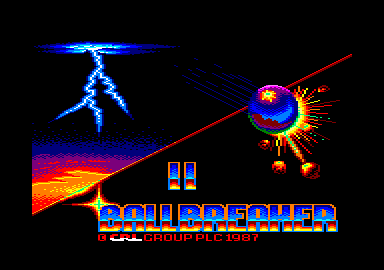
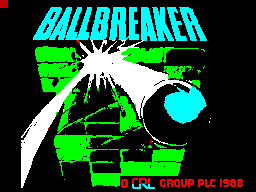
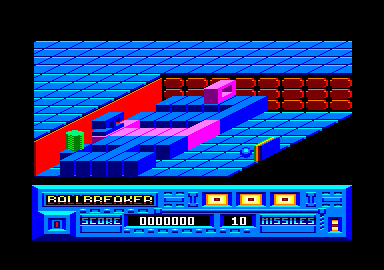
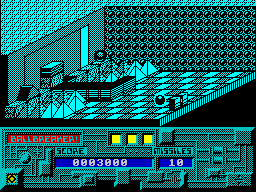
The isometric battle is all about stacked blocks rather than a flat brick wall. Your ball and right-side paddle stay on the lower plane, while the block pile rises above them; when lower blocks vanish, seeing the upper blocks drop makes the puzzle-like structure easy to understand.
Story
There is no story to carry Ballbreaker II from one level to the next. Its momentum comes from the basic arcade question of whether you can clear the current arrangement before losing control of the ball.
That suits the game’s direct design. You are not waiting for a plot turn or a character moment; each level’s stack creates its own small arc, from the first opening hits to the last stubborn blocks.
If you need narrative context to stay invested, this will feel bare. If a score-chasing, level-clearing arcade loop is enough, the falling-block structure supplies the only progression it needs.
Overall Experience
Ballbreaker II is a smart variation on Breakout, not a reinvention. The paddle placement gives the familiar bounce-and-clear routine a fresh physical feel, and the stacked blocks make your successful hits matter in a way a standard wall of bricks cannot.
Its strongest moments come when you recognize that clearing the bottom of a stack is often more useful than simply hitting whatever is closest. That small strategic wrinkle gives the action more texture without changing its straightforward goal: remove every block.
Give it a chance if you enjoy compact arcade games that ask for a little adaptation and reward steady control. Skip it if the sideways paddle sounds like an irritation rather than an intriguing challenge, because that unusual angle is the whole reason to play this sequel.


Reviews
There are no reviews yet.