 Retro Replay Retro Replay gaming reviews, news, emulation, geek stuff and more!


Retro Replay Review
Gameplay
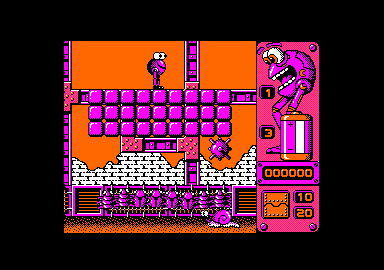
Jump offers a refreshing hybrid of two classic arcade legends, combining the strategic wall-bouncing of Breakout with the relentless pressure of Space Invaders. You take control of an electromechanical robot that strides along the top of a brick wall, timing each leap to crush the bugs climbing from below. This simple premise creates a satisfying loop of tension and reward, as every successful jump sends a brick—and any unsuspecting critter—plummeting.
(HEY YOU!! We hope you enjoy! We try not to run ads. So basically, this is a very expensive hobby running this site. Please consider joining us for updates, forums, and more. Network w/ us to make some cash or friends while retro gaming, and you can win some free retro games for posting. Okay, carry on 👍)
The challenge deepens with the introduction of a horizontally flying bomb that carves away at your wall mid-jump. You’ll need to carefully plan your jumps to avoid having your own bricks destroyed before you land. Miss the window and you could find gaps in your path, leading to an untimely fall. At the same time, the swarm of bugs grows ever faster, forcing split-second decisions that test your reflexes and spatial awareness.
Adding a quirky twist, each time you eliminate a bug, its soul—either benevolent or malevolent—soars skyward. Collecting these souls affects your robot’s mood, subtly altering its jumping height and speed. This clever mechanic rewards skilled play with tangible upgrades, giving you extra incentive to clear waves quickly and efficiently. And don’t forget the snail slowly scuttling at the very bottom; a lucky, well-aimed jump can send bricks crashing down to squash it, earning bonus points.
Graphics
Visually, Jump channels the spirit of early ’80s arcade machines with bright, blocky sprites and a limited but charming color palette. The brick wall is rendered in crisp, contrasting hues that make it easy to track your robot’s position, while the bugs and bomber craft sports clear, simple animations. Everything moves smoothly, with no slowdown even when the screen is awash with falling debris and scuttling insects.
The parallax layers aren’t present, but the static background of a star-studded sky adds a touch of atmosphere without distracting from the core action. Small visual flourishes—like a flicker when a brick detaches or a brief flash for each soul collected—keep the presentation lively. Even the snail, partially hidden beneath the throng of bugs, is distinguishable once you know where to look, making those surprise splats all the more gratifying.
While Jump doesn’t push any graphical boundaries by modern standards, its faithful retro styling evokes nostalgia without feeling stale. The minimalistic approach works in its favor, ensuring clarity during frantic sequences. If you grew up on coin-ops or just appreciate clean, purposeful design, you’ll find Jump’s visuals delightful and appropriately spirited.
Story
Jump’s narrative is delightfully basic, reflecting its arcade heritage. You are the last functional electromechanical robot, standing guard atop a fortified wall against an endless tide of mutant bugs. There’s no sprawling lore or dramatic cutscenes—just an unwavering premise that challenges you to survive each wave. This stripped-down approach keeps the focus squarely on the action.
Yet beneath the simplicity lies a subtle thematic beat: the robot’s mood swings driven by the collection of bug souls hint at an unlikely emotional core. As you gather more “good” or “bad” essences, the robot’s demeanor shifts, offering a small but welcome sense of progression. It’s a neat way to marry narrative flavor with gameplay mechanics in an arcade setting.
Fans of more story-driven titles might find Jump’s plot skeletal, but those who appreciate classic arcades will recognize its charm. The absence of lengthy exposition leaves room for pure, unadulterated gameplay—and in Jump’s case, that’s exactly what most players will be after. The premise serves its purpose, giving you just enough context to feel invested in each escalating challenge.
Overall Experience
Jump delivers a concise, exhilarating arcade experience that feels tailor-made for high-score chasers and retro enthusiasts alike. Its unique jump-and-crush mechanic blends two vintage staples into something both familiar and new. Each level unfolds with rising intensity, as more bugs appear, bombs drop more frequently, and your wall weakens under the pressure. The result is a thrilling pendulum swing between triumph and near-disaster.
The learning curve is welcoming yet firm. Beginners can pick up the basic controls within minutes, but mastering jump timing, wall preservation, and mood management takes practice. The added risk of falling or being overrun encourages precision play, while the soul-collection system injects an element of long-term strategy often missing from quick-session arcades.
In all, Jump is a delightful throwback that stands out in today’s landscape of hyper-realistic blockbusters. Its straightforward design, peppered with inventive twists, provides both short bursts of excitement and extended play sessions as you aim to climb the leaderboards. If you’re looking for a game with immediate pick-up-and-play appeal and enough depth to keep you coming back, Jump is a must-try.



Reviews
There are no reviews yet.