 Retro Replay Retro Replay gaming reviews, news, emulation, geek stuff and more!


Retro Replay Review
Gameplay
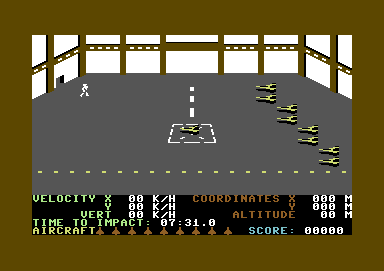
Raid over Moscow thrusts you directly into a high-stakes Cold War scenario where every second counts. You begin with a dramatic missile launch sequence that sets the tone for the frantic multi-stage action to follow. From your cramped hangar, you must scramble fighters under low-gravity conditions, testing your dexterity as you jockey between launch bays to get airborne before the clock runs out.
(HEY YOU!! We hope you enjoy! We try not to run ads. So basically, this is a very expensive hobby running this site. Please consider joining us for updates, forums, and more. Network w/ us to make some cash or friends while retro gaming, and you can win some free retro games for posting. Okay, carry on 👍)
Once in flight, the side-view shoot ’em up segment demands quick reflexes as you weave beneath enemy radar sweeps, dogfighting Soviet jets and dodging treetops. The controls are straightforward yet demanding, rewarding precise timing when lining up shots or performing sharp evasive maneuvers. This phase captures the tension of high-speed combat in a way that few contemporaries managed, thanks to its tight collision detection and responsive handling.
After surviving the skies, you transition to a static-screen mini-game featuring five windows to fire through, each frame teeming with incoming projectiles and enemy troops. This challenge forces you to maintain constant vigilance, switching aim between targets to keep your fighter intact. Finally, the climactic disc-throwing puzzle at the heart of the Soviet base serves as a cerebral twist on the action, requiring you to angle shots so that they ricochet off walls and overheat critical machinery. The inclusion of multiple distinct gameplay styles keeps the experience fresh, though the steep difficulty curve means you’ll likely replay sections repeatedly to beat the bomb timer.
Graphics
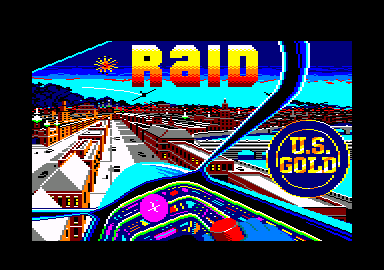
For its era, Raid over Moscow offers surprisingly crisp and colorful visuals, especially on platforms like the Commodore 64 and ZX Spectrum. The opening missile sequence is rendered with bold lines and bright flashes, instantly conveying the explosive stakes of your mission. Sprite animations are simple but effective, with fighter planes and enemy units easily distinguishable against vibrant backdrops.
In the side-scrolling stages, parallax-like effects hint at depth as you skim treetops and cloud banks, while radar sweeps arc across the sky in contrasting hues. The static-window shooting segment cleverly divides the screen into clear target zones, each framed by stark borders that focus your attention. Though primitive by modern standards, these visual cues are elegant solutions for communicating action in real time.
The final disc-throwing puzzle takes place in a dimly lit base interior, with stark color contrasts between the metallic walls, glowing overheating vents, and approaching repair droids. The minimalist palette doesn’t detract from gameplay; instead, it highlights key interactable elements, ensuring you always know where to aim. Overall, the graphical presentation strikes a fine balance between functional clarity and Cold War atmosphere.
Story
The premise of Raid over Moscow is straightforward but compelling: the USSR has launched a massive assault on the United States, and you lead the only remaining squadron capable of thwarting the attack. This “man vs. machine” narrative plays on real-world anxieties of the era, lending a palpable sense of urgency to each stage. Although the plot unfolds largely in a few opening text screens, it provides just enough context to motivate your actions.
Each mini-game feels like a discrete chapter of your mission dossier. The initial scramble sequence represents the frantic mobilization of U.S. air defenses, while the ensuing dogfight simulates the perilous journey over enemy territory. Subsequent stages, from perimeter defense to sabotage of Soviet machinery, read like briefing excerpts in a military operation, reinforcing your role as an elite pilot on a do-or-die assignment.
While there’s no elaborate character development or branching storyline, the ticking bomb timer serves as a narrative device that unites these gameplay segments into a cohesive whole. The high-pressure scenario keeps you invested—even without cutscenes or dialogue, you can’t help but root for your fighter squadron to succeed. In essence, the story is terse but effective, using gameplay mechanics to tell its tale.
Overall Experience
Raid over Moscow delivers a classic blend of adrenaline-pumping action and strategic puzzle-solving, all under an oppressive time constraint. Its multi-stage design breaks up the monotony that often plagues single-genre shooters, offering a varied gameplay loop that keeps you on your toes. Hardcore retro gamers will appreciate the punishing difficulty, while newcomers may find themselves hooked by its relentless pace.
The game’s strengths lie in its tight controls, imaginative stage transitions, and effective use of thematic visuals. Though the graphics and sound are dated by today’s standards, they still capture the atmosphere of a world teetering on the brink of nuclear war. The constant race against time creates an addictive loop, encouraging you to refine your strategies and shave precious seconds off each run.
Ultimately, Raid over Moscow stands as a testament to early action game design, where inventive ideas outweighed polygon counts. Its combination of frantic flying, static-defense shooting, and reflective puzzle elements feels remarkably modern, even three decades after its release. If you’re seeking a challenging retro title that balances variety and intensity, this Cold War classic remains a worthy—and thrilling—mission assignment.


Reviews
There are no reviews yet.